
A cracked windshield on a premium vehicle is rarely just a glass problem. Windshield replacement affects forward visibility, cabin acoustics, structural integrity, camera-based driver-assistance systems, and the finish of the vehicle itself. For owners of European, exotic, and performance vehicles, the right decision is not simply where to get new glass installed. It is how to return the vehicle to its intended standard without compromising the engineering around it.
Why Windshield Replacement Deserves Specialist Attention
Modern windshields are engineered components, not interchangeable panes of glass. They contribute to roof-crush protection, support passenger-side airbag deployment on many vehicles, reduce wind noise, filter UV exposure, and provide the optical surface through which cameras and sensors operate.
That matters even more on vehicles equipped with advanced driver-assistance systems. A forward-facing camera may support lane-keeping assistance, adaptive cruise control, automatic emergency braking, traffic-sign recognition, and high-beam assistance. If the glass, mounting position, camera bracket, or calibration procedure is wrong, those features may not perform as the manufacturer intended.
A quality windshield replacement therefore begins before a technician removes the damaged glass. The vehicle must be identified accurately by VIN and option configuration, particularly when the windshield includes a head-up display, acoustic interlayer, rain sensor, heated elements, antenna connections, infrared coating, or camera provisions. Two windshields that appear identical can have meaningful differences in fitment and functionality.
Repair or Replace? The Decision Depends on Damage and Location
Small stone chips can sometimes be repaired successfully, especially when damage is shallow, outside the driver’s primary field of vision, and away from the glass edge. A proper repair can limit crack propagation and preserve the original factory windshield.
Replacement is typically the more responsible choice when a crack reaches the edge of the glass, enters the driver’s viewing area, grows across the windshield, or affects a sensor or camera zone. Deep impact damage and multiple chips can also make a repair a short-term compromise rather than a lasting solution.
For a collector or enthusiast vehicle, the decision can be more nuanced. Original glass may carry value or date-correct markings that matter to a restoration. In those cases, a specialist should evaluate whether stabilization is realistic before recommending replacement. Safety and clear vision still come first, but the vehicle’s history deserves consideration.
Choosing the Right Glass for Your Vehicle
The lowest-price windshield is not always the right windshield. Premium vehicles often benefit from OEM glass or an equivalent manufacturer-approved option that matches the original specifications for optical clarity, acoustic performance, sensor integration, tint band, and display compatibility.
Aftermarket glass can be appropriate in certain applications, particularly when it is produced by a respected manufacturer to the correct specification. The trade-off is that quality and feature compatibility can vary. A slightly different optical distortion, camera mounting detail, acoustic layer, or trim fit may be insignificant on a basic commuter vehicle but noticeable in a refined cabin.
Owners should also be cautious about assuming insurance authorization automatically means every component will match factory equipment. Coverage may distinguish between OEM and non-OEM glass, and policies vary widely. A trusted shop can help clarify the options so the decision reflects the vehicle, its systems, and the owner’s standards rather than a generic parts category.
Features That Must Match
The windshield should be verified for the vehicle’s exact equipment, including camera and sensor brackets, rain/light sensor compatibility, head-up display requirements, acoustic laminate, heating elements, and antenna or transponder provisions. Moldings, clips, cowl panels, and seals deserve the same attention. Reusing damaged or distorted trim can undermine an otherwise precise installation.
Precision Installation Is More Than Removing and Replacing Glass
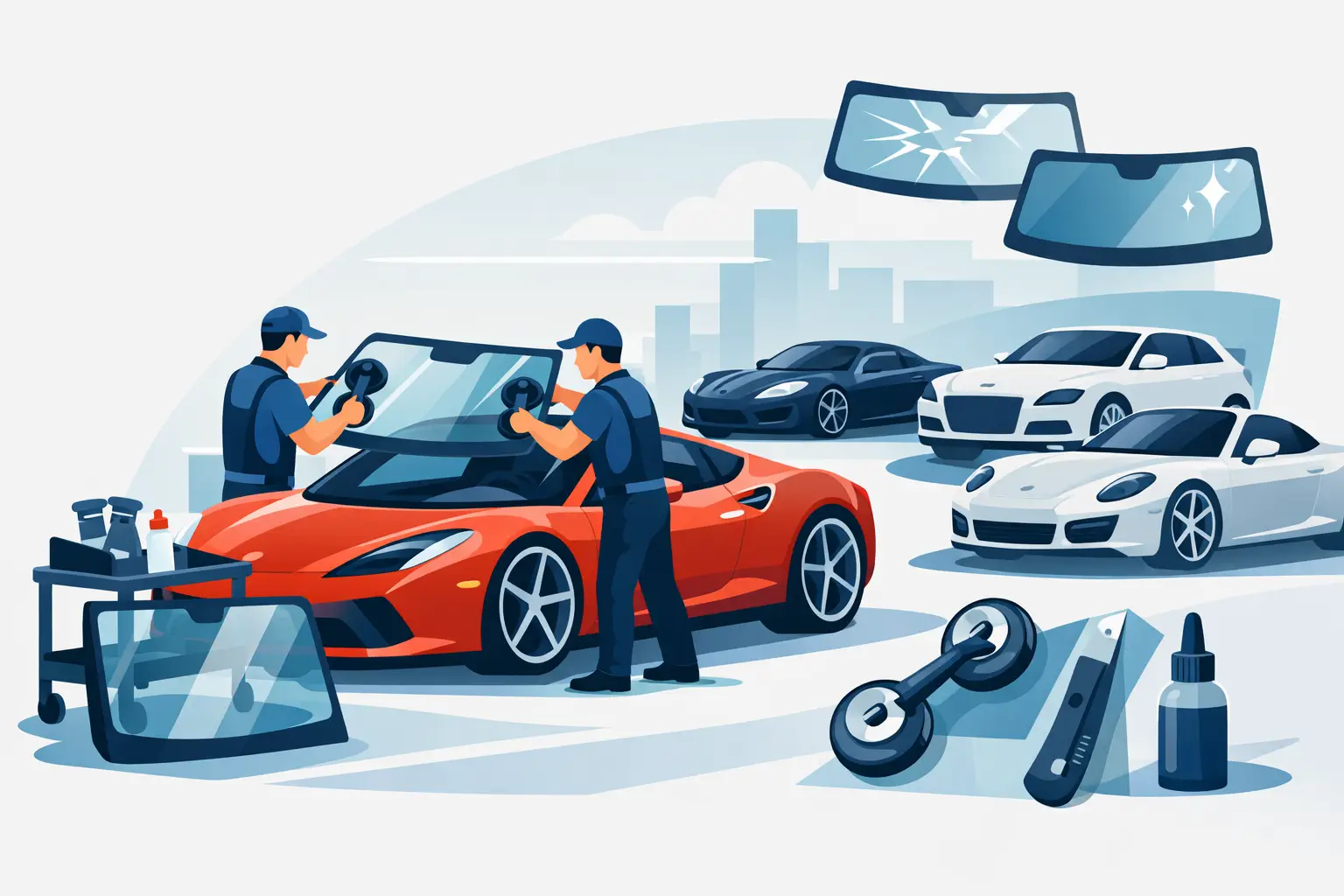
The installation process has a direct effect on safety, appearance, and long-term durability. Removing a bonded windshield carelessly can damage paint at the pinch weld, deform surrounding trim, or leave adhesive residue that prevents the new glass from seating correctly.
A meticulous installation includes protecting the paint and interior, removing the existing windshield without unnecessary stress to adjacent panels, preparing the bonding surface according to adhesive requirements, and inspecting for hidden corrosion or prior repair issues. Any exposed metal at the pinch weld should be addressed correctly before new glass is installed. Skipping this step can create a path for corrosion beneath the windshield over time.
The adhesive system also matters. Automotive urethane must be selected and applied according to the vehicle and manufacturer requirements, with the correct bead profile and safe drive-away time. Rushing the process can affect bonding performance. Temperature, humidity, and curing conditions all influence when the vehicle can safely return to the road.
A premium installation should leave more than a clean windshield. It should preserve even panel transitions, proper molding alignment, a quiet cabin, reliable water sealing, and a finish that looks native to the vehicle rather than visibly serviced.
ADAS Calibration After Windshield Replacement
For vehicles with windshield-mounted cameras, calibration is often a required part of the replacement process. Reinstalling the camera in the same physical location does not guarantee that the system is correctly aligned. Even minor changes in windshield angle, camera position, ride height, or alignment can affect what the camera sees.
Depending on the vehicle, calibration may be static, dynamic, or both. Static calibration uses manufacturer-directed targets and precise measurements in a controlled environment. Dynamic calibration requires a defined road procedure, often at specific speeds and under suitable driving conditions. Some models require scan-tool verification and fault-code checks before and after calibration.
There is no universal answer because every manufacturer handles these systems differently. What should remain universal is verification. The vehicle should not be treated as complete simply because warning lights are off. Calibration documentation and post-installation system checks provide confidence that critical safety technology has been returned to proper operation.
Protecting the New Windshield From Bay Area Road Hazards
Northern California driving presents plenty of windshield threats: freeway debris, gravel from construction zones, changing temperatures, coastal moisture, and the tight following distances of daily traffic. New glass deserves a protection strategy, particularly on vehicles where replacement involves specialized glass and camera recalibration.
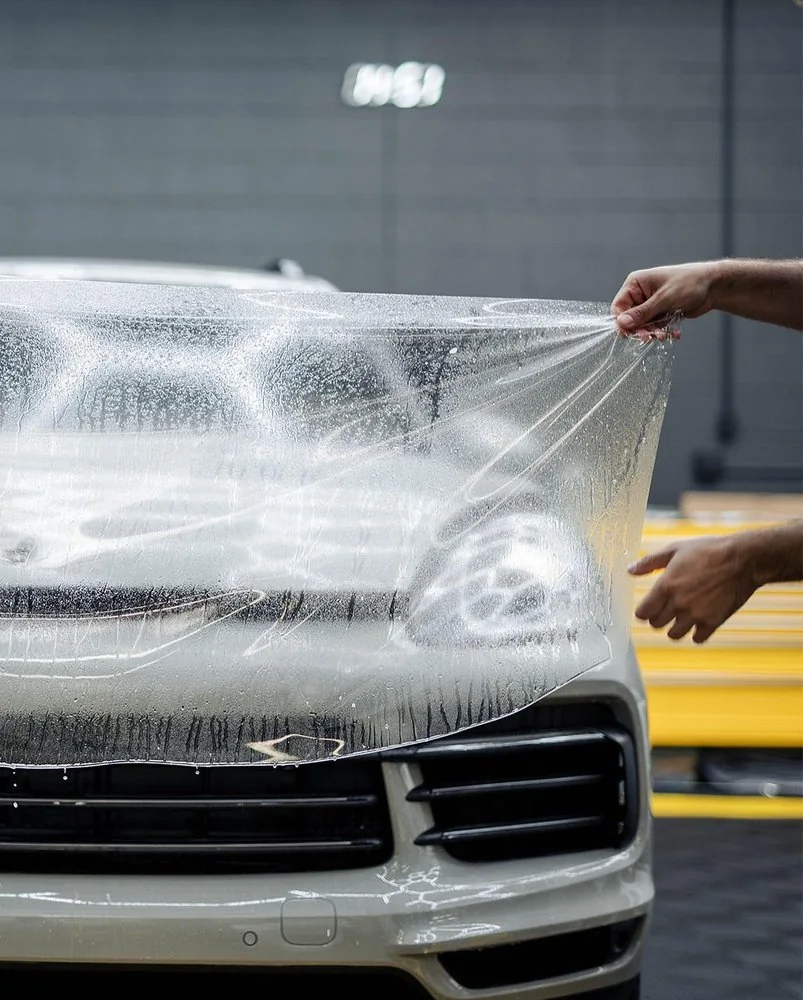
Windshield protection film can provide a sacrificial layer against light impacts, pitting, wiper abrasion, and everyday road wear. It is not a promise that every high-speed rock strike will be harmless, and it should not be presented as an alternative to safe following distance. Its value is in reducing the cumulative damage that gradually dulls clarity and shortens the life of the glass.
The best approach depends on how the vehicle is used. A weekend exotic that spends most of its time on scenic roads has different exposure than a daily-driven performance sedan crossing the Bay Area on Highway 101 or Interstate 280. Film selection, maintenance habits, and replacement timing should reflect that reality.
Use quality washer fluid, keep wiper blades clean and in good condition, and avoid running dry or worn blades over dusty glass. During hand washing, inspect the windshield under direct light for fresh chips and edge damage. Catching a small impact early can sometimes prevent a crack from turning a simple assessment into a full replacement.
A Coordinated Approach to Vehicle Care
Windshield work can be an ideal moment to inspect the surrounding areas that protect the vehicle’s finish and daily usability. Cowl trim, wipers, glass seals, roof-edge paint, front-end paint protection film, window tint, and camera systems all meet at the windshield. Treating them as separate concerns can leave small details overlooked.
At Artec Automotive, that integrated view is central to the ownership experience. A windshield replacement can be coordinated with windshield protection film, detailing, paint protection, or other vehicle-specific care so the finished result reflects the same standard across every visible and functional surface.
When a windshield is damaged, avoid waiting for a small crack to become an urgent safety issue. Photograph the damage, note whether any driver-assistance warnings have appeared, and have the vehicle evaluated with its exact equipment in mind. The right replacement should restore the clear, quiet, precisely engineered view your vehicle was designed to deliver.