
A sharp squeal at a stoplight can make even a meticulously maintained vehicle feel questionable. So, why do brakes squeal? The answer can be as harmless as morning moisture on the rotors or as consequential as worn pads, damaged hardware, or a brake system that needs immediate attention. The sound matters, but the timing, tone, and feel of the pedal matter just as much.
For a European performance car, luxury SUV, or collector vehicle, brakes are not a place for guesswork. The system is engineered as a package: pads, rotors, calipers, sensors, shims, hardware, fluid, tires, and suspension all contribute to predictable stopping performance. A precise diagnosis protects more than quiet operation. It protects confidence behind the wheel.
Why Do Brakes Squeal During Normal Driving?
Brake squeal is created by vibration. As the brake pad presses against the rotor, the materials can vibrate at a frequency high enough for you to hear. That vibration may be influenced by pad compound, rotor surface condition, temperature, humidity, brake dust, or the condition of the anti-rattle clips and shims that control pad movement.
A brief squeal after the car has been sitting overnight is common, particularly in the Bay Area's cool, damp mornings. A light film of surface rust can form on iron brake rotors within hours. It usually clears after a few controlled stops, and the brakes return to normal without any change in pedal feel or stopping distance.
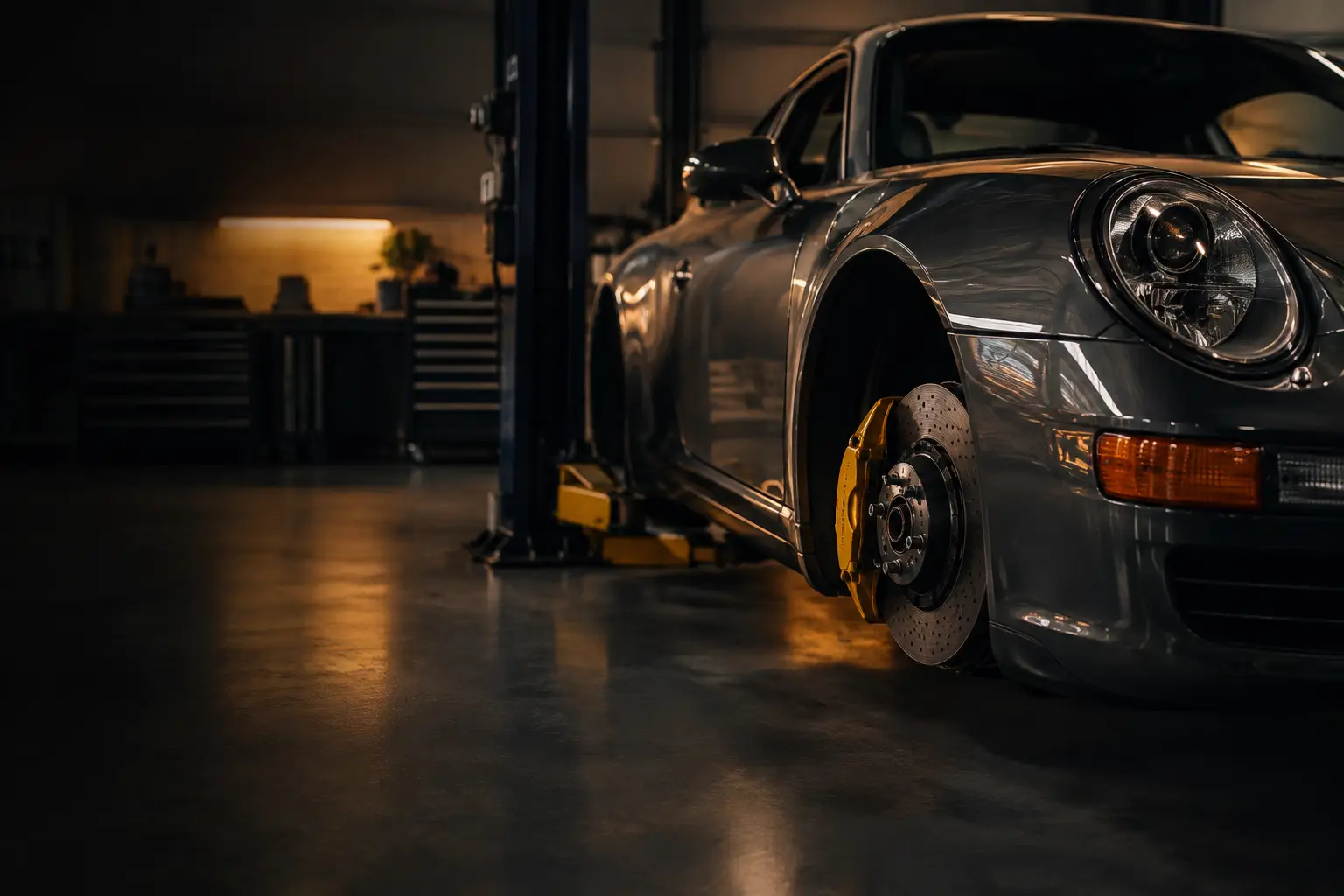
High-performance brake systems can also make more noise than conventional systems. Many factory performance pads use aggressive friction materials designed to remain effective at elevated temperatures. The trade-off is that they may squeak when cold, during low-speed maneuvering, or after repeated hard use. This is especially familiar to owners of performance-oriented BMW, Porsche, Mercedes-Benz AMG, Audi, and exotic vehicles.
That does not mean every squeal is “normal” simply because the vehicle wears a performance badge. Persistent noise deserves a closer look, particularly when it begins suddenly or arrives with vibration, pulling, a soft pedal, warning lights, or reduced braking confidence.
The Most Common Causes of Squealing Brakes
Worn brake pads and wear indicators
Many pads use a small metal wear indicator designed to touch the rotor when the friction material approaches its service limit. The resulting high-pitched squeal is intentional. It is an early warning that pad replacement should be scheduled before the pad material is exhausted.
Ignoring that warning can turn a straightforward pad service into a more expensive rotor and caliper repair. Once the backing plate contacts the rotor, the sound often changes from a squeal to a harsh grinding noise. At that point, braking performance and component integrity can deteriorate quickly.
Pad material and temperature
Not all brake pads behave the same way. Ceramic pads tend to produce less dust and can be quieter in daily operation, while semi-metallic and performance compounds may offer stronger bite and thermal capacity but create more noise. The right choice depends on how the vehicle is driven.
A quiet, low-dust street pad may be appropriate for a luxury daily driver. A vehicle that sees canyon roads, track events, or repeated high-speed braking may need a more temperature-tolerant compound. Selecting pads strictly for silence can compromise the pedal feel and heat management an enthusiast expects. Selecting an aggressive track-focused compound for school-run duty can create unnecessary noise, dust, and rotor wear.
Glazed pads or rotors
Glazing occurs when the friction surface becomes excessively smooth and hardened, often from repeated light braking, overheating, improper bedding-in, or holding the vehicle at a stop with hot brakes applied. The result can be a squeal, reduced initial bite, or an inconsistent pedal feel.
Correcting glazing may require resurfacing or replacing rotors and installing new pads, followed by the proper bedding procedure. Bedding is not a ritual for the sake of it. It transfers an even layer of pad material onto the rotor, helping the system operate consistently under load.
Contamination on the braking surfaces
Oil, grease, cleaning chemicals, road residue, or fluid leaks can contaminate pads and rotors. A contaminated pad may squeal, grab, or lose effectiveness. Spraying a lubricant near the braking surface is not a solution and can create a safety issue.
A technician should identify the source of contamination before replacing components. If a leaking caliper, axle seal, or brake line is responsible, installing fresh pads alone only delays the problem.
Missing or fatigued brake hardware
Shims, retaining clips, guide pins, and anti-rattle hardware exist for a reason. They keep pads correctly positioned and help control vibration. Corroded, worn, improperly installed, or reused hardware can cause persistent squeal even when the pads and rotors appear relatively new.
This is one reason quality brake service is more involved than fitting new pads. Proper cleaning, lubrication at the correct contact points, inspection of caliper movement, and replacement of worn hardware all influence the final result.
When Brake Noise Is a Safety Concern
A squeal alone does not always mean the vehicle is unsafe, but certain symptoms call for prompt inspection. Grinding or metal-on-metal scraping can indicate severely worn pads. A steering wheel shake or pedal pulsation during braking may point to uneven rotor deposits, rotor runout, suspension concerns, or improper wheel installation.
Pay attention if the vehicle pulls to one side, the pedal feels unusually soft or sinks toward the floor, braking requires more distance than usual, or a brake warning light appears. A hot or burning smell after ordinary driving may signal a sticking caliper or seized slide pin. Do not continue driving a vehicle with these symptoms simply to see whether the noise disappears.
For premium vehicles with electronic brake wear sensors, dashboard messages should be addressed with the same urgency as the physical sound. The system may be monitoring pad thickness, brake fluid condition, or a fault within the braking system. Resetting a warning without correcting the underlying issue is not service.
Why New Brakes May Still Squeal
New pads and rotors are not guaranteed to be silent on the first drive. Fresh components often need a break-in period, and some pad compounds remain audible at low speeds or when cold. Light noise can also develop if the system was not bedded correctly or if the rotor surface was not cleaned and measured before installation.
However, persistent squealing after new brake work should not be dismissed automatically. The brake system should be checked for pad fitment, rotor condition, hardware installation, caliper operation, and the suitability of the selected friction material. On sophisticated European platforms, using components that meet the vehicle's intended specifications is especially important. The lowest-cost parts may fit physically while failing to deliver the refinement, response, and durability the vehicle was engineered to provide.
A Better Approach to Brake Service
The best brake repair begins with diagnosis, not a parts quote. A proper inspection should assess remaining pad thickness, rotor thickness and surface condition, caliper and guide-pin movement, brake fluid condition, hoses, wear sensors, hardware, and any uneven wear across an axle. The technician should also consider how the vehicle is used.
For example, a low-mileage collector car can develop rotor corrosion and sticky caliper components despite having plenty of pad material left. A heavy luxury SUV may consume front pads quickly because of its mass. A performance coupe with aftermarket wheels, suspension, or brake upgrades may need a tailored approach to preserve both stopping capability and proper clearance.
At Artec Automotive, brake service is approached with the same precision applied to high-value vehicle preservation and performance work. The goal is not merely to make a noise disappear. It is to restore a braking system that feels composed, predictable, and appropriate for the vehicle and its driver.
If the squeal fades after the first few stops on a damp morning, make a mental note and monitor it. If it persists, changes character, or arrives with any change in pedal feel or vehicle behavior, schedule an inspection before a small signal becomes a compromised driving experience.