
UV Protection Car Tint: What Window Film Really Blocks

Yes, quality car window tint blocks UV rays, and darkness has little to do with it. According to the Skin Cancer Foundation, automotive window film can block more than 99% of harmful UVA and UVB rays. Even a nearly clear film can do this. What changes with shade and film type is how much heat, glare and privacy you get on top of the UV protection. This guide explains what to ask for if UV is your priority, and how to avoid paying for darkness you do not need.
TL;DR
- Quality automotive film, including clear film, can block over 99% of UV light. A darker shade does not add UV protection.
- Factory side glass is not a reliable UV shield. One study found side windows averaged 71% UVA blockage, with a wide range.
- UV blocking and heat rejection are separate performance numbers. Ceramic films are the usual choice when you want strong heat control without a dark look.
- Compare films on tested data (UV rejection, total solar energy rejected) and on the warranty, not on the shade percentage alone.
- Federal and state rules limit how dark the windows you drive through can be, so check the current California rules before you pick a shade.
Table of Contents
- How much UV does your car glass already block?
- Does darker tint block more UV?
- UV protection vs. heat rejection
- How to compare UV and heat claims
- What the law says about tint darkness
- How long does window film last?
- Safety film and shatter protection
- Our perspective
- Windshield protection: the part tint cannot cover
- Choosing the right film for your car
- Window tint at Artec in Belmont
- FAQ
- Sources
How much UV does your car glass already block?
Most drivers assume a car is a safe place from the sun. It is only partly true, and the gap is mostly in the side windows.
A peer-reviewed study in JAMA Ophthalmology measured UVA blockage in vehicle glass. Front windshields averaged 96% UVA blockage, with a range of 95% to 98%. Side windows averaged 71%, and the range ran from 44% to 96%. The same research found that factory-installed tint on side windows did not correlate with higher UVA blockage. In other words, the slightly dark “privacy glass” on many vehicles is no guarantee of UV protection.
This matters for two reasons.
- You. The left arm, hand and side of the face of a driver get the most exposure through the side window. That is a long commute’s worth of UVA every week.
- Your interior. UV is a major driver of fading, cracking and drying of leather, wood trim, dashboards and stitching. In a car with a hand-finished cabin, that is real money.
Windshields are laminated, which is why they perform better. Glass specifications still differ from model to model, and replacement glass is not always equal to the original. If you have a car with a rain sensor, a camera or ADAS features, we cover the replacement question in our post on OEM vs aftermarket windshields for ADAS cars, and this overview of OEM versus aftermarket windshields shows why the glass itself deserves attention on high-end cars.
Does darker tint block more UV?
No. This is the most common misunderstanding, and it is why so many shoppers overbuy darkness.
The Skin Cancer Foundation’s expert guidance says that clear window film can block 99 percent of UV light, and that darker tints do not protect against UV any better than clear UV-protective film. The industry’s own education guide agrees: clear UV-blocking films can reach 99% UV rejection without significantly reducing visible light transmission.
So the shade percentage (VLT, or visible light transmission) tells you how much visible light gets through. It tells you very little about UV. Three practical consequences follow:
- If UV protection is your only goal, you can choose a very light film and keep the factory look of the car.
- If you want privacy or a darker look, choose the shade you like, then confirm the film’s UV rejection number separately.
- A cheap dark film with no published performance data can look impressive and still tell you nothing about protection.
One caveat applies to every film. UV-blocking tint works only when the windows are closed. Cancer Council Australia notes that UV-blocking films and tints are only effective with the windows up. Tint reduces exposure. It does not replace sunscreen, sleeves or sunglasses on long drives.
UV protection vs. heat rejection
Shoppers often search for UV and heat as if they were the same thing. They are different measurements, and a film can excel at one and be average at the other.
The industry guide puts it simply: UV control protects skin, eyes and vehicle interiors, while solar heat control reduces the heat entering the vehicle. UV is invisible and mostly causes damage. Heat comes largely from infrared energy and visible light, and it is what you feel on your legs and the seat.
This is where film technology separates:
| Film type | How it works | UV protection | Heat rejection | Look |
|---|---|---|---|---|
| Clear (often safety or security film) | Blocks UV, little tint | Can reach 99% | Low | Near factory |
| Dyed | Absorbs visible light | Varies by product | Modest | Darker, can fade over time |
| Carbon | Carbon particles in the film | Check the data sheet | Moderate | Matte, dark |
| Nano-ceramic | Nanoparticles absorb or reflect infrared | Check the data sheet | Strongest for its shade | Can be light and neutral |
| Reflective or sputtered (metallized) | Metal layers reflect sunlight | Check the data sheet | High | Mirrored look, can affect signals |
The categories follow the four primary types the industry guide describes: clear, nanoceramic, reflective and sputtered. Carbon and dyed films fall within the traditional tinted group. The guide explains that ceramic films use nano-technology to absorb or reflect infrared heat without metallic components, and typically beat simple dyed films on heat rejection without needing to be dark.
That last point is why ceramic is popular on exotic and luxury cars. You can keep a light, clean look and still cut the heat. Our deeper breakdowns cover both sides: do ceramic tints reduce heat and ceramic vs. carbon tint on exotic cars.
A note on non-metallic film
Metallized films can interfere with GPS, key fobs, toll transponders and cellular signal. Ceramic films avoid the metal. If your car has a fob-based entry, a navigation system or an electronic toll tag, that is one more reason to prefer a non-metallic film.

How to compare UV and heat claims
Every film box says “blocks 99% UV.” Fewer say how the number was measured. Use this short checklist when you compare films or quotes.
- Ask for the data sheet. Look for UV rejection, total solar energy rejected (TSER) and infrared rejection. The industry guide advises comparing tested performance data and checking that it was produced with standardized procedures such as ANSI/NFRC 200 on identical glass types.
- Be careful with infrared numbers. Unlike UV, there is no single, universally defined test method for infrared rejection, so manufacturers report it in different ways. Two films with the same IR figure may not perform the same.
- Compare total solar energy. TSER takes in more of what you feel as heat. For reference, one manufacturer’s ceramic series data sheet lists a 200-layer film rejecting up to 68% of infrared energy and up to 64% of total solar energy. That is the kind of specific, sourced figure to look for, along with the glass it was tested on.
- Match the shade to your use, then check UV separately. A light ceramic can outperform a darker dyed film on heat.
- Read the warranty. More on that below.
If a seller will not show data and only repeats a headline number, treat the claim as unverified.
What the law says about tint darkness
UV protection is a good reason to tint. The law still sets the limits on how dark you can go.
At the federal level, NHTSA’s interpretation of FMVSS No. 205 says that windows requisite for driving must allow at least 70% light transmittance in new vehicles, and that individual owners may tint their vehicles under federal law, subject to state laws. In practice, your state decides what is legal on each window of a car you own. California has its own rules for the front windshield, front side windows and rear windows, and they differ by window.
For the Bay Area, this means:
- Clear or very light ceramic film is a strong option for the front windows because it adds UV and heat protection without pushing darkness.
- Darker shades are usually kept for rear windows, where the rules differ.
- Check the current California Vehicle Code requirements and confirm what your installer will apply before you book. Rules change, and your car’s factory glass already blocks some visible light.
Legality is part of the same fitment conversation as fabrication and modification work. If you are weighing other changes to a car, our guide on aftermarket exhaust legality in California shows how we approach the same question for other upgrades.
How long does window film last?
Good film is a multi-year decision, and the warranty tells you a lot about the product.
- Avery Dennison’s automotive solutions guide notes that its films include limited lifetime, non-transferable warranties, and that some are designed to resist fading and scratching.
- One manufacturer’s data sheet recommends a five-year shelf life for the roll, which is indicative and not a warranty. That is about storage before installation, not how long it lasts on your glass.
- Product-specific warranty terms differ, so read what is covered (bubbling, peeling, fading, discoloration), who honors it, and whether it transfers when you sell the car. Many of these warranties do not transfer.
Installation quality drives real-world life as much as the film. Dust under the film, poor edge work and rushed curing all show up later as lifting or haze. On an exotic, you also want an installer who knows how to handle curved glass, trim and delicate interior panels without leaving marks.
Safety film and shatter protection
Some films do more than block UV. The industry’s technical paper notes that safety film is installed on the interior side of automotive glass and can help hold broken glass in place. For a car that sits in public lots or street parking, that is a practical benefit alongside UV control. Ask what thickness and attachment method is available for your car’s glass.
Our perspective
We tint a lot of cars that cost more than most houses’ kitchens, and the first question we ask is not “how dark?” It is “what is the car for, and what are you trying to protect?”
For most of our clients the answer is the interior, their skin on long drives, and comfort in a car that sits in the sun. That points to a quality ceramic film chosen for its tested data, in a shade that suits the car and stays inside California limits. Darkness is a styling choice. UV protection is a product choice.
We also look at the whole glass picture. Factory side glass is inconsistent, the windshield needs its own protection plan, and replacement glass on ADAS cars deserves care. We would rather give you a clear recommendation, a transparent estimate and photo records of the work than push the most expensive option. Everything is handled under one roof by certified technicians who work on European, exotic and collector cars every day.
Artec
Windshield protection: the part tint cannot cover
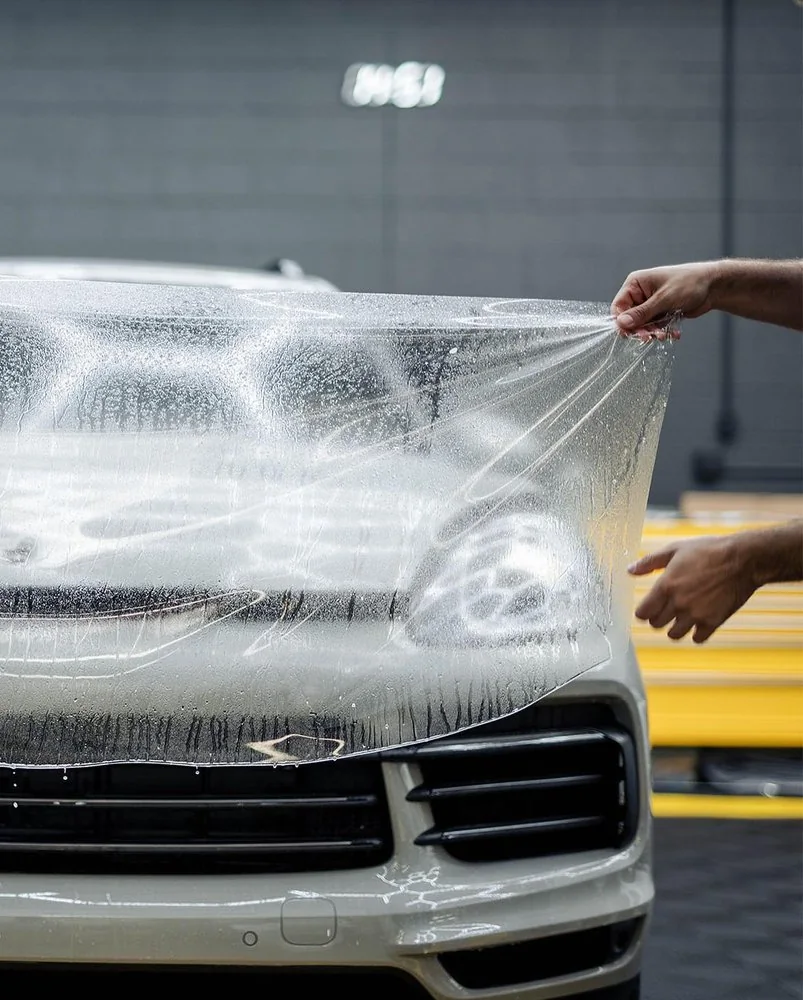
Window tint covers side and rear glass. The windshield is a different job. Front glass already blocks most UVA, which is why the JAMA study measured a 96% average, but it takes the most abuse from rock chips and pitting. If your concern is the front glass itself, a clear protective layer is the better tool.

Our windshield protection film is published at $300 to $700 as a one-off service. It is designed to absorb the small impacts that lead to chips and cracks, which matters most on cars where replacement glass is expensive or has to be calibrated. For paint, the same thinking applies: our guides on PPF coverage options and luxury car protection options that make sense explain how to build a protection plan in the right order, and ceramic coating vs. wax covers the paint-side comparison.
Choosing the right film for your car
Use these quick rules.
- You mainly want UV protection and a factory look: a light or clear film with a published UV rejection of 99% or more.
- You want heat control without a dark car: a nano-ceramic film in a light-to-medium shade. Compare TSER and IR numbers on the data sheet, remembering that IR methods vary.
- You want privacy in the rear: choose a darker shade for rear glass only, within California rules, and keep the front lighter.
- Your car has fobs, toll tags or heavy electronics: avoid metallized films.
- You plan to keep the car long term: pay for a film with a strong warranty and an installer who stands behind the work.
- Your car is stored most of the year: UV still reaches the interior through the glass of a parked car, so film is useful even for low-mileage collectors’ cars. If you need a place to keep it, see our exotic and classic car storage.
Window tint at Artec in Belmont
We install window tint at our Belmont, CA shop for exotic, classic, luxury and European cars, alongside our other protection services. Tint pricing depends on the vehicle, the glass, the film and the shade, so we quote it after we see the car. We do not publish a tint price, and we will not guess one here.
What you can expect from us:
- A recommendation based on your goal (UV, heat, privacy or all three), not on the most expensive film.
- A transparent estimate and clear communication before work starts.
- Photo records of the work.
- Tint, paint protection film, ceramic coating, detailing and repair handled by one team under one roof.
See our window tint page for details, or contact us through our site to book a consultation.

If you are protecting the whole car, our paint protection film packages are published at $1,200 to $1,800 for partial front and $2,200 to $3,000 for full front, and our detailing packages start at $475 (Bronze), $800 (Silver) and $1,300 (Gold). For the finish itself, see how ceramic coating helps paint keep its gloss.
FAQ
Does car tint block UV rays?
Yes. Quality automotive film can block more than 99% of UVA and UVB rays, according to the Skin Cancer Foundation. This applies to clear film as well as tinted film. Always confirm the figure on the specific film’s data sheet, and keep the windows closed for the protection to work.
Is dark tint better for UV protection?
No. Darker tints do not protect against UV any better than clear UV-protective film. Darkness changes how much visible light, glare and heat get through. It does not change UV blocking in a meaningful way, so pick the shade for privacy and style, and pick the film for its tested UV and heat data.
What is better for heat, ceramic or carbon tint?
Ceramic films typically give stronger heat rejection than simple dyed films, and they can do it in a lighter shade. Carbon films offer a dark, matte look with moderate performance. Compare the total solar energy rejected on each data sheet, since infrared test methods are not standardized across manufacturers.
How long does window film last?
That depends on the film and the installation. Many major automotive films carry limited lifetime warranties, though terms differ and are often non-transferable, so read the coverage for fading, bubbling and peeling before you buy. A careful installation and proper curing do as much for lifespan as the film.
Can I tint my front windows in California?
Federal rules set a 70% light transmittance floor for windows requisite for driving on new vehicles, and owners may tint subject to state law. California sets its own limits by window position, so confirm the current Vehicle Code requirements with your installer before choosing a front-window shade.
Sources
- UV Window Film & Tint, Skin Cancer Foundation
- Ask the Expert: Car Window Tint for UV Protection, Skin Cancer Foundation
- Assessment of Levels of Ultraviolet A Light Protection in Automobile Windows, JAMA Ophthalmology
- Fact sheet: Tinted windows, Cancer Council Australia
- Automotive Education Guide, International Window Film Association
- Automotive Window Films Application, EWFA technical paper
- Crystalline Series technical data sheet, 3M
- Automotive Window Film Solutions Guide, Avery Dennison
- FMVSS No. 205 interpretation, NHTSA
- OEM vs aftermarket windshields, SuperCars.Parts