
Tesla Maintenance Schedule for Owners: 4 Year Brake Check, What to DIY

Tesla vehicles don’t run on a fixed annual service plan. Instead, Tesla recommends maintenance on an “as-needed” basis built around a short list of safety-critical items: rotate the tires every 6,250 miles, test the brake fluid every four years, swap the cabin air filter on a set cycle, replace wipers yearly, and clean and lubricate the brake calipers annually. Track all of it through the touchscreen’s Maintenance Summary, and use mobile service for smaller jobs when your schedule allows.
TL;DR:
- Tesla recommends tire rotations every 6,250 miles because EVs experience faster and uneven tire wear due to higher torque and weight.
- Brake fluid should be tested every four years to prevent moisture absorption that can compromise braking reliability.
- The brake calipers need lubrication annually or every 12,500 miles in salted road regions, as regenerative braking reduces physical brake use and increases corrosion risk.
- Owners can perform simple tasks like replacing wiper blades and topping up washer fluid, but brake fluid, A/C, and high-voltage system maintenance should be handled by professionals.
- Most mobile Tesla services cover routine items, but complex repairs require a service center visit, with costs typically staying under $50 for basic jobs like tire rotation.
Table of Contents
- How Often Should You Service a Tesla?
- Owner Checks: Daily, Weekly, and Monthly Routines
- Which Tesla Maintenance Tasks Can You Do Yourself?
- Mobile Service or Service Center: How to Decide
- What Does Tesla Maintenance Actually Cost?
- When a Specialist Shop Matters for Tesla Owners
- Our Take: Track the Right Items, Skip the Rest
- Book Tesla Service With Artec Automotive
- Sources
- FAQ
How Often Should You Service a Tesla?
Owners coming from gas-powered cars often expect an oil change light and a 5,000-mile checkup ritual. Tesla doesn’t work that way. There’s no engine oil, no spark plugs, no transmission fluid to burn through. What remains is a shorter, more specific list of tasks tied to wear and safety rather than a calendar date.
Here’s the full checklist, based on Tesla’s official maintenance guidance:
- Tire rotation — every 6,250 miles (10,000 km), or sooner if tread depth differs by 2/32 inch or more between tires. EVs put more torque to the wheels at low speeds and carry more weight than comparable gas cars, so tires tend to wear faster and unevenly, especially on the rear.
- Brake fluid health check — every 4 years, regardless of mileage. Brake fluid absorbs moisture over time, which lowers its boiling point and can lead to spongy or unreliable braking. If the check shows contamination, the fluid needs replacing right away, not at the next scheduled visit.
- Cabin air filter — every 2 years on Model 3 and Model Y, every 3 years on Model S and Model X. A HEPA-equipped cabin (available on some trims) may hold up longer, but musty smells or weak airflow from the vents are signs it’s due regardless of the calendar.
- Wiper blades — roughly once a year. Cracked or streaking blades are the obvious trigger, but don’t wait for a windshield you can barely see through in a downpour to make the call.
- Brake caliper cleaning and lubrication — every 12 months, or every 12,500 miles if you drive on salted roads. This one surprises a lot of new owners. Tesla’s regenerative braking means the physical brakes get used far less than on a traditional car, and that light use lets calipers seize from corrosion rather than wear out. The independent Tesla maintenance guide from TSLNA backs this up as one of the most overlooked items on the list.
- Washer fluid — top up as needed, and switch to a freeze-rated formula before winter to prevent a cracked reservoir.
- A/C desiccant bag — replaced periodically during A/C service on some models; your service center will flag this if it’s due.
None of these are annual full-service rituals. They’re targeted jobs, each with its own trigger.
Owner Checks: Daily, Weekly, and Monthly Routines
You don’t need a wrench for most of this. A few short habits catch small problems before they become expensive ones.
- Daily or every few days: Glance at tire condition and check the cameras and sensors for dirt or obstruction. A smudged camera lens can trigger driver-assist warnings that have nothing to do with a mechanical fault.
- Weekly: Wipe down camera lenses and sensor covers, particularly after rain, snow, or a dusty drive. Tesla’s Service Manual calls this out specifically for Model Y and Model 3.
- Monthly: Check tire pressure (cold, ideally) and top off washer fluid.
- As needed: Open Controls > Service > Maintenance on the touchscreen to view your Maintenance Summary, which timestamps every completed job. You can reset an item there once it’s done, and service history persists through a factory reset, so the record stays intact even if you sell the car or hand it off for warranty work.
Any warning that mentions braking, steering, or a loss of power should move you from “routine check” to “book service now.”
Which Tesla Maintenance Tasks Can You Do Yourself?
Some of the checklist above is genuinely simple. Others aren’t, and the difference matters more than most owners realize.
Safe DIY territory:
- Topping off washer fluid (use a freeze-protected formula in cold climates)
- Replacing wiper blades
- Swapping the cabin air filter, which usually takes a screwdriver and ten minutes
- Visual tire and tread checks, plus pressure monitoring
- Wiping down cameras and sensors
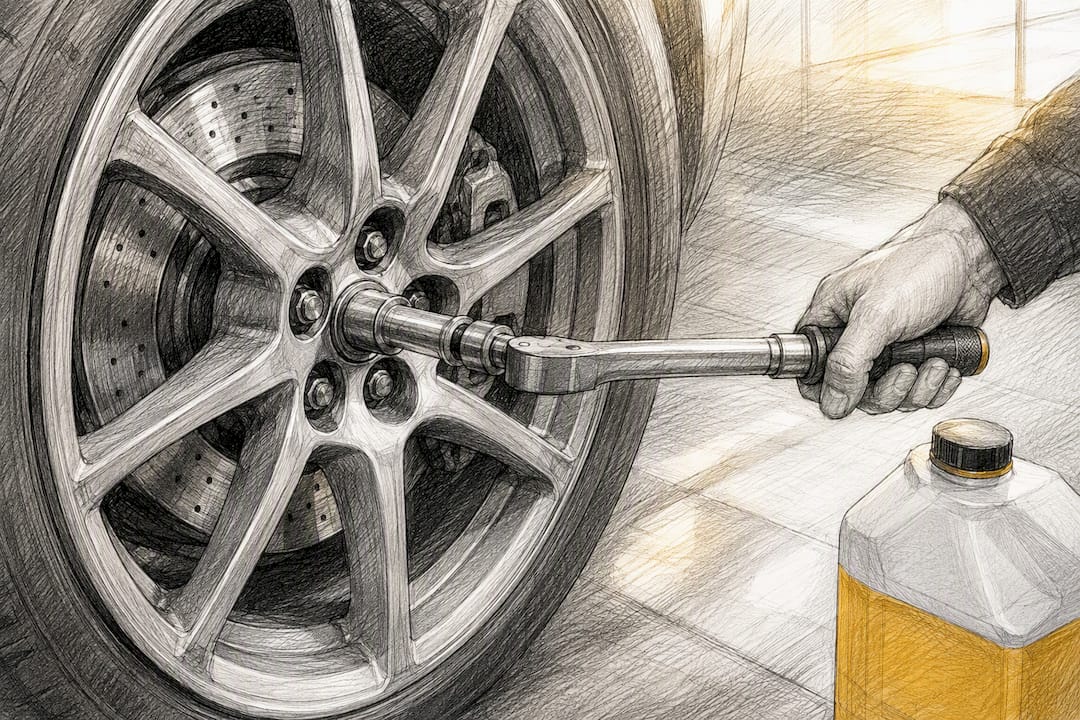
Basic tools cover nearly all of it: a torque wrench, a trim panel tool for filter access, and a tire pressure gauge. Keep gloves and eye protection on hand for anything involving fluids.
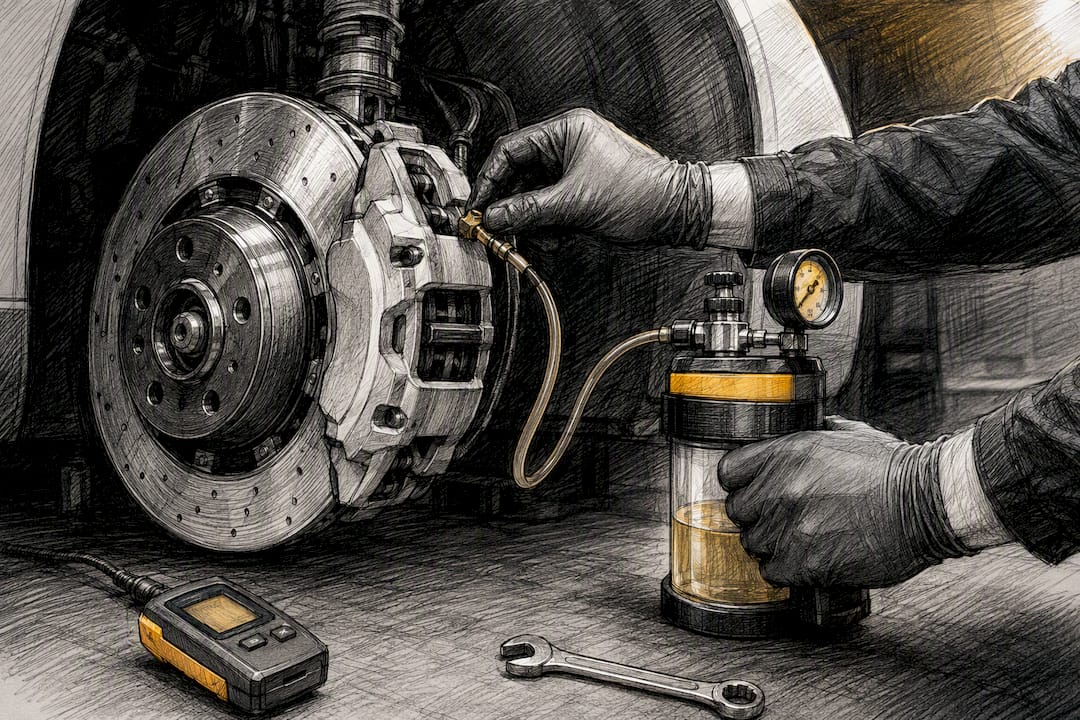
Leave this to a technician: brake fluid service, A/C system work, and anything touching the high-voltage battery or drive unit. Brake fluid replacement isn’t a simple drain-and-fill. It requires cycling the ABS/ESC pump through a specific procedure and moisture-testing the fluid, and Car Talk’s guidance on Tesla maintenance notes that DIY attempts without the right equipment risk trapping air in the brake lines, which is a safety issue, not a convenience one.
Pro Tip: Before winter hits, swap in freeze-protected washer fluid and double-check wheel bolt torque specs if you’ve recently rotated tires yourself. Under-torqued lug nuts and a frozen washer reservoir are two of the most common self-inflicted headaches owners report every cold season.
Mobile Service or Service Center: How to Decide
Tesla’s mobile technicians handle plenty of the checklist without you ever leaving your driveway: wiper replacement, cabin filter swaps, tire rotations in some regions, and basic diagnostics. Anything requiring a lift, specialized brake fluid equipment, alignment machines, or drivetrain teardown needs a service center.
When booking through the Tesla app, describe symptoms in as much detail as possible. Tesla notes that specifics, when a noise happens, what triggers a warning light, whether it’s speed-dependent, help technicians diagnose faster and can shorten your appointment.
- Mobile-friendly: wipers, cabin filter, washer fluid, minor diagnostics, some tire rotations
- Service-center-only: brake fluid replacement, alignment, suspension work, HV battery service
- Red flags needing urgent attention: grinding or pulsing brakes, steering pull, any warning tied to braking or power delivery
Drop off with a charged battery and a clear description logged in the app ahead of time; it speeds up intake.
What Does Tesla Maintenance Actually Cost?
Rough US ranges for common jobs, per the TSLNA cost breakdown: tire rotation often runs under $50, cabin filter replacement is a modest parts-and-labor charge, brake fluid service costs more given the equipment involved, and wiper blades are inexpensive enough that many owners buy them online and self-install.
- Tire rotation: budget-friendly, especially if bundled with a filter change
- Cabin air filter: low cost, quick turnaround
- Brake fluid health check and replacement: moderate cost when replacement is triggered
- Wipers: cheap parts, free if you install them yourself
On warranty: Tesla’s basic vehicle warranty, battery and drive unit warranty, and body corrosion warranty each carry their own terms and mileage caps that vary by model. The battery and drive unit are covered for 8 years with a model-dependent mileage limit, and real-world degradation tends to be modest. Book in-warranty repairs through Tesla directly to keep the coverage intact.
Driving style changes the math. Towing, mountain driving, or frequent hard acceleration wears brakes and tires faster. Salted winter roads accelerate caliper corrosion, which is why Tesla shortens the caliper service interval to 12,500 miles in those regions specifically.
When a Specialist Shop Matters for Tesla Owners
Most of the checklist above is straightforward. But complex diagnostics, suspension work after an accident, bodywork, or paint and interior preservation on a car you plan to keep for the long haul call for a different level of attention.
A specialist shop typically documents work more thoroughly than a DIY receipt folder ever will, and that record can matter later. Maintenance Summary resets combined with detailed invoices and photos give you real proof of care if you sell the car or need to settle a warranty dispute.
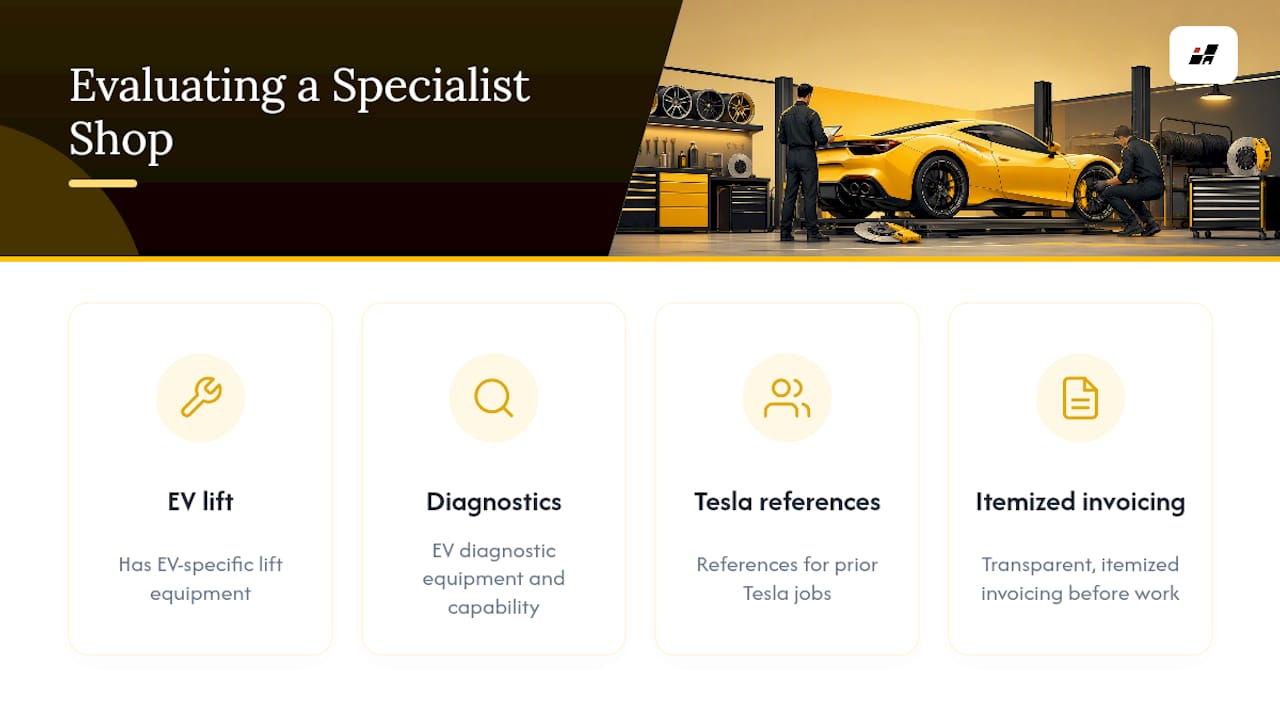
If you’re evaluating an independent shop for Tesla work, check for EV-specific lift and diagnostic equipment, ask for references on prior Tesla jobs, and insist on transparent, itemized invoicing before any work begins. A specialist shop typically documents work more thoroughly than a DIY receipt folder ever will, and that record can matter later.
Our Take: Track the Right Items, Skip the Rest
The biggest mistake we see is owners either ignoring maintenance entirely because “EVs don’t need service,” or overcorrecting with a gas-car mindset and booking unnecessary annual visits. Neither serves you well. The smarter approach is narrow and specific: watch tire wear, test brake fluid on schedule, keep calipers lubricated if you’re anywhere near salted roads, and let the touchscreen’s Maintenance Summary do the tracking for you.
Set a phone reminder for the four-year brake fluid check and the annual caliper service, since those are the two intervals owners forget most often. For anything beyond consumables, bring in a specialist who documents the work properly.
— Artec
Book Tesla Service With Artec Automotive
Specialist shops offer Tesla owners an alternative to generic quick-lube chains, providing EV-trained diagnostics, suspension and bodywork capability, as well as detailing and paint protection, backed by thorough documentation.

Beyond the checklist items above, specialist shops handle jobs that call for a lift and real expertise: brake fluid service, suspension inspection after rough roads or towing, and bodywork or paint correction if winter grit or road debris has taken a toll. Owners in salt-exposed climates should also look into salt protection strategies to slow caliper corrosion between services. When you book, expect a full inspection, a clear written estimate before any work starts, and documented service records you can hand off at resale. Visit the Artec Automotive service page to schedule an inspection or get a quote for your Tesla.
Sources
Verify model-specific intervals directly through Tesla Support and the Tesla Service Manual, and always cross-check your own touchscreen Maintenance Summary, since it reflects notes specific to your vehicle.
- Vehicle maintenance | Tesla Support
- Maintenance Service Intervals — Tesla Service (Model Y DIY)
- Tesla Maintenance & Service Guide 2026: Schedules, Costs & Warranty - Tesla North America Guide
- Car Talk — Tesla maintenance cost and DIY guidance
FAQ
How Often Does a Tesla Need Maintenance?
Tesla doesn’t schedule annual full services. Instead, follow item-specific intervals: tire rotation every 6,250 miles, brake fluid checks every 4 years, cabin filter replacement every 2 to 3 years, wipers yearly, and caliper lubrication annually.
Why Are So Many People Getting Rid of Their Teslas?
Maintenance isn’t typically the driving factor; owner surveys and resale trends point more toward pricing changes, styling preferences, and charging infrastructure than to service costs, which tend to run lower than for comparable gas vehicles.
Can I Do Tesla Maintenance Myself?
Yes, for consumables like wipers, washer fluid, and cabin filters. Brake fluid replacement and anything touching the high-voltage system need specialized tools and are best left to a technician or a specialist shop like Artec Automotive.
Are Teslas Really Maintenance Free?
No. Batteries and drive units require little upkeep, but tires, brake fluid, cabin filters, wipers, and calipers still need attention on Tesla’s recommended schedule, just less often than on a traditional combustion vehicle.