
Porsche Performance Tuning: What Works and What to Know

Good Porsche tuning starts with a goal, not a horsepower number. Decide how you drive the car (street, canyon roads, track days), then choose a matched set of upgrades: engine calibration, intake and exhaust, brakes, suspension and alignment. Have them installed and verified by a shop that knows your platform. In the US, every engine change also has to respect emissions law, and in California that matters more than anywhere else.
This guide covers what tuning changes, which power upgrades are common, the legal and warranty questions to settle first, and a short section on Tesla suspension modifications for readers who arrived with that question.
TL;DR
- Tuning changes throttle response, grip, braking, ride and sound, not only peak power. Define your use first, then buy parts that work together.
- A calibration (ECU tune) is only as good as the supporting hardware, fuel, oil condition and the tuner’s testing. Dyno-backed, car-specific tuning beats a generic file.
- The Clean Air Act prohibits tampering with emissions controls, and EPA treats products that defeat them as illegal. Street cars in California need parts that are legal for road use.
- Brakes, suspension and alignment usually deliver more usable speed than adding power alone, especially for track days.
- Tesla owners can change ride and handling with suspension upgrades, and an alignment after installation is part of the job.
Table of Contents
- What Porsche performance tuning actually changes
- Match the upgrade path to how you drive
- Common Porsche power upgrades
- Emissions law: what US Porsche owners must check
- Warranty and reliability
- Buying a tuned Porsche
- Tesla suspension modifications and performance suspension
- Our perspective
- Work with a Porsche specialist in Belmont
- FAQ
- Sources
What Porsche performance tuning actually changes
People search for “power upgrades,” but a well-tuned Porsche feels different in more ways than one. A dealer guide on performance upgrades describes tuning as affecting throttle response, acceleration feel, grip, braking, ride firmness and sound, and recommends defining your goal and driving use before buying anything. That matches how we approach every build.
Think of five areas:
- Engine calibration: fueling, boost (on turbocharged cars), ignition timing and throttle mapping.
- Air and exhaust: intake, downpipes, mufflers and valves that change flow and sound.
- Brakes and wheels: pads, fluid, rotors, lines and wheel and tire choices.
- Suspension and alignment: springs, dampers, sway bars, ride height and geometry.
- Cooling and lubrication: oil, coolers, and anything that keeps temperatures stable under load.
A car that gains power but still has tired dampers, old brake fluid and a factory alignment will not feel faster in the places you drive. Balance matters more than any single part.
Match the upgrade path to how you drive
Street and canyon driver
You want crisper response and a better sound without losing daily comfort. A conservative calibration, a quality exhaust that stays legal, fresh fluids and a performance alignment usually do more for the drive than big hardware. Our guide to performance upgrades that improve the drive walks through the order we recommend.
Track day driver
Heat is the enemy. Prioritize brake pads and fluid rated for repeated hard stops, tires, cooling, and a suspension setup that stays consistent lap after lap. Corner balancing is worth understanding if you run a dedicated car, and we explain it in our vehicle corner balancing guide for track cars. Our performance brake upgrades guide covers pad compounds, rotors and fluid in more detail. Racers who need roll cages or custom chassis work can see what our shop builds on the roll cage and fabrication page.

Collector with a low-mileage car
If the car mostly sits, keep it close to original and favor reversible changes. Service condition matters most: fluids, battery health, tires and the transmission. For PDK cars, our PDK service interval guide explains what to follow and why.
Common Porsche power upgrades
Dealer parts guides list a similar menu: intakes, ECU tuning, exhausts, intercoolers, performance kits, turbocharger or supercharger upgrades, oil-catch and sump systems, lightweight batteries and forged internals. Not every item belongs on every car. Here is how we sort them.
| Upgrade | What it changes | Best for | Watch for |
|---|---|---|---|
| ECU calibration | Throttle response, boost, fueling, timing | Turbocharged and naturally aspirated street cars | Emissions legality, fuel quality, tuner testing |
| Intake | Airflow, induction sound | Cars where sound and response are the goal | Fitment for your exact model year |
| Exhaust | Flow, sound, weight | Street and track | State sound and emissions rules |
| Intercooler or cooling | Lower intake and oil temperatures | Track use, hot climates | Needs supporting calibration |
| Brakes | Fade resistance, pedal feel | Track and spirited driving | Matching pads to rotors and use |
| Suspension and alignment | Grip, stability, ride | Every build | Setup must match tires and use |
| Forged internals, turbo upgrades | Large power increases | Dedicated builds | Cost, drivability and reliability |
Intake and induction
An intake is often the first hardware change because it is straightforward and changes how the car sounds under throttle. Parts are model specific. For example, a carbon Porsche 997 Turbo air intake exists for 2006 to 2009 cars, which shows how narrowly fitment is defined. Confirm the exact generation and engine before you order anything.
Calibration
A calibration rewrites how the engine management behaves. On turbocharged Porsches it can change boost and timing, and the results depend on fuel quality, the condition of the car and the thoroughness of the tune. We cover the two main approaches in dyno tune vs canned tune: a car-specific tune built and checked on a dyno, versus a pre-written file loaded as is.
When you evaluate a tuner, ask how they establish safe limits, what they measure (air-fuel ratio, boost, ignition timing) and what support they offer after the car leaves. A shop that explains its method clearly and stands behind the result is the one to trust. Higher combustion pressure also stresses oil, so check oil condition and use the fuel grade the tune requires.

Exhaust
Exhaust choice is where sound, legality and daily comfort meet. Valved systems let you keep a quiet cruise and open the sound when you want it. In California the rules are specific, and our article on whether aftermarket exhausts are California legal explains what to check before you buy.
OEM or aftermarket parts
Parts quality varies widely. Our comparison of OEM vs aftermarket parts for enthusiasts explains where aftermarket parts make sense and where the original part is the right call.
Emissions law: what US Porsche owners must check
This is the part many tuning pages skip. EPA’s tampering policy states that Clean Air Act section 203(a)(3) prohibits tampering with emissions controls and making, selling or installing products whose principal effect is to bypass, defeat or render them inoperative, and that this applies for the vehicle’s entire life. The same document notes that ECU tuners can be illegal defeat devices.
The practical result for you:
- Keep catalytic converters, oxygen sensors and other emissions hardware in place and functioning on a street car.
- Ask any tuner whether their calibration is approved for road use where you live.
- Understand that the policy treats competition-only vehicles differently, but it does not remove separate state and local requirements for road use.
Enforcement is real. In a September 2024 settlement, EPA reported a $2,914,000 civil penalty against COBB, and the company could keep selling tunes only after engineering evaluation, a demonstration that emissions stay within allowable levels and CARB Executive Order approval. For California drivers, that CARB step is the one to look for. If a part or tune lacks it, plan to use it only on a car that is not driven on public roads, and talk to us before you buy.

Warranty and reliability
If your Porsche is still under factory warranty, read the warranty booklet and ask your dealer in writing how a calibration change would be treated. Many of the cars we see are out of warranty, which gives owners more freedom, but reliability still depends on the details. Use the fuel grade the tune calls for, keep oil fresh, and shorten service intervals if you track the car.
For Bay Area owners avoiding dealer pricing, an independent specialist can service and upgrade the car while keeping detailed records. We provide photo documentation of our work and transparent estimates, which also helps if you sell the car later.
Buying a tuned Porsche
A modified car deserves a closer inspection. Look for the calibration source, receipts for hardware, evidence of emissions equipment, and signs of track use such as brake wear and tire condition. Our guide to a Porsche pre-purchase inspection lists what we check before a buyer commits.
Tesla suspension modifications and performance suspension
Some readers who land here own a Tesla, so here is a short guide. Suspension is the most meaningful mechanical change on most Teslas, because power is already abundant and ride and body control are what owners want to improve.
Know what the factory already does
The 2024 Model 3 Highland uses softer springs and frequency-response dampers that change damping force depending on suspension inputs, softer for large impacts and stiffer at higher frequencies to reduce jiggling over expansion joints. Before modifying, know which generation and trim you have, because the baseline differs.
Common paths
- Factory-part retrofit: InsideEVs reported that for roughly $600 in Tesla parts, owners could fit Highland-style front shocks and springs and rear shocks to older Model 3s, with an alignment needed afterward.
- Coilovers: adjustable ride height and damping suit owners who want a lower stance or firmer control.
- Sway bars and bushings: reduce body roll and sharpen response without changing ride height much.
Selecting and installing
Choose based on use. Daily commuters should favor comfort-oriented damping and modest changes. Track-focused owners need firmer control, tires to match and brake upgrades. Whatever you choose, plan on a proper alignment afterward, and keep the settings on record. Lowering a car changes geometry and can affect tire wear.
Our perspective
Most of the Porsches we see are not underpowered. They are out of balance. The owner added an exhaust or a tune, but the dampers are tired, the brake fluid is old and the alignment is wrong for the tires.
We start every performance project by asking how the car will be driven. A weekend canyon car and a track car need different answers, and a collector car may need almost nothing. We recommend only what fits that use, and we say so when a service or inspection should come before any modification.
Because our shop handles repair, fabrication, brakes, suspension and protection under one roof, we can plan the whole car instead of one part. Our certified technicians use advanced diagnostics, document work with photos, and give clear estimates so you know what is being done and why.
Legal compliance is part of the build. We help California owners choose parts and calibrations suited to road use, and we are direct about what belongs on a track-only car.
Artec
Work with a Porsche specialist in Belmont
Artec Automotive has served exotic, classic and European owners since 2001. Our Porsche repair and service page outlines what we handle, from routine maintenance and diagnostics to performance upgrades and track preparation. For planning a build, start with our custom auto modification services.

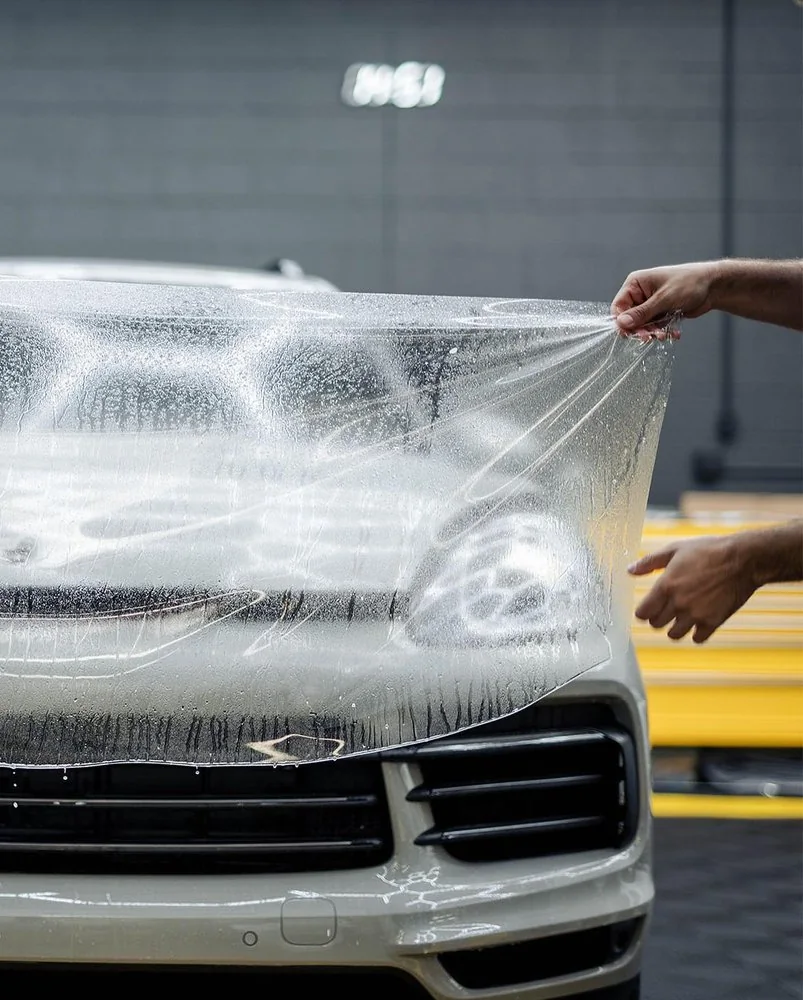
If you want to protect the car after the work is done, we also offer paint protection film, ceramic coating and detailing. Bring your goals and your car to our Belmont shop and we will give you an honest plan with a transparent estimate. You can reach us through artecautomotive.com.
FAQ
Is Porsche ECU tuning legal in the US?
It depends on the product and how it affects emissions. EPA’s policy prohibits products whose principal effect is to defeat emissions controls, and says ECU tuners might be illegal defeat devices. For road use, look for calibrations with the required approvals, such as CARB approval in California.
Will tuning my Porsche void the warranty?
Check your warranty terms and ask your dealer in writing. Aftermarket parts do not automatically void coverage everywhere, but a claim can be denied if a modification caused the failure. A calibration on a car still under warranty deserves that conversation first.
What should I upgrade first on a Porsche?
Start with the car’s condition: fluids, brakes, tires and alignment. Then match upgrades to your driving, such as brakes and cooling for track days, or intake, exhaust and calibration for a street car. Adding power before the chassis is ready rarely improves the drive.
Do Tesla suspension upgrades need an alignment?
Yes. Changing springs, shocks or ride height alters geometry, so an alignment after installation is part of the job. It protects tire life and ensures the car handles as intended.
Sources
- EPA Tampering Policy: Enforcement Policy on Vehicle and Engine Tampering
- EPA: COBB Tuning Products, LLC Clean Air Act Settlement
- Porsche West Palm Beach: The Best Porsche Performance Upgrades
- Porsche Ann Arbor: Porsche Performance Upgrades, Parts and Tuning Guide
- MotorTrend: 2024 Tesla Model 3 Highland Deep Dive
- InsideEVs: Fixing the Old Tesla Model 3’s Biggest Flaw
- Fabspeed Carbon Fiber Competition Air Intake for Porsche 997 Turbo