
A fast car that cannot shed speed with the same confidence it gains it is only half finished. The right performance brake upgrades do more than reduce stopping distances in a single dramatic stop. They create a firmer, more predictable pedal, preserve control when temperatures rise, and let the driver use the vehicle’s capability with greater precision on the street, canyon road, or track.
For premium European, exotic, and high-performance vehicles, braking is an engineered system. A meaningful upgrade starts by identifying where the factory system is reaching its limit, then specifying components that improve that exact constraint without compromising daily usability, safety systems, or the character that makes the vehicle special.
What Performance Brake Upgrades Actually Change
Brake performance is often reduced to one question: How quickly can the car stop? That matters, but it is not the full story. At the limit, tires and road surface have enormous influence on a vehicle’s ultimate stopping distance. A larger brake kit cannot overcome a tire that has already run out of grip.
What upgraded brakes most consistently improve is repeatability. They manage heat more effectively, resist fade during repeated high-energy stops, and maintain a stable pedal when factory pads and fluid would begin to lose composure. This becomes especially relevant in the Bay Area, where a spirited drive can move quickly from highway speeds to steep, technical descents.
A properly matched system can also improve modulation. Rather than feeling abrupt or vague near the threshold, the pedal communicates what the front tires are doing. That feedback is valuable whether the car is approaching a braking zone at a track day or navigating a crowded city street in changing weather.
Start With the Real Limitation
The best brake package is not always the largest or most expensive option. A vehicle used primarily for commuting and weekend drives has different needs than a Porsche, BMW M car, AMG, Audi RS model, or McLaren that sees regular circuit use. The correct recommendation depends on vehicle weight, power, wheel fitment, tire choice, driving environment, and how often the brakes are exposed to sustained heat.
For many street-driven performance cars, the factory calipers are already capable. The weak point may be the pad compound, brake fluid, or rotor design rather than caliper clamping force. In that case, a high-quality street-performance pad, fresh high-temperature fluid, and properly selected rotors can deliver a substantial improvement while retaining low noise, controlled dust, and cold-stop performance.
For harder canyon use or occasional track events, a more temperature-tolerant pad compound and fluid with a higher dry boiling point are often the foundation. A brake fluid flush is not a cosmetic add-on. Fluid absorbs moisture over time, lowering its boiling point and increasing the chance of a soft pedal under demanding conditions. Fresh, correctly bled fluid restores a critical part of the system’s confidence.
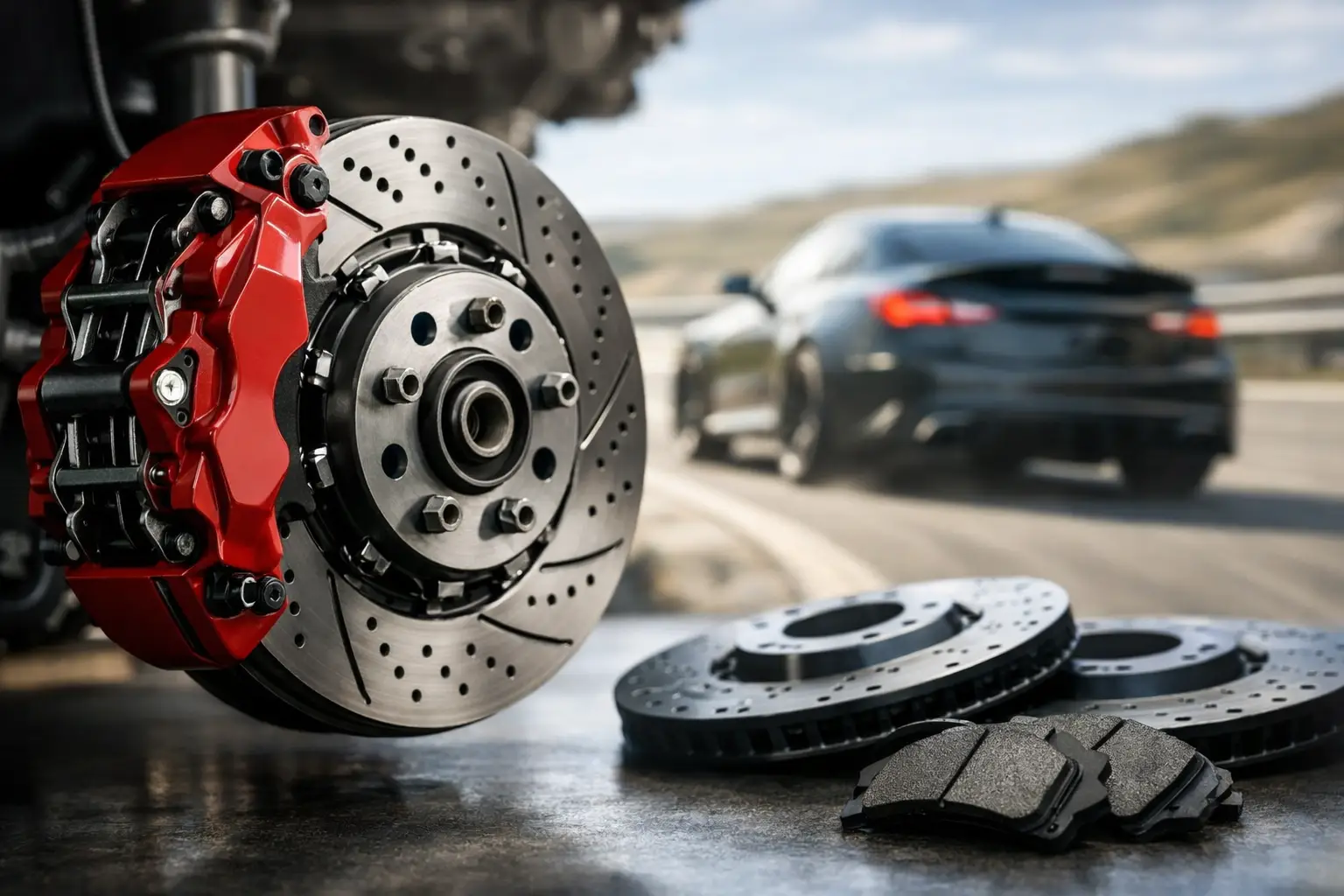
Dedicated track vehicles and high-output builds may justify larger rotors, multi-piston calipers, improved cooling, and purpose-built pad compounds. These systems increase thermal mass and heat rejection while giving the pad a more stable working environment. They also require a complete fitment and balance assessment, not a catalog-based parts order.
Pads: The Character of the Pedal
Brake pads have an outsized effect on how a vehicle feels. Their friction material determines initial bite, hot performance, pedal modulation, noise, dust, rotor wear, and behavior at low temperatures. There is no single compound that is ideal for every owner.
An aggressive track pad may retain excellent friction after repeated high-speed stops, but it can be noisy, dusty, and less refined during cold street driving. It may also accelerate rotor wear. Conversely, a quiet low-dust street pad can be a compelling choice for a luxury daily driver, but it may not tolerate repeated track braking without fade.
The goal is not to make every car feel like a race car. It is to select a pad that supports the owner’s real driving pattern while preserving the premium ownership experience.
Rotors: More Than a Visual Upgrade
Rotor selection deserves the same discipline. Two-piece floating rotors can reduce unsprung and rotating mass while allowing the iron friction ring to expand more freely under heat. That can improve thermal stability and make replacement more efficient when the rings wear out. For high-performance applications, the weight savings and heat-management advantages can be meaningful.
Slotted rotors may help maintain a clean pad surface and provide visual definition without the structural concerns associated with poorly executed drilled designs. Quality matters here. Rotor metallurgy, vane design, machining accuracy, and hub construction all influence durability and performance.
Cross-drilled rotors remain appropriate on many factory applications, particularly when engineered as part of the original system. But an aftermarket drilled rotor is not automatically an upgrade. On a vehicle subjected to serious thermal cycling, crack resistance and effective cooling should take priority over appearance.
Calipers and Big Brake Kits
A properly engineered big brake kit is about more than a larger caliper behind the wheel. It typically adds greater rotor diameter and thickness, improved pad volume, more thermal capacity, and a caliper designed for consistent pressure distribution. The result can be stronger resistance to fade and more controlled braking under repeated use.
However, bigger is not always better. Caliper piston sizing must work with the master cylinder, brake booster, ABS calibration, and front-to-rear balance. An incorrectly configured kit can alter pedal travel or shift brake bias in a way that reduces confidence at the limit. Wheel clearance, spoke profile, offset, and suspension movement must also be verified before installation.
For vehicles with factory carbon-ceramic brakes, the conversation is even more specific. These systems offer low weight and exceptional high-temperature capability, but replacement costs are significant. The right path may involve preserving the original system for road use, choosing compatible consumables, or building a dedicated track-wheel-and-brake strategy depending on the vehicle and the owner’s goals.
Brake Cooling and Supporting Hardware Matter
Heat is the central challenge in performance braking. Even premium pads and rotors can be overwhelmed if cooling airflow is insufficient. Ducting, air guides, heat shields, and correctly routed brake cooling can make a major difference on track-oriented builds by directing airflow toward the rotor’s internal vanes and reducing peak operating temperatures.
Stainless-steel brake lines are another commonly considered upgrade. On an older vehicle with aging rubber hoses, quality lines can improve pedal consistency and durability. On a newer car, the difference may be more subtle than marketing suggests. They should be installed with proper routing, secure mounting, and a complete system inspection rather than treated as a standalone solution.
Tires, alignment, suspension condition, and wheel choice also shape braking performance. High-grip tires generate the traction that turns brake torque into deceleration. A well-considered alignment helps the contact patch work consistently under load. Lightweight wheels can reduce unsprung mass, while a wheel with inadequate caliper clearance can bring an otherwise excellent build to a halt before it begins.
Installation Is Where the System Becomes Real
Premium braking components deserve installation standards that match their engineering. Mounting surfaces must be clean and measured, fasteners torqued correctly, brake lines routed without tension, and the hydraulic system bled thoroughly. Pad bedding is equally important. It establishes an even transfer layer on the rotor surface, which supports consistent friction and helps prevent vibration or uneven deposits.
Electronic parking brakes, brake-by-wire systems, wear sensors, and advanced stability controls make modern vehicles more complex than their predecessors. Service procedures, diagnostic capability, and vehicle-specific calibration matter. A skilled technician evaluates the complete system, including the condition of wheel bearings, caliper hardware, brake cooling components, and existing rotor runout before new parts are installed.
At Artec Automotive, that complete-vehicle perspective is central to building braking systems that perform as intended. A tailored recommendation considers the mechanical objective alongside the wheel design, suspension setup, intended use, and overall finish of the vehicle.
Knowing When an Upgrade Is Worth It
Signs that a brake upgrade may be warranted include fade after repeated hard stops, a soft or inconsistent pedal, frequent track use, increased power output, heavier wheels, or a factory system that is expensive to maintain without meeting the vehicle’s new demands. A driver who simply wants cleaner wheels and a more composed daily-driving experience may benefit most from carefully selected pads and a proper service rather than a full big brake conversion.
The most satisfying brake build is the one you notice at the exact moment you need it, then stop thinking about immediately. It delivers quiet confidence at normal speeds, clear feedback when the road becomes demanding, and the control to enjoy every mile with the vehicle operating at its best.