
Verify a Frame Off Restoration With Photo and Torque Proof
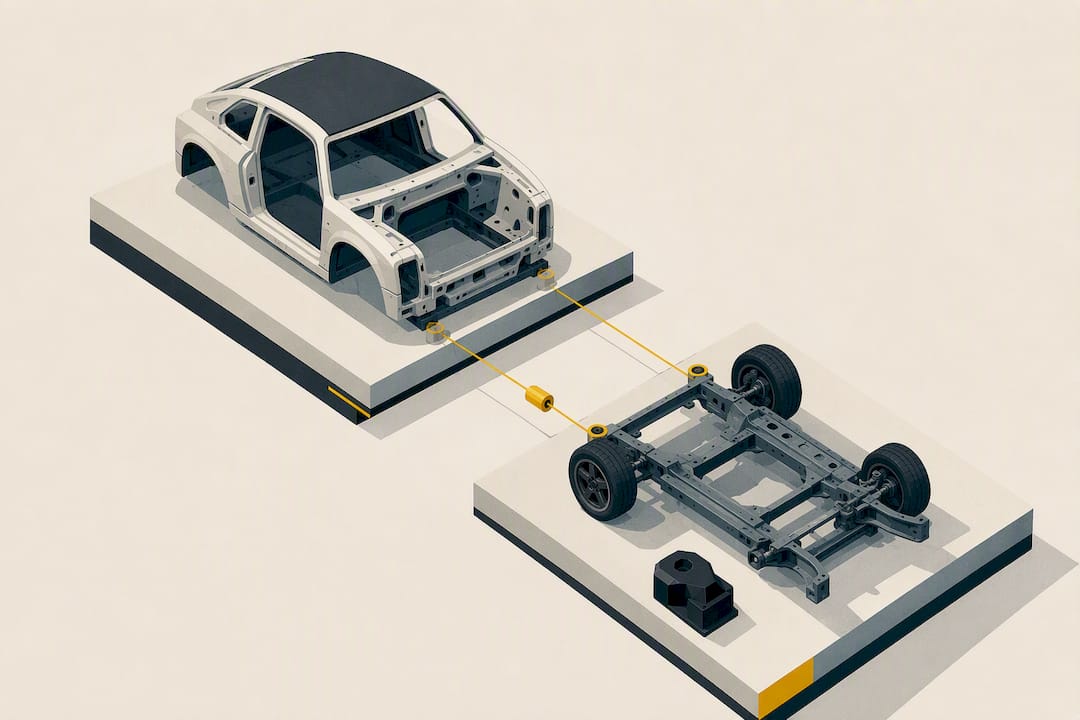
A frame-off restoration means separating the body completely from the chassis so every hidden surface, weld, and wire can be inspected and repaired. The main payoff is total structural access. The main cost is time and money: a frame-off project routinely runs into thousands of labor hours and a budget several times larger than a rolling, frame-on refresh.
TL;DR:
- A frame-off restoration provides full structural access by completely separating the body from the chassis, but it costs significantly more and takes longer than frame-on repairs.
- Rust damage, accident history, or outdoor exposure for decades are strong indicators that a full teardown is necessary to meet high-quality standards.
- Proper assessment involves photographing and measuring key locations before disassembly, and documenting every step to prevent reassembly guesswork.
- Successful projects follow a strict, sequential process of disassembly, body separation, repair, rebuild, and reassembly, with emphasis on documentation and quality welds.
- Hiring a reputable shop requires clear written scope, consistent photo evidence, torque logs, and transparency, especially when considering whether full frame-off work is truly justified.
Table of Contents
- What Is Frame-Off Restoration and When Do You Need It?
- How Do You Assess a Car Before Starting?
- What Are the Steps in a Frame-Off Restoration?
- How Do Shops Repair and Protect the Frame?
- What Should You Budget for Time and Money?
- What Tools and Workspace Do You Actually Need?
- What Mistakes and Red Flags Should You Watch For?
- What Should You Expect From a Professional Restoration Shop?
- What Actually Determines Whether a Frame-Off Is Worth It?
- Thinking About Hiring Out Your Restoration?
- Where to Learn More About Frame-Off Restoration
- Sources
- FAQ
What Is Frame-Off Restoration and When Do You Need It?
A frame-off restoration lifts the entire body off the chassis, exposing the frame rails, floor pans, and every mounting point for inspection and repair. A frame-off restoration, sometimes called a nut-and-bolt restoration, gets its name because virtually every fastener comes apart. Frame-on restoration, by contrast, keeps the body in place and works around it, which is faster and cheaper but leaves rust and wiring behind the firewall largely untouched.
Choose frame-off when:
- The frame shows rust perforation, accident damage, or previous poor repairs
- You’re building toward concours judging, where undercarriage correctness matters
- The car has sat outdoors or in a humid climate for decades
Frame-on or a partial separation, like dropping the bed or front clip, often suffices for a solid driver-quality car with a structurally sound chassis. Frame-off vs. frame-on isn’t always a binary choice. Partial separation can buy meaningful access at a fraction of the cost.
How Do You Assess a Car Before Starting?
Before committing to a full teardown, get the car on a lift and look at the spots that fail first: rail tops under body mounts, crossmembers, cab mounts, and the inner edges of the rockers. Rust here often looks minor from below but hides deeper perforation once you scrape the surface.
Document everything before you touch a bolt:
- Photograph all four corners, the undercarriage, and each mounting point from multiple angles.
- Record measurements at the frame rails and compare them to factory specifications.
- Pull the factory service manual for your model and note torque specs for suspension, body mounts, and drivetrain fasteners.
- Decide your target outcome, preservation, driver, or concours, since that decision drives every budget line after it.
Pro Tip: Photograph the car with a tape measure or reference object in frame before disassembly starts. It sounds basic, but that single habit resolves more “which bracket goes where” arguments six months into a project than any label ever will.
What Are the Steps in a Frame-Off Restoration?
A reliable frame-off restoration process follows a consistent order: assess, plan and budget, disassemble, separate the body, repair the frame, rebuild the systems, restore the body, then reassemble and verify. Skipping steps or working out of sequence is how projects stall for years in a garage corner.
- Disassembly and tagging. Remove interior, glass, trim, and mechanical components as separate systems, not as one giant pile. Label every bag and box with the subsystem, location, and orientation, and photograph each assembly before it comes apart.
- Body separation. Support the body on a rotisserie or sturdy stands, and protect the body mount bushings and cage points during the lift. Rushing this step is how floor pans get bent or rockers get crushed.
- Frame prep. Strip the bare frame to inspect for hairline cracks near mounts and suspension pickup points. Straighten any bent sections before welding, and don’t paint over a crack you haven’t fully traced.
- Systems rebuild. Suspension bushings, ball joints, brake lines, fuel lines, and wiring harnesses typically get replaced outright rather than reused, since the labor to remove them again later dwarfs the parts cost now.
- Body restoration. Media blast the body shell, repair or replace damaged panels, check panel gaps and door alignment, and prep the metal for primer and paint.
- Reassembly and verification. Torque every fastener to factory spec and log the number, check ride height and alignment, pressure test fuel and brake lines for leaks, and road test before calling the car finished.
Common missteps at this stage:
- Welding a patch before confirming the crack doesn’t extend under a mount
- Reusing old rubber bushings to save money, then fighting alignment issues for months
- Skipping a full brake bleed and leak check because “it looked fine”
Pro Tip: Complete one system at a time, brakes, then fuel, then electrical, rather than tearing the whole car down at once. A systems-based sequence keeps you from losing track of parts and prevents the burnout that kills half-finished projects.
How Do Shops Repair and Protect the Frame?
Media blasting and chemical stripping both remove rust and old coatings, but they suit different situations. Media blasting works faster on thick scale and heavy corrosion; chemical stripping reaches into box sections and seams a blast cabinet can’t touch without disassembly.
- Cut-and-weld patching repairs localized rust or damage without replacing the whole rail.
- Full-section replacement is warranted when corrosion has eaten through structural steel over a wide span.
- Weld quality matters as much as the repair itself. Acceptable frame welds show full penetration, clean fusion, and proper backing, not just a bead that looks tidy on the surface.
Once the metal is sound, protective finishes decide how long the repair lasts. Epoxy primer resists moisture and provides a stable base coat. Chassis paint adds a durable topcoat for visible areas. Powder coat offers the longest-lasting protection against stone chips and road grime but costs more and requires the part to be fully disassembled first.
What Should You Budget for Time and Money?
A driver-quality frame-off project commonly takes six months to two years, depending on parts availability and how much work you outsource. Concours-level builds run longer, since panel fit, paint depth, and undercarriage detail all demand extra passes. A driver build skips these.
Cost drivers worth watching:
- Labor hours, especially bodywork, paint, and structural welding
- Sheet metal repair or replacement panels
- Paint and finish quality, from single-stage enamel to multi-stage basecoat/clearcoat
- Parts availability, since rare trim or drivetrain components can stall a project for months
- Outsourced services like machine shop work, upholstery, and chrome plating
Budget in phases rather than committing every dollar up front. Build in a contingency of at least 20% for the rust or damage you won’t find until the body comes off, and prioritize safety-critical systems, brakes, steering, and structural welds, before cosmetic spending.
What Tools and Workspace Do You Actually Need?
A workable home shop needs an engine hoist, a rotisserie or sturdy body stand, a MIG or TIG welder, an air compressor, and enough floor space to keep the body, frame, and parts bins separated without tripping over each other.
Organization matters as much as equipment:
- Keep a running photo log tied to dates and subsystems
- Label every parts bag with location and orientation, not just a part name
- Track inventory digitally so you know what’s ordered, received, and installed
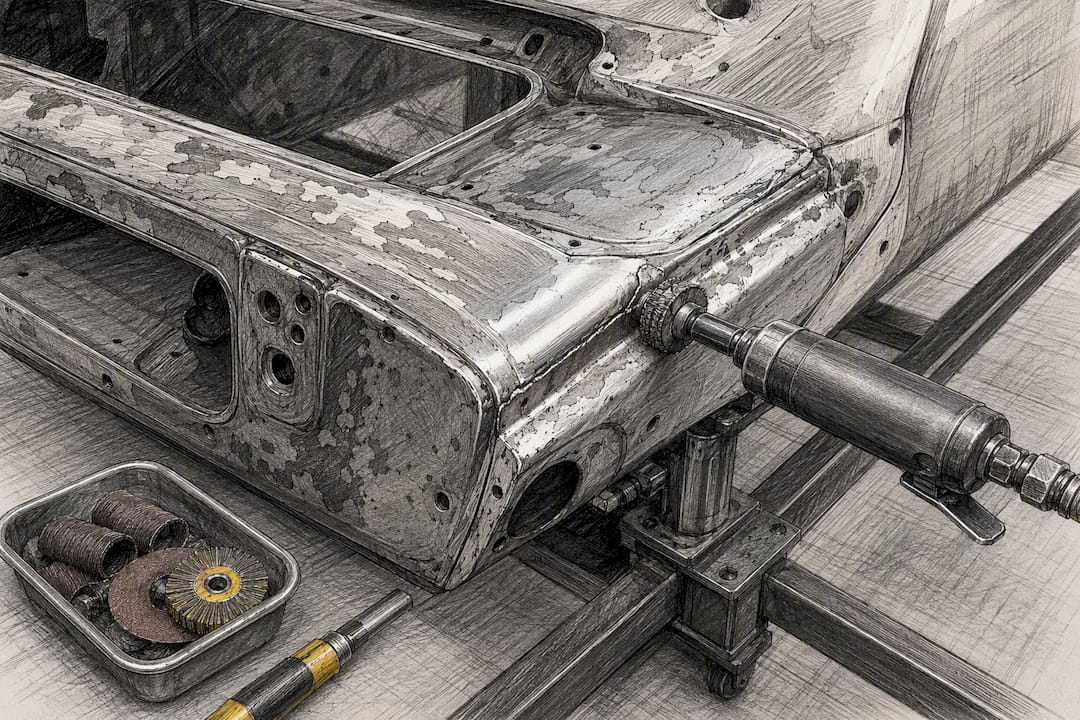
Structural welding, media blasting, and paint are the three tasks most DIYers should outsource. They demand equipment, ventilation, and skill that a home garage rarely matches, and a bad weld on a frame rail is not a mistake you want to discover on the highway.
Pro Tip: Before you outsource paint or blasting, ask to see photos of a shop’s in-process work, not just finished cars. Bare metal and prep work reveal skill level far better than a glossy final shot does.
What Mistakes and Red Flags Should You Watch For?
The most common rookie error is tearing the entire car apart before labeling or photographing anything, which turns reassembly into guesswork months later. Structural red flags include hidden cracks near body mounts, patched rails with inconsistent weld beads, and panel gaps that don’t align evenly side to side.
Before calling a project done, verify:
- Torque records exist for every critical fastener
- An alignment report confirms ride height and geometry
- Fuel and brake lines have been pressure tested for leaks
- Photo documentation covers disassembly, bare frame, and reassembly stages
What Should You Expect From a Professional Restoration Shop?
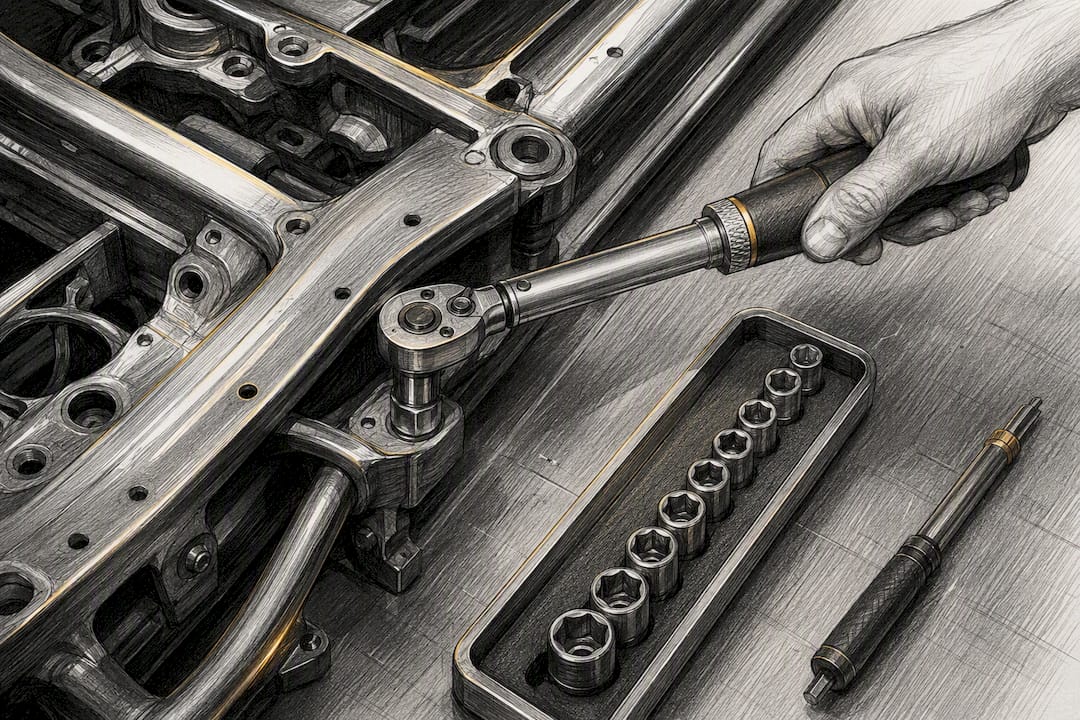
A shop doing genuine frame-off work should hand you photo documentation of body separation, a torque log for reassembly, weld photos for any frame repair, and an alignment report once the car is back on its wheels. If a shop can’t produce that paperwork, the term “frame-off” may be applied loosely to work that never actually separated the body.
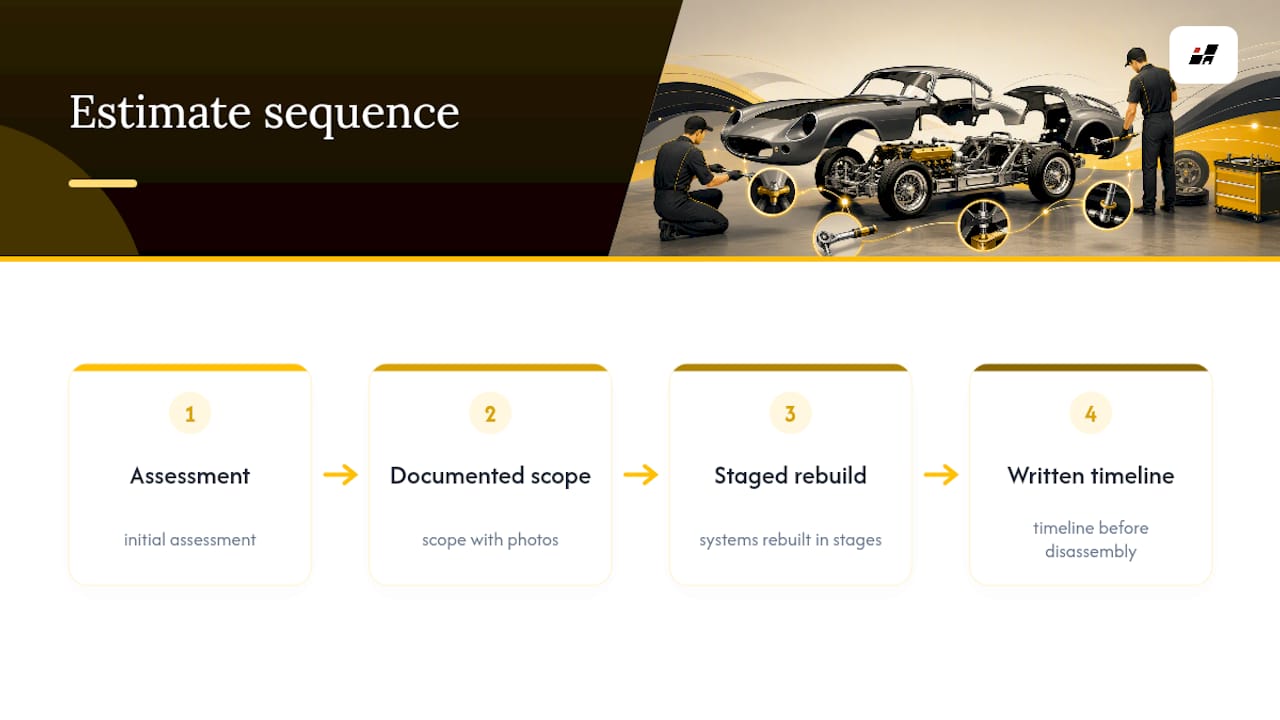
Estimates are built around that same sequencing: assessment, documented scope, staged systems rebuild, and a written timeline before any bolt comes loose. Ask any shop you’re considering for the same level of detail before you sign.
What Actually Determines Whether a Frame-Off Is Worth It?
Most advice on this topic treats frame-off restoration as an all-or-nothing decision, and that framing does owners a disservice. The real question isn’t whether to go frame-off. It’s whether the frame’s condition and your end goal justify the jump from frame-on to full separation.
A rusted frame is often worth fixing, since cut-and-weld patching and full-section replacement can restore structural integrity for less than the cost of sourcing a rust-free donor chassis. But “worth fixing” and “requires a full frame-off” aren’t the same question, and conflating them is where budgets balloon unnecessarily.
What actually matters is documentation discipline, not heroic mechanical skill. The projects that finish on time are the ones where every bag gets labeled, every torque value gets logged, and every system gets rebuilt in sequence rather than all at once. Prioritize that discipline before you buy a single tool. A well-organized amateur restoration will outperform a chaotic professional one every time.
— Artec
Thinking About Hiring Out Your Restoration?
If you’d rather hand the disassembly, welding, and paint work to people who do it daily, a shop may bring the frame-off sequencing above into a written estimate before any panel comes off your car. Restoration and fabrication work at some shops covers classic and exotic chassis repair, structural welding, custom bodywork, and full reassembly, backed by photo documentation and torque logging standards owners should demand from any shop.
When you request an estimate, ask for a defined scope of work, a photo documentation plan, and a realistic timeline in writing, not just a verbal ballpark. Once the metal work is done, a proper engine bay cleaning and protection routine keeps the finished product looking as good as the repair underneath it. Reach out through Artec Automotive’s restoration page to start a conversation about your car’s scope and get a written estimate before committing to teardown.
Where to Learn More About Frame-Off Restoration
For a deeper look at how genuine frame-off projects get documented, Motorious breaks down what separates real frame-off work from marketing language. ClassicCarsArena compares frame-off and frame-on outcomes in detail. Forum threads like the AACA restoration sequence discussion offer real-world sequencing tips from owners who’ve done it. Always pair these with your car’s factory service manual for exact torque and weld specifications.
Sources
- The Art of the Frame-Off Restoration
- Frame-Off vs Frame-On Restoration Explained
- Frame Off Restoration Process Steps – Master The Art Of Rebuilding From The Ground Up 2026
- Beginner’s Guide to Classic Car Restoration
FAQ
What Is a Frame-Off Restoration?
A frame-off restoration removes the body completely from the chassis, giving full access to inspect and repair hidden rust, worn bushings, and wiring that stay hidden in a frame-on rebuild.
What Is the Average Cost of a Frame-Off Restoration?
Costs vary widely by vehicle and scope, but frame-off projects consistently run in a much higher bracket than frame-on rolling restorations because of the added labor, parts replacement, and finish work.
How Long Does a Frame-Off Restoration Take?
Most driver-quality frame-off projects take several months to a couple of years, depending on parts availability and how much work is outsourced. Concours-level builds typically take longer due to the added detail work in paint and panel fit.
Is a Rusted Frame Worth Fixing?
In most cases, yes. Cut-and-weld patching or full-section replacement can restore structural integrity for less than sourcing a rust-free replacement chassis, provided the repairs meet proper weld penetration and fusion standards.
How Do I Know if a Shop’s “Frame-Off” Work Is Genuine?
Ask for photo documentation of body separation, a torque log from reassembly, and weld photos for any frame repair. Shops doing authentic frame-off work can typically produce this paperwork without hesitation.