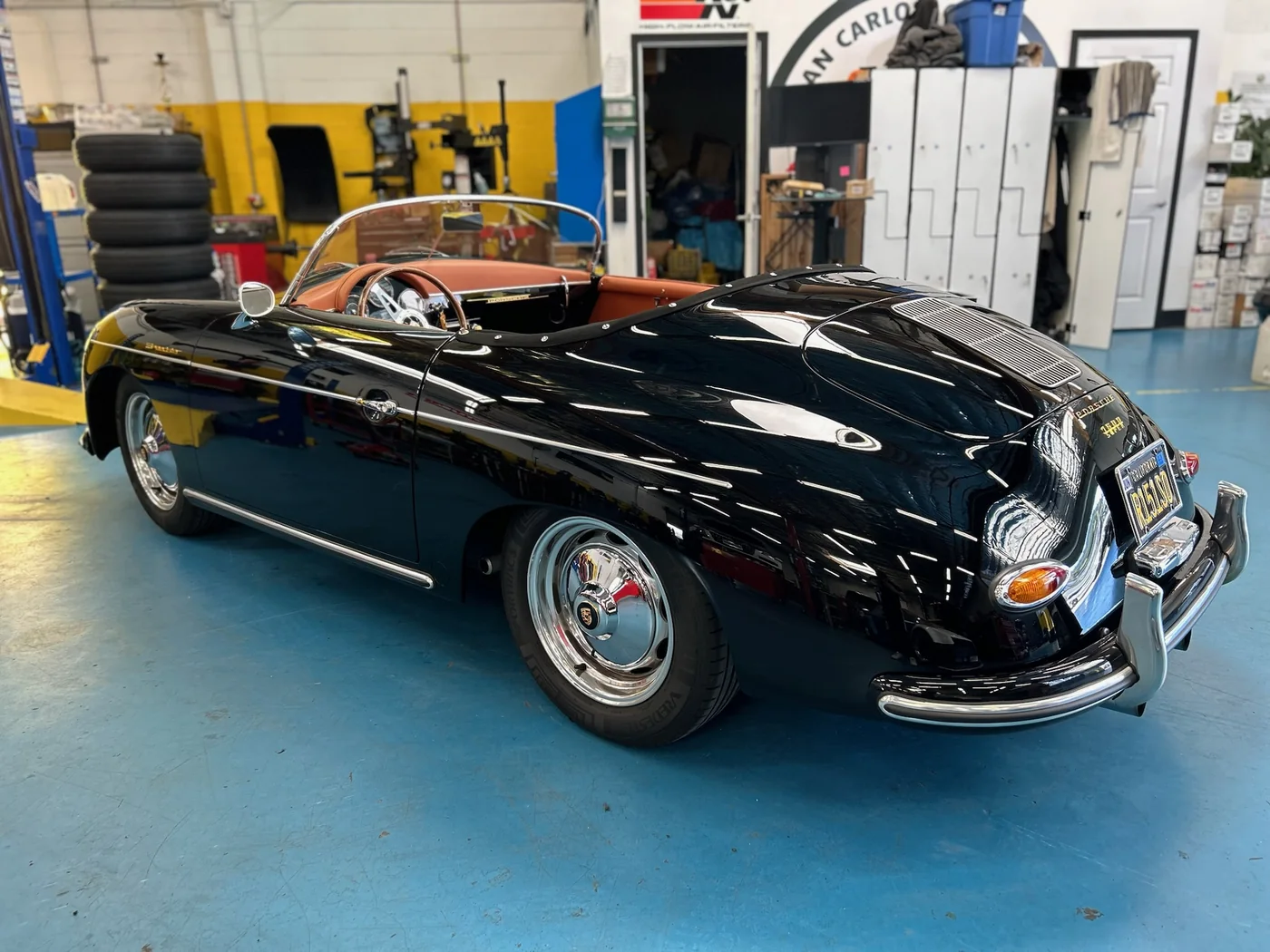

Classic Car Storage Guide: Prepare, Store and Wake It Up

To store a classic car long term, put it in a clean, dry, enclosed space with stable temperature and humidity, and prepare it before it sits: fresh oil, a full tank with stabilizer, a protected battery, clean paint and interior, and weight off the tires. Then wake it up carefully instead of just turning the key.
This guide covers each step in order, explains where people go wrong, and adds what matters in the San Francisco Bay Area, where the climate is mild but coastal moisture and registration rules still catch owners out.
TL;DR
- Aim for roughly 50°F to 60°F and 40% to 60% relative humidity. Stable conditions matter more than a perfect number.
- Fill the tank (ethanol-free fuel if you can get it), add stabilizer, and change the oil before storage, not after.
- Disconnect the battery or use a proper maintainer. Never leave a charger running in a space you do not control.
- Skip the parking brake, use chocks, and keep the tires from developing flat spots.
- In California, a car stored off the road all year may qualify for Planned Non-Operation, which changes how you handle registration.
Table of Contents
- Choose where the car will live
- Temperature and humidity targets
- Prepare the car before it sits
- Should you start it during storage?
- California registration, insurance and paperwork
- What the Bay Area changes
- Waking the car up
- Our perspective
- Storage with a shop that can also service the car
- Pre-storage checklist
- FAQ
- Sources
Choose where the car will live
Location does more for a stored car than any product you can buy. Hagerty’s winterization guide calls a temperature-controlled garage with a dry concrete floor ideal, and notes that where you store matters as much as how you prepare.
The options, from best to worst:
| Option | Strengths | Weak points |
|---|---|---|
| Climate-controlled indoor facility | Stable temperature and humidity, security, no rodents if well run | Monthly cost, you must vet the operator |
| Dry home garage on concrete | Convenient, you control access | Temperature swings, humidity near the coast, garage pests |
| Carport or covered outdoor space | Cheap | UV, moisture, theft risk, little protection from critters |
| Dirt or grass | None | Constant moisture rising into the undercarriage |
If the only option is an unpaved surface, Hagerty’s guide recommends a plastic vapor barrier or tarp under the whole footprint of the car to isolate it from ground moisture.
Avoid basements and low-lying garages, and check local flood maps before you commit. Bay Area owners near the bayfront or in low pockets of the Peninsula should take this seriously.
Home garage or professional facility
A home garage works when it is dry, enclosed, lockable and you can visit often. It stops working when the car is a high-value collector piece, when you travel for months, or when the garage doubles as a workshop with solvents, a water heater and a freezer. We cover the trade-offs in more detail in our piece on storing a supercar for months, and what a controlled environment actually means in climate controlled exotic car storage.
When you tour any facility, ask:
- Is the space truly temperature and humidity controlled, and can they show you readings?
- Is the car in an enclosed bay or shared open floor?
- What is the policy on battery tenders, and is there fire suppression?
- Who can access the building, and is it logged?
- Will someone start, check or move the car on a schedule, and is that included?
- Can the shop that stores it also service it, so you do not need a transporter in between?
Temperature and humidity targets
The usual guidance is a temperature of 50°F to 60°F and relative humidity between 40% and 60%, per Hemmings. Humidity is the number amateurs overlook. Classic Car Maintenance explains that below 40% leather, wood and natural rubber dry out and crack, while above 60% you invite rust, mildew and rot.
If you control the space yourself, a desiccant dehumidifier is generally preferred over a condensation type, because it holds its level at lower temperatures where compressor units struggle, according to the same source. Put a cheap hygrometer in the car’s space and read it. Guessing is how a garage that feels dry ends up at 70% in February.
One caution: do not seal a damp car under a plastic tarp. Trapped moisture is worse than none. Use a breathable cover, and only after the car is clean and dry.

Prepare the car before it sits
Do these in order, over a weekend, a week or two before storage so you can drive the car once after the work.
1. Wash, dry and protect the paint
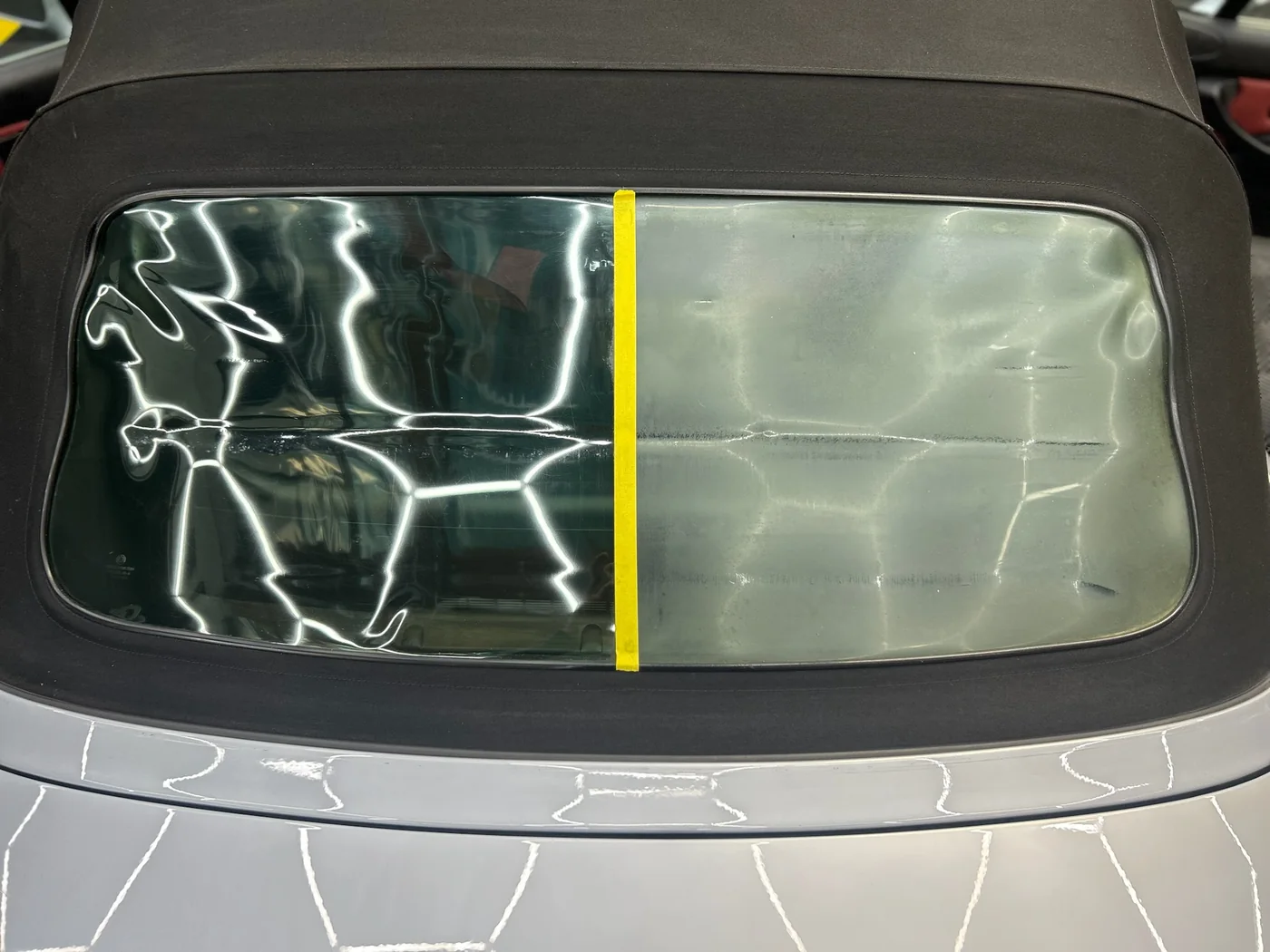
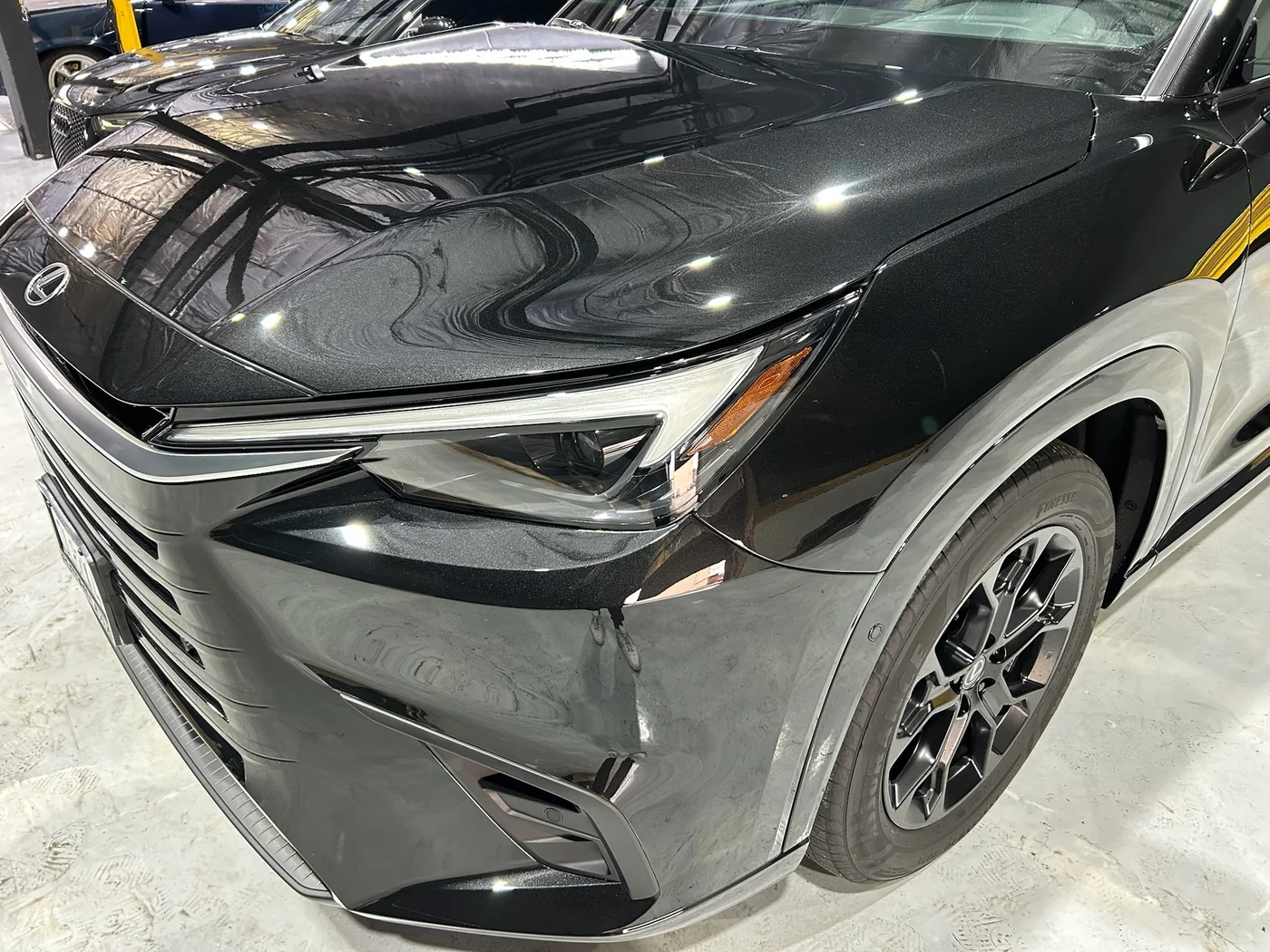
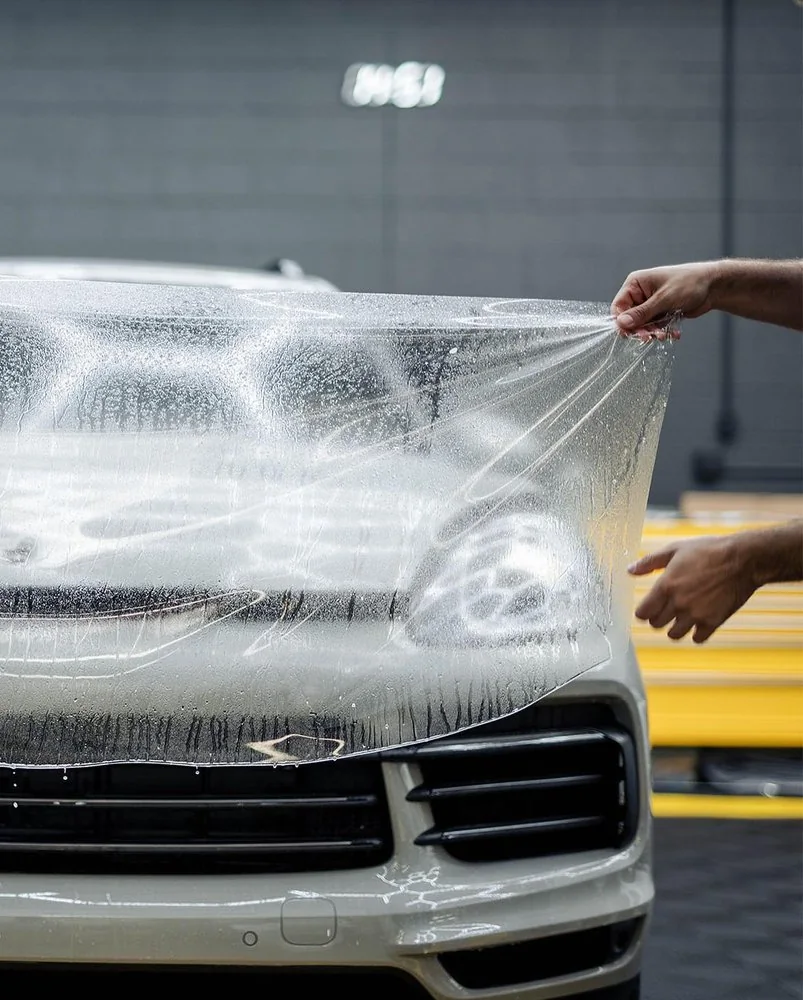
It may feel pointless to wash a car about to be put away, but Hagerty notes that water stains and bird droppings left on the paint can permanently damage it. Wash, dry completely, and wax or seal. If the paint has swirls or oxidation, correct it first so you are not sealing in defects. Our guides to paint correction stages and ceramic coating maintenance explain what each level of work does. Cars with paint protection film should be washed using the method in our PPF maintenance steps.
Clean the interior too. Crumbs, wrappers and anything edible attract rodents. Leave the windows closed and remove any food, air fresheners and paper.
2. Change the oil and filter
Used oil holds acids and moisture that sit against engine surfaces for months. Fresh oil before storage, not after, is the standard advice. Check coolant strength and condition at the same time, and top off brake and other fluids.
3. Handle the fuel
Fuel is where modern gasoline hurts old cars. Hagerty reports that E10 fuel starts degrading in about 30 days. For long-term storage the recommended practice is ethanol-free fuel where available, a completely full tank to reduce the surface area where condensation forms, and a quality stabilizer. Run the engine long enough to circulate the treated fuel through the whole system, ideally on a short drive.
If you have a carbureted car, ask a classic specialist whether to run the bowls dry or leave them treated for your expected storage time. The right answer depends on the car and the duration.
4. Protect the battery
You have two safe choices. For a space you control with power, use a dedicated three-stage battery maintainer rather than a basic trickle charger. Hagerty’s mythbusting piece is clear that in a location you do not control, such as a public storage building, you should not leave any charger connected, because of the rare but real fire risk. Disconnect the negative terminal instead.
If the battery will sit in freezing temperatures, remove it. The Classic DeLorean Motor Company’s storage notes give the same guidance: disconnect the cable, and use a maintainer, not a trickle charger. Cars with modern electronics, alarms or memory settings need a plan before you disconnect anything, so check the manual.
5. Tires and suspension
Flat spots can develop within a year, and Hagerty’s look at what happens when cars sit recommends lifting the car slightly on jack stands. If you keep the tires on the ground, inflate to the upper end of the recommended range and plan to move the car periodically. Set the stands under solid frame points, never under suspension components, and if you are not sure where those are on your car, have a shop do it.
6. Brakes: chocks, not the handbrake
Progressive’s classic car storage guidance points out that pads or shoes can rust to the drum or rotor over time and seize. Leave the parking brake off and secure the car with wheel chocks.
7. Keep pests out
Block the exhaust tip with coarse steel wool or a removable plug (and put a visible reminder on the steering wheel so nobody starts it with the plug in). Use traps or deterrents around, not inside, the car. Check the engine bay and air box on every visit. Mice love insulation, wiring and upholstery.
8. Cover it correctly
Use a soft, breathable, fitted cover on a clean car. Avoid plastic and avoid covers that trap dust against the paint. Indoors in a clean facility, a light cover mainly keeps dust off.

Should you start it during storage?
This is the most argued point in storage. Many owners start the car every couple of weeks, but Hagerty’s Rob Siegel describes it as one of the common storage myths. Cars from the 1950s onward often benefit from being moved, but a short start that never gets the engine to full temperature can introduce moisture into the oil, and delicate vintage or rare cars may see wear for no benefit.
A practical rule: either drive the car long enough to fully warm it, or leave it alone with proper preparation. Idling for five minutes in the garage helps nothing and fills the garage with exhaust. If you are away for months, pay someone who knows the car to handle it.
California registration, insurance and paperwork
If the car will not touch a public road for a full registration year, the California DMV offers Planned Non-Operation (PNO). The DMV says the vehicle cannot be driven, towed, stored or parked on public roads for the entire registration year, and that it accepts a filing up to 60 days before registration expires or up to 90 days after, with penalties for the late window. Check the DMV page for current fees before you file.
Also call your insurer. Many collector policies have storage terms, usage limits and agreed-value conditions, and a lapse in coverage on a stored car is an expensive surprise. Ask what changes when the car is off the road, and whether comprehensive coverage should stay in force while it sits.
What the Bay Area changes
The region is gentler than a snowbelt winter, but three local factors matter:
- Coastal moisture. Fog and marine air raise humidity in garages near the coast and bay. A hygrometer tells you if you need dehumidification.
- Temperature swings inland. Warm days and cool nights cause condensation in uninsulated garages.
- Wildfire smoke and dust. Smoke seasons put particulate on paint and into vents. A closed, filtered space and a clean cover help.
If you split your year between the Bay Area and elsewhere, long-term storage is often cheaper than the repair bills from a car left in a driveway.
Waking the car up
When you take the car out, go in reverse order and slowly:
- Remove the exhaust plug, covers and any pest deterrents. Inspect the engine bay for nests and chewed wiring.
- Check tire pressures and look for flat spots or cracking.
- Reconnect or reinstall the battery and test the lights and electrics.
- Check all fluid levels, and look under the car for fresh drips.
- Pump the brake pedal gently and confirm it feels firm before moving.
- Start the engine, let oil pressure come up, and watch gauges. Drive gently until everything is at temperature.
- After the first drive, recheck for leaks, and listen for brake noise or pull.
If the car sat more than a year, brake fluid, hoses, belts and fuel lines deserve a professional look before a spirited drive. Our classic car repair team does these post-storage checks.
Our perspective
We have worked on exotic, classic and European cars in Belmont since 2001, and the storage problems we see are rarely dramatic. They are small things that compound: stale fuel, a dead battery, a humid corner, a brake that grabbed, rodents in the airbox, tires that took a set.
Two habits separate cars that wake up easily from the ones that arrive on a flatbed. First, prepare the car as if you will not see it for a year, even if you plan three months. Plans change. Second, document the condition at drop-off with photos. We keep photo records of our work, and the same discipline helps with storage: you know how the car went in, and you can see how it came out.
Also be honest about the value of the car and your time. If you cannot visit and the car matters to you, a controlled facility from a shop that can also service it is simpler than a garage you check once a month. We do not push storage on people with a dry garage and a routine, and we would rather tell you what is needed than sell you an extra.
— Artec
Storage with a shop that can also service the car
We offer exotic and classic car storage in Belmont for owners on the Peninsula and across the Bay Area. Because the shop that stores the car can also handle pre-storage service, post-storage inspections and detailing, you avoid moving a delicate car between vendors. If you want to prepare the car’s finish before it goes in, our detailing packages start at 475 USD for Bronze. Contact us for storage availability and terms.
Pre-storage checklist
- Wash, dry, wax or seal the paint; clean and vacuum the interior
- Fresh oil and filter; check coolant and brake fluid
- Full tank, stabilizer added, engine run to circulate it
- Battery on a maintainer (own space) or negative terminal disconnected (shared space)
- Tires inflated or car on jack stands; wheel chocks, no parking brake
- Exhaust plugged with a visible reminder; pest control in place
- Breathable cover; hygrometer in the space
- Insurance and DMV registration status confirmed
- Photos of the car’s condition and a note of the odometer reading
FAQ
How do I store a classic car long term?
Choose a clean, dry, enclosed space with stable temperature and humidity. Change the oil, fill the tank with stabilized fuel, protect the battery, chock the wheels rather than using the handbrake, and relieve the tires. Cover the car with a breathable cover and check on it regularly.
What temperature and humidity are best for classic car storage?
The common target is 50°F to 60°F with relative humidity between 40% and 60%. Below that humidity range leather, rubber and wood can crack. Above it, rust and mildew become likely. Stability matters as much as the exact figure.
Should I leave a classic car on a battery tender in storage?
In your own garage, a three-stage maintainer is a good choice. In a facility you do not control, experts advise against leaving any charger connected because of fire risk, and recommend disconnecting the negative terminal instead.
Do I need to start my stored classic car every few weeks?
Not necessarily. A short start that does not bring the engine to full temperature can add moisture to the oil. Either drive it long enough to fully warm up, or prepare the car well and leave it alone.
Sources
- 10 Tips for Storing Your Classic Car, Hemmings
- Mythbusting: Seasonal Storage, Hagerty Media
- How to: Classic Car Winterization & Storage, Hagerty
- The Best Tips for Winter Car Storage and Care, Hagerty Media
- What Happens When Cars Sit?, Hagerty Media
- Classic Car Storage Tips, Progressive
- Optimal Classic Car Storage, Classic Car Maintenance
- Long Term Storage, Classic DeLorean Motor Company
- Planned Nonoperation Filing, California DMV