
Keep Your Car 3+ Years? Ceramic Coating vs Wax for Enthusiasts

If you want multi-year protection and easier washing, a ceramic coating is the better investment. If you want low cost, a warm classic shine, and don’t mind reapplying every couple of months, wax still earns its place. Most owners land in between with a synthetic sealant, which trades some of wax’s ritual for a longer-lasting, tougher layer.
TL;DR:
- Ceramic coatings last between 3 to 7 years when professionally installed, whereas wax reapplication is needed every 4 to 8 weeks.
- DIY ceramic kits cost $50 to $200 and last up to three years, making them more cost-effective over time compared to annual wax expenses.
- Proper application of ceramic coating requires decontamination, paint correction, and controlled environment curing, unlike quick wax routines.
- Ceramic coatings chemically bond to paint, providing superior resistance to UV damage and chemical stains, but do not prevent physical damage like chips.
- Wax still appeals for its aesthetic warmth, ease of use, and low cost, especially for show cars or owners who prefer regular ritualistic application.
Table of Contents
- Ceramic Coating vs Wax: A Side-by-Side Look
- How Do Wax, Sealants, and Ceramic Coatings Actually Bond to Paint?
- What Ceramic Coating Gets Right, and Where It Falls Short
- Why Wax Still Has a Place on Show Cars
- DIY vs Professional: What Application Actually Involves
- How Much Maintenance and Money Should You Budget?
- A Simple Framework for Choosing Between Wax and Ceramic Coating
- When a Professional Coating Makes the Difference
- The Honest Take on Ritual vs Practicality
- Ready for Professional Paint Protection?
- Where This Comparison Comes From
- Sources
- FAQ
Ceramic Coating vs Wax: A Side-by-Side Look
The gap between these products is not marketing spin. It shows up directly in how long each one survives on your paint and what it costs you over time.
Carnauba paste wax lasts roughly 4 to 8 weeks before it breaks down under sun and washing. Synthetic sealants last longer, typically 3 to 6 months. DIY ceramic coatings, applied correctly, run 12 to 36 months. Professional ceramic coatings, installed under controlled conditions with proper prep, hold up for 3 to 7 years with routine maintenance.

Cost tracks the same curve. A jar of carnauba wax runs $20 to $50 but needs replacing every couple of months. Sealants cost a bit more per bottle and last longer between applications. DIY ceramic kits land in the $50 to $200 range but demand real prep work. Professional installs run $800 to $2,500 depending on your car’s size and paint condition, but that price spreads across years, not weeks.
Here’s how the core attributes stack up:
- Durability: Wax (weeks) < sealant (months) < DIY ceramic (1 to 3 years) < pro ceramic (3 to 7 years)
- Upfront cost: Wax is cheapest per bottle; pro ceramic is the highest single expense but often the lowest cost per year
- Appearance: Carnauba gives a warm, deep glow; ceramic delivers a glassy, high-gloss finish with stronger water beading
- Application: Wax goes on and off in an afternoon; ceramic requires decontamination, correction, and a multi-day cure
- Reversibility: Wax washes away naturally; a cured ceramic coating requires machine polishing to remove
Neither product is objectively “better” in a vacuum. The right pick depends on how long you’ll own the car and how much maintenance you’re willing to do.
How Do Wax, Sealants, and Ceramic Coatings Actually Bond to Paint?
The durability differences above aren’t random. They come down to chemistry, specifically how each product attaches to your clear coat.
Carnauba wax is a natural product made of long carbon-chain molecules that simply sit on top of the clear coat. There’s no chemical bond, just a physical layer held in place by weak surface adhesion. That’s why heat, UV exposure, and detergent washing strip it off within weeks.
Synthetic sealants are man-made polymers engineered to grip the clear coat more aggressively than wax. They still sit largely on the surface, but the polymer chains interlock better, which is why sealants outlast wax by months instead of weeks.
Ceramic coatings work differently at a molecular level. They’re SiO2-based formulas that chemically bond to the clear coat and cure into a hardened, glass-like film. This forms what’s essentially a new outer layer fused to the paint rather than resting on it, which is why coatings resist UV degradation and chemical staining far longer than anything sitting loosely on the surface.
Then there are the hybrid “ceramic wax” or “ceramic spray” products lining shelves at auto parts stores. Most contain a small fraction of SiO2 mixed into a polymer carrier. They perform more like a boosted sealant than a true coating, and treating them as a multi-year solution sets you up for disappointment.
What Ceramic Coating Gets Right, and Where It Falls Short
A properly cured ceramic coating changes how your car ages. Understanding both what it delivers and what it doesn’t will keep your expectations realistic.
What you actually get:
- Multi-year protection: 12 to 36 months for DIY kits, 3 to 7 years for professional installs with maintenance
- Strong resistance to UV fading and chemical etching from bird droppings, tree sap, and road grime
- Easier washing, since dirt and water bead and slide off instead of clinging to the surface
- Fewer wash-induced micro-scratches, with some installers reporting reductions of 30% to 60% in swirl marks compared to unprotected paint
What it doesn’t do:
- Stop rock chips or physical impact damage. A coating hardens the surface chemically, not structurally, so gravel, road debris, and parking lot mishaps still cause damage. That’s a job for Paint Protection Film, which many shops now pair with ceramic coating on high-impact zones like the front bumper and hood.
- Fix existing paint defects. Swirl marks, oxidation, and light scratches get locked in place once the coating cures. Paint correction before application isn’t optional if you want the finish you’re expecting.
- Forgive sloppy application. Because the coating forms a near-permanent chemical bond with the clear coat, high spots, streaking, or trapped debris require abrasive polishing to correct. That’s an expensive fix for a mistake that proper prep would have avoided.
Pro Tip: Ask any installer about their curing environment before booking. Coatings need a controlled temperature and humidity range to flash and harden correctly. A coating cured in a dusty garage on a humid afternoon will underperform one applied in a climate-controlled bay, even if the product is identical.
Why Wax Still Has a Place on Show Cars
Ceramic coating wins on numbers, but wax survives for reasons that have nothing to do with durability charts. For collectors and weekend show car owners, the visual result still matters more than the maintenance schedule.
Carnauba wax produces a warm, almost liquid depth that many enthusiasts prefer over the sharper, glassier look of a cured ceramic layer. That’s a legitimate aesthetic preference, not nostalgia. If your car spends its life under a car cover and comes out for concours events, that warmth is worth the extra effort.

Wax also forgives mistakes in a way ceramic never will. Apply it unevenly, get streaking, or simply change your mind about the product? Wash it off and start over. There’s no correction process, no risk of locking in a bad application for years.
Here’s where wax makes practical sense, not just sentimental sense:
- You plan to sell or trade the car within a year or two, so multi-year protection is money you won’t recoup
- The car lives in a garage and rarely sees rain, UV exposure, or road grime
- You enjoy the process itself: the Saturday morning ritual of applying and buffing is part of why you own the car
- Your budget is tight and a $30 jar of carnauba fits better than an $800 to $2,500 professional install
Typical carnauba wax needs reapplication every 4 to 8 weeks to maintain its beading and gloss. For a garage queen driven a few weekends a month, that’s a minor chore. For a daily driver parked outside in Bay Area sun and coastal salt air, it’s a losing battle against the clock.
DIY vs Professional: What Application Actually Involves
The gap in upfront effort between waxing your car and coating it is bigger than most first-timers expect. Skipping steps here is the single biggest reason coatings underperform their advertised lifespan.
- Wash and decontaminate. Both processes start with a thorough wash, but coating prep adds a clay bar or chemical decontamination pass to strip embedded contaminants the wash alone won’t touch.
- Correct the paint. Swirl marks, oxidation, and light scratches need to be polished out before coating, since the coating will seal in whatever condition the paint is in when it cures.
- Wipe with isopropyl alcohol. This removes polish residue and oils so the ceramic formula bonds directly to bare clear coat instead of a film that blocks adhesion.
- Apply in controlled conditions. Ceramic coating goes on in thin, even panels, away from direct sun, dust, and humidity swings.
- Cure without disturbance. Most coatings need roughly 24 hours before any water contact and several days of light-duty curing before a full wash cycle.
A hobbyist waxing a car spends maybe 45 minutes to an hour, start to finish, with no cure window and no risk of a mistake outlasting the weekend. A DIY ceramic kit realistically takes half a day once you include decontamination and correction. Professional installs run a full day or more when correction work is involved, which is part of why installer estimates vary so widely.
Pro Tip: Never coat over paint you haven’t corrected. It’s the single most common mistake DIY installers make, and it’s the one mistake that’s genuinely expensive to undo, since removing a cured coating requires machine polishing the same way removing old clear coat oxidation does.
How Much Maintenance and Money Should You Budget?
Both products need upkeep. The difference is how often, and what that upkeep costs you over a year of ownership.
For wax, safe washing means a pH-neutral car soap, a two-bucket method to avoid dragging grit across the paint, and avoiding automated brush car washes that introduce fine scratches. Reapply every 4 to 8 weeks to keep beading strong. For ceramic coatings, the same wash rules apply, but you’re topping the surface with a spray booster every month or two instead of reapplying a full protective layer.
Running the math for a full year of ownership tells the real story:
- Wax hobbyist: roughly $150 to $250 a year in product, plus a monthly hour of labor, assuming reapplication every 6 to 8 weeks
- DIY ceramic: a one-time cost of $50 to $200 that can stretch across 1 to 3 years, making it one of the cheapest options per year if the first application is done correctly
- Professional ceramic: $800 to $2,500 upfront, but spread across 3 to 7 years, that often lands below $300 a year, especially once you factor in the labor hours a wax routine demands
The math favors ceramic coating for anyone keeping a car more than two years. Wax wins on flexibility and upfront simplicity, not long-term economics.
A Simple Framework for Choosing Between Wax and Ceramic Coating
Cut through the comparison charts with a few honest questions about how you actually use and store your car.
If you’re keeping the car under two years and enjoy the process, wax is the practical choice. You won’t recoup the cost of a multi-year coating on a car you’re about to sell, and the maintenance ritual is part of the ownership experience for a lot of enthusiasts.
If you’re keeping the car three or more years, park outside regularly, or want less time washing, a ceramic coating, DIY or professional, pays for itself in both durability and reduced upkeep. This is especially true in climates with intense UV exposure or road salt.
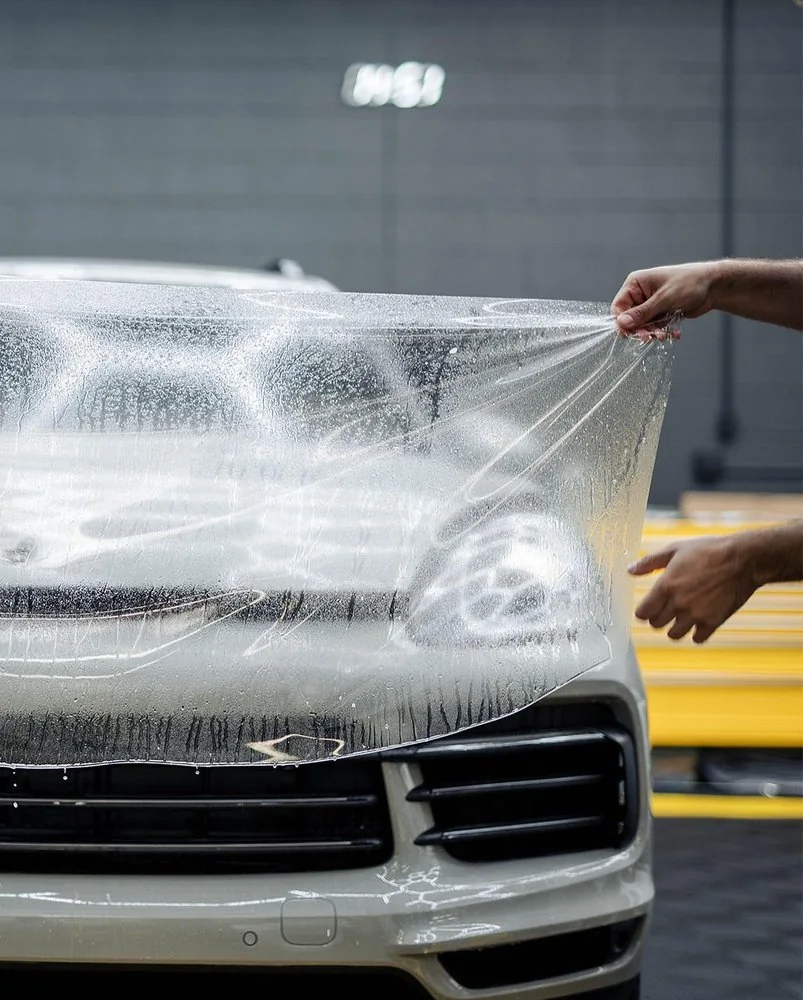
If you’re worried about rock chips or highway debris on the front end, no coating solves that problem alone. Pair Paint Protection Film on the front bumper, hood, and mirrors with a ceramic coating across the rest of the car for a layered defense that professionals increasingly treat as standard on high-value vehicles.
A rough product path by commitment level looks like this:
- Seasonal ritual: Traditional carnauba wax, reapplied every 4 to 8 weeks
- Low-commitment upgrade: Synthetic sealant, reapplied quarterly
- Interim boost between full services: Ceramic spray booster, monthly or as needed
- Long-term, lowest-effort protection: Professional ceramic coating, reapplied every 3 to 7 years with maintenance visits in between
None of these paths is wrong. They just fit different owners at different points in their relationship with a car.
When a Professional Coating Makes the Difference
Experience with exotic, classic, and European vehicles has shown one consistent lesson: the coating is only as good as the paint underneath it and the environment it cures in. High-value cars amplify every mistake, which is why controlled prep matters more here than on a daily commuter.
Professional ceramic coating is generally recommended for three situations: a new vehicle before its first exposure to the elements, a car that just had paint correction and needs that work protected immediately, and high-value daily drivers that face real UV and road exposure without the luxury of a garage.
A professional service typically includes a full paint inspection, an estimate on what correction is needed before coating, multiple coating layers applied in a controlled environment, and a maintenance plan to keep the coating performing at its rated lifespan rather than degrading early from poor aftercare.

The Honest Take on Ritual vs Practicality
There’s real satisfaction in a Saturday spent buffing carnauba wax into a warm, deep shine. That ritual is part of why people fall in love with car care in the first place, and no amount of cost-per-year math should talk you out of it if that’s genuinely what you enjoy.
But if you’re parking outside, driving year round, or just tired of monthly reapplication, a coating’s convenience wins on every practical measure. Whichever route you pick, get the paint corrected first. A coating locks in whatever condition your paint is in when it cures, for years.
— Artec
Ready for Professional Paint Protection?
There is a direct alternative to guesswork detailing shops: a paint-correction-first approach that protects the investment underneath the coating, not just the coating itself. Every ceramic coating job starts with an inspection of the paint condition, so you avoid sealing in swirl marks or oxidation that were not addressed.

Before booking anywhere, ask about warranty terms, how many coating layers you’re actually paying for, and what maintenance visits are included after application. Those three questions separate a shop that stands behind its work from one that doesn’t. If you own an exotic, classic, or European vehicle and want a coating that’s installed properly the first time, book an estimate and receive a straightforward assessment of what your paint needs before application.
Where This Comparison Comes From
Durability ranges and cost data come from CarCareTruth’s product comparison and Jalopnik’s cost breakdown. Coating chemistry and PPF guidance draw from LA Wrap & Tint School’s technical explainer, while application best practices reference South Miami Tint’s installer guidance.
Sources
- Ceramic Coating vs Wax vs Sealant: Durability · CarCareTruth
- How Effective Is Ceramic Coating for Car Protection? The 2026 Science-Backed Guide (LA Wrap & Tint School)
- Ceramic coating vs. waxing: pros, cons, differences (Jalopnik)
FAQ
Is a Ceramic Coating Better Than Wax?
For long-term protection and easier washing, yes. Ceramic coating lasts years instead of weeks and resists UV and chemical staining far better, though wax still wins on upfront cost and reversibility.
Is There a Downside to Ceramic Coating?
The main downsides are cost, prep requirements, and permanence. A coating seals in any existing paint defects, and removing it later requires machine polishing rather than a simple wash.
Do I Need to Wax My Car if It Has Ceramic Coating?
No, and doing so is generally unnecessary since the coating already provides the hydrophobic, glossy finish wax is meant to deliver. Some owners apply a ceramic spray booster between maintenance visits instead.
Which Comes First, Wax or Ceramic Coating?
Never apply wax underneath a ceramic coating. Paint must be washed, decontaminated, and corrected first so the ceramic formula bonds directly to clear coat rather than a layer of wax residue.