
Avoid Failed Emissions: Shop Tested Catted vs Catless Downpipes for US
For a street-driven turbo car, a high-flow catted downpipe is the right call almost every time. Catless units belong on track or competition builds where local rules allow them. The horsepower gap between the two is generally small, while catless pipes commonly trigger check-engine lights and run afoul of emissions law on public roads.
TL;DR:
- A high-flow catted downpipe offers most street-driven turbo cars a balance of performance and legal compliance, with the small horsepower gain from a catless pipe often not worth the legal risks.
- Catted units produce a deeper tone and less noticeable exhaust smell, while catless pipes result in sharper sounds, increased drone, and stronger raw exhaust odors that can seep into the cabin.
- Removing the catalytic converter on public roads can violate federal and state emissions laws, with failure modes including visual checks, OBD-II monitor failures, and emissions testing.
- Proper tuning after installing a downpipe is essential to prevent check-engine lights, ensure safe engine operation, and maintain warranty coverage; coordination with a shop reduces setup time and issues.
- Most owners benefit financially and legally from choosing a high-quality high-flow catted downpipe, as it avoids inspection failures, resale issues, and potential fines common to catless setups.
Table of Contents
- Catted vs Catless Downpipe: How Turbo Flow and Power Actually Change
- Sound, Drone, and the Smell Nobody Warns You About
- Emissions Rules, Inspections, and Legal Risk You Need to Know
- Tuning, Check-Engine Lights, and What Breaks If You Skip a Tune
- What a Downpipe Really Costs Once You Add It All Up
- How to Pick the Right Downpipe for Your Build
- Artec Automotive: Shop Perspective and Recommended Workflow
- What Most Enthusiasts Get Wrong About This Decision
- Get Your Downpipe Fitted and Tuned Right the First Time
- Where to Verify Emissions and Compliance Claims
- Sources
- FAQ
Catted vs Catless Downpipe: How Turbo Flow and Power Actually Change
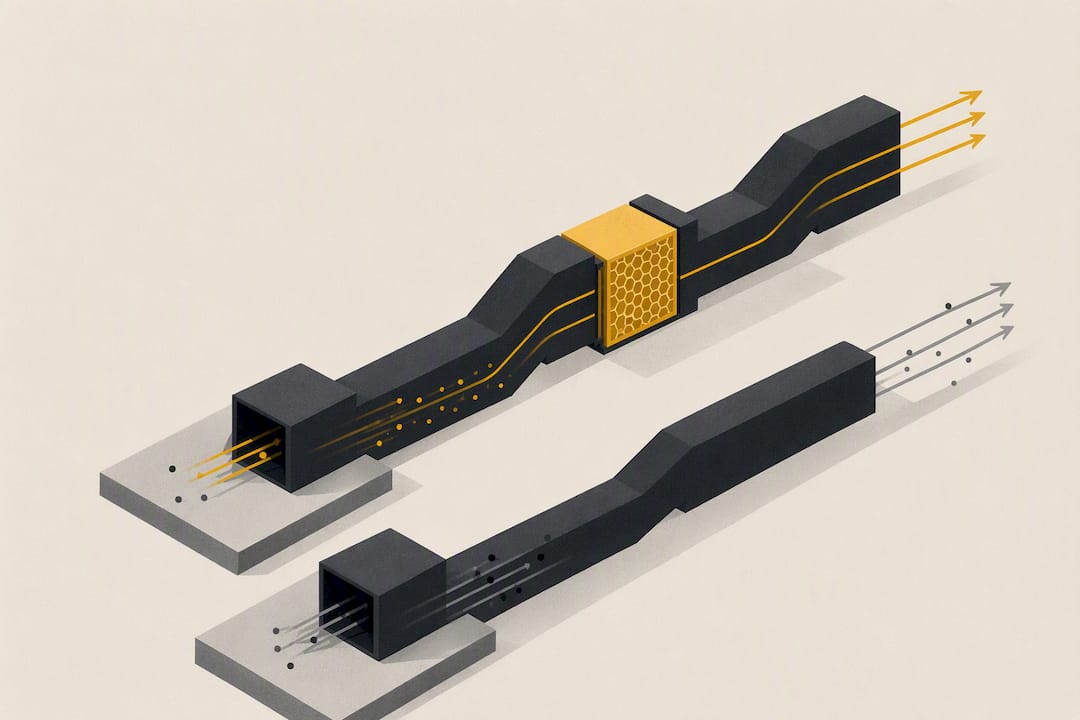
A downpipe is the section of exhaust that carries spent gases away from the turbine housing before they reach the rest of the exhaust system. Its diameter, bend radius, and internal restriction affect how quickly the turbo can spool and how much backpressure the engine fights under load. Whether a catalyst sits inside that pipe matters less than most enthusiasts assume. A cheap, narrow catted downpipe with tight bends will hurt flow more than a well-engineered high-flow catted unit ever would.
Dyno testing across several turbo platforms backs this up. Swapping a stock downpipe for a quality high-flow catted design commonly nets a moderate rear-wheel horsepower gain, largely because the factory unit is so restrictive to begin with. Going fully catless on top of that usually adds a modest additional rear-wheel horsepower gain, and on some platforms the difference is close to negligible. One test on a twin-turbo LS3 platform measured no significant rear-wheel horsepower difference with the cats in versus out.
A few variables decide how much of that gain you’ll actually see:
- Turbo size relative to the engine. A larger turbo pushing more exhaust volume is more likely to hit the catalyst’s flow ceiling, making catless meaningfully faster.
- Cell count and cat design. A 200 or 300-cell high-flow cat flows close to straight pipe on many street builds, closing most of the gap.
- Pipe diameter versus exhaust velocity. Oversizing the downpipe on a small turbo can actually hurt spool by dropping exhaust gas velocity, even with a catless setup.
- Tune quality. None of these gains show up reliably without recalibrating fueling and boost targets to match the new exhaust flow.
Sound, Drone, and the Smell Nobody Warns You About
Catted and catless downpipes sound genuinely different, not just louder or quieter. A catted setup keeps a deeper, more controlled tone because the catalyst substrate breaks up sound waves before they exit. Go catless and you get a sharper, rasp-heavy note, especially noticeable on cold start and during hard acceleration.
Drone tends to show up in the same rev range regardless of which downpipe you run, but it gets worse without a cat because there’s less material in the exhaust path to dampen resonance. Cabin layout, resonator placement, and whether you’re running a stock or aftermarket catback all shift how bad it gets.
The bigger surprise for first-time buyers is the smell. Catless downpipes often produce a stronger, more noticeable raw exhaust odor that can seep into the cabin, especially in stop-and-go traffic or with the windows cracked. It’s one of the most common reasons owners quietly swap back to catted.
- Catted: deeper, smoother tone; less raw exhaust smell; drone still possible with aggressive cutbacks.
- Catless: sharp, raspy note; louder cold starts; noticeable smell intrusion in traffic.
Emissions Rules, Inspections, and Legal Risk You Need to Know
Removing a catalytic converter from a vehicle driven on public roads can violate the federal Clean Air Act’s anti-tampering provisions, regardless of what state you live in. That’s a real legal exposure, not just an inspection hassle, and it applies whether the car ever gets pulled over for it or not.
States that follow California Air Resources Board standards add another layer. CARB requires Executive Order approval for most aftermarket catalytic converters and related exhaust components sold or installed in CARB states, and a catless downpipe generally has no path to that approval since it removes the catalyst entirely.
Here’s how catless setups typically get caught, and what to check before you buy:
- Visual inspection. Many state programs include a physical check for missing or altered emissions equipment, not just a tailpipe sniff test.
- OBD-II readiness monitors. A missing catalyst usually fails the catalyst-efficiency monitor, which shows up as “not ready” and can fail an OBD-II inspection outright.
- Tailpipe emissions testing. Where required, a catless car will almost certainly exceed hydrocarbon and NOx limits without a cat to treat exhaust gases.
- Vendor documentation check. Before buying, search the CARB Executive Order database for the specific part number and confirm it’s listed for your vehicle.
- Ask for dyno and compliance paperwork. A reputable seller should provide both performance data and emissions documentation, not just marketing claims.
Tuning, Check-Engine Lights, and What Breaks If You Skip a Tune
Swapping to a catless downpipe changes airflow and oxygen sensor readings enough that the factory ECU calibration almost never keeps up. A proper tune after a downpipe change addresses air-fuel targets, catalyst-efficiency monitors, and boost control so the engine doesn’t run dangerously lean or throw the car into limp mode.
Without a tune, expect one of two outcomes: a check-engine light from the catalyst-efficiency monitor detecting no catalyst present, or a car that runs rich or lean depending on how the ECU compensates. Some tuners offer O2 sensor simulators or code deletes to mask these codes. Skip those. They mask a real monitor rather than fixing the underlying calibration, and they can create genuine drivability and longevity issues on top of the legal exposure.
- O2 sensors downstream of a removed catalyst will read differently, and the ECU needs recalibration to interpret that correctly.
- Warranty coverage on the drivetrain can be denied if a shop traces damage back to an unmanaged tune.
- Reverting to stock later costs real labor, on top of whatever you paid for the catless part.
Pro Tip: Buy the downpipe, book the tune, and schedule the install at the same shop. Coordinating all three in one visit is the single biggest factor in avoiding weeks of chasing mystery codes.
What a Downpipe Really Costs Once You Add It All Up
Catless downpipes often cost less upfront simply because they skip the catalyst substrate and its precious-metal coating, which is the most expensive part to manufacture. That price gap closes fast once you factor in the rest of ownership.
- A failed emissions inspection can mean fines, a mandatory retest, or being blocked from renewing registration entirely.
- Reverting to a catted setup later adds labor costs on top of the price of the replacement part.
- Resale buyers in emissions-testing states often view a catless downpipe as a liability, not a feature.
For most street builds, the premium on a quality high-flow catted downpipe pays for itself the first time you avoid a failed inspection or a warranty denial.
How to Pick the Right Downpipe for Your Build
- Daily driver or weekend street car: favor a high-flow catted downpipe. You get most of the flow benefit with none of the inspection risk or smell complaints.
- Dedicated track car that never sees a public road: catless can make sense, but confirm your racing series or track day organizer allows it before you buy.
- Full-time competition build: verify class rules first, since some sanctioning bodies mandate specific exhaust configurations regardless of what’s legal on the street.
Before handing over payment, ask any vendor or tuner these questions directly: is this part listed in the CARB Executive Order database for your vehicle, what dyno data backs the horsepower claims, what tune package do they recommend alongside it, and what’s the return policy if fitment or emissions compliance doesn’t work out.
Artec Automotive: Shop Perspective and Recommended Workflow
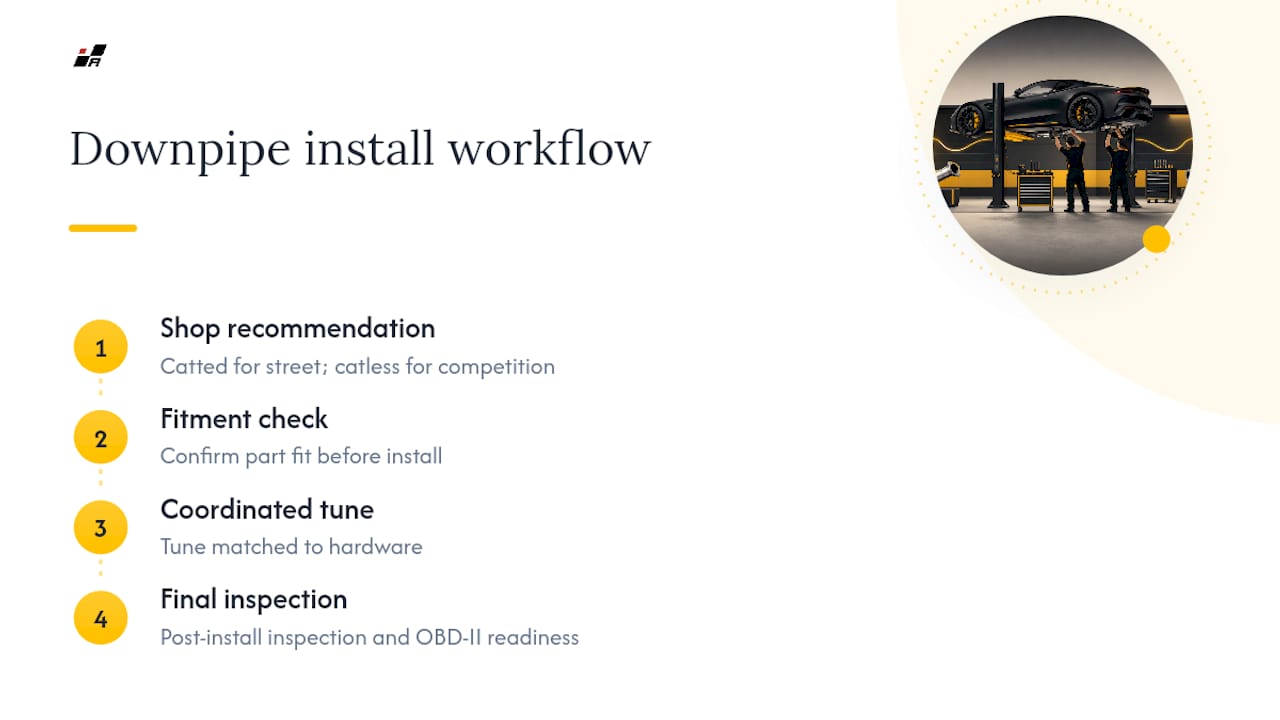
A reputable automotive shop recommends high-flow catted downpipes for most street-driven European and exotic vehicles, reserving catless setups for dedicated competition cars after confirming class rules. A proper install pairs a fitment check with a coordinated tune, then follows up with a post-install inspection and OBD-II readiness verification before the car goes back on the road.
What Most Enthusiasts Get Wrong About This Decision
Most builders chase the last few horsepower a catless pipe promises and overlook how small that number actually is against a good high-flow catted unit. Catless has a real place in dedicated competition cars. For anything you drive daily, the legal exposure and cabin smell cost more than the power is worth.
— Artec
Get Your Downpipe Fitted and Tuned Right the First Time
Getting a downpipe swap right means matching the part to your car, verifying it clears emissions rules for your state, and locking in a tune that actually accounts for the new exhaust flow, all in one coordinated visit instead of three separate appointments and a guessing game. Some automotive service providers handle European and exotic vehicles from diagnostics through fitment and tune coordination, so a downpipe upgrade doesn’t turn into a month of chasing check-engine lights.

If you’re weighing a catted or catless downpipe for a Ferrari, Porsche, BMW, or any turbocharged European car, book a build evaluation with Artec Automotive and get a straight answer on what fits your car, your state, and your driving habits before you spend a dollar on parts.
Where to Verify Emissions and Compliance Claims
- Check CARB’s Executive Order database directly before buying any aftermarket exhaust component in a CARB-compliant state.
- Review EPA guidance on Clean Air Act anti-tampering rules for the federal baseline that applies nationwide.
- Understanding how intake modifications affect overall engine airflow helps frame why exhaust-side changes need the same careful approach.
Sources
- Catted vs Catless Downpipes: Why high-flow cats make more sense
- Catted vs. Catless Downpipe: Pros, Cons & Differences – XKVracing
- What Is a Downpipe ? Benefits, Performance Gains & Installation Guide 2026 - Onlymechanic
FAQ
Do catted downpipes add horsepower?
Yes. Swapping a restrictive factory downpipe for a quality high-flow catted unit commonly adds a moderate rear-wheel horsepower gain on many turbo platforms, mostly by relieving factory-level backpressure.
How much louder is catless versus catted?
Catless downpipes produce a noticeably sharper, raspier note with louder cold starts, while catted setups keep a deeper, more controlled tone because the catalyst substrate absorbs some of the raw exhaust noise.
What are the downsides of a catless downpipe?
Beyond a modest power gain over a good high-flow catted unit, catless setups commonly trigger check-engine lights from failed catalyst-efficiency monitors, produce a stronger exhaust smell in the cabin, and often fail state emissions inspections.
Is a catted downpipe illegal?
No. A catted downpipe keeps the required catalytic converter in place, which is why it’s the compliant choice for street use; a catless downpipe is the one that risks violating Clean Air Act anti-tampering rules and CARB requirements in applicable states.