
3% Rule for Brake Fluid Flush: Owners’ 2–3 Year Safety Baseline
For most cars, a safe baseline is a brake fluid flush every two to three years, or roughly every 30,000 miles, whichever comes first. Severe use like towing or track driving calls for annual testing instead. The one number that overrides all of it: if a moisture test reads above 3% water, flush the fluid now, regardless of what the calendar says, and always defer to your owner’s manual when its schedule differs.
TL;DR:
- Brake fluid should be flushed every two to three years or 30,000 miles, with annual testing recommended for severe driving or towing.
- Water content above 3% in brake fluid significantly decreases boiling point, increasing the risk of vapor lock and brake failure under high-stress conditions.
- Visual inspection and moisture testing are effective for early detection, with dark or murky fluid indicating a need for replacement.
- A proper flush involves replacing all system fluid, often using ABS-specific bleeding sequences, and typically costs $50 to $150.
- Electric and hybrid vehicles, as well as high-performance cars, require regular testing and occasionally upgraded fluid grades to maintain brake system safety.
Table of Contents
- How Often to Change Brake Fluid: OEM Time and Mileage Rules
- Why Brake Fluid Breaks Down Faster Than You’d Think
- How to Check Brake Fluid: Visual Signs and the 3% Moisture Test
- What a Brake Fluid Flush Actually Involves (And Why Topping Off Fails)
- Brake Fluid for EVs, Hybrids, and High-Performance Cars
- What We’ve Learned Servicing Exotic and Classic Brake Systems
- Book a Brake Fluid Test and Flush With Artec Automotive
- Sources
- FAQ
How Often to Change Brake Fluid: OEM Time and Mileage Rules
Manufacturer schedules aren’t uniform, and that’s not an accident. A common baseline across most passenger vehicles falls at 24 to 36 months, or 30,000 to 45,000 miles. But the exact number depends on the brake system’s design, the fluid grade the factory specified, and how the automaker expects the car to be driven.
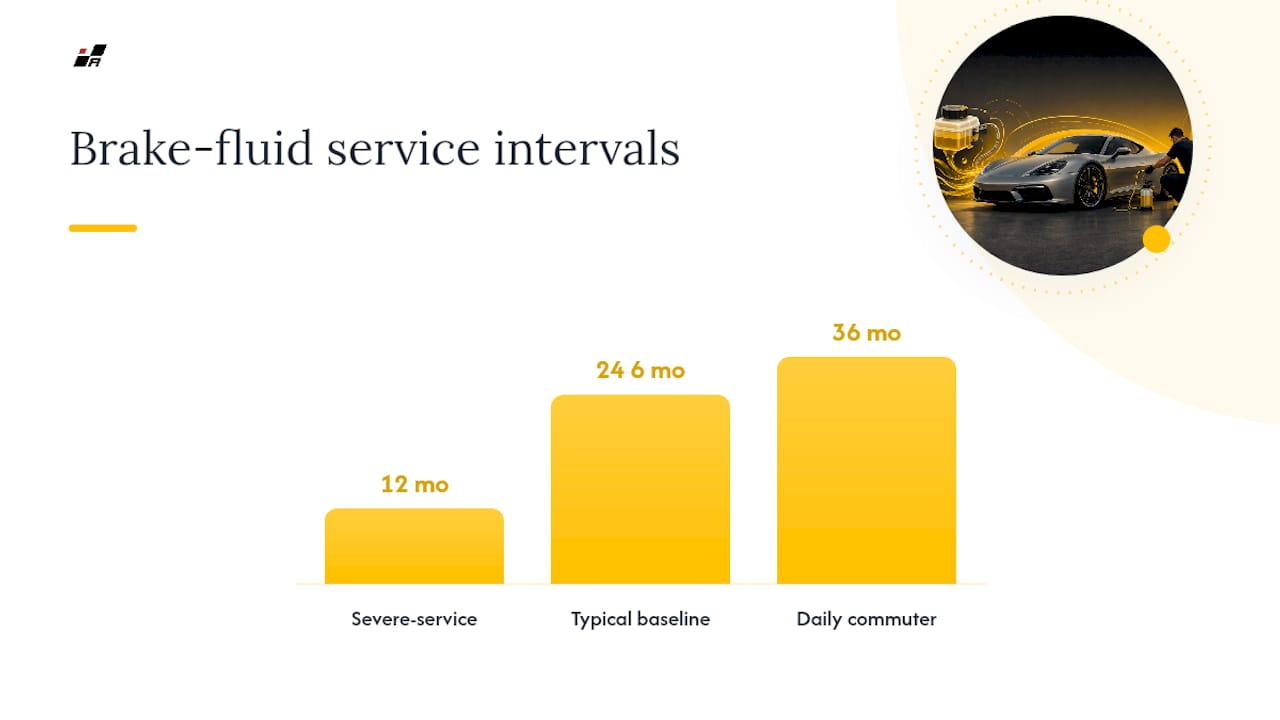
Some vehicles, particularly certain hybrids under severe-service conditions, list annual or 15,000 mile intervals, while others, including some Toyota schedules, favor periodic inspection over mandatory replacement. Neither approach is wrong. They just reflect different engineering assumptions about brake heat, moisture exposure, and how often the average owner drives hard.
When your manual is vague or missing, don’t default to the longest number you can find. Pick the shorter interval, or better, use a moisture test to settle the question with data instead of guesswork.
A few practical guideposts if you’re working without a clear factory number:
- Daily commuter in a mild, dry climate: 3 years or 45,000 miles is usually fine, backed by a moisture check at the halfway point.
- Mixed city and highway driving, average climate: stick to the 2 to 3 year window.
- Any vehicle with unknown service history: test before you assume the fluid is fine.
Why Brake Fluid Breaks Down Faster Than You’d Think
Brake fluid is hygroscopic, meaning it pulls moisture from the air through microscopic seals, hose walls, and every time the reservoir cap comes off. That process never stops. It just accelerates or slows depending on climate and how the car is used.
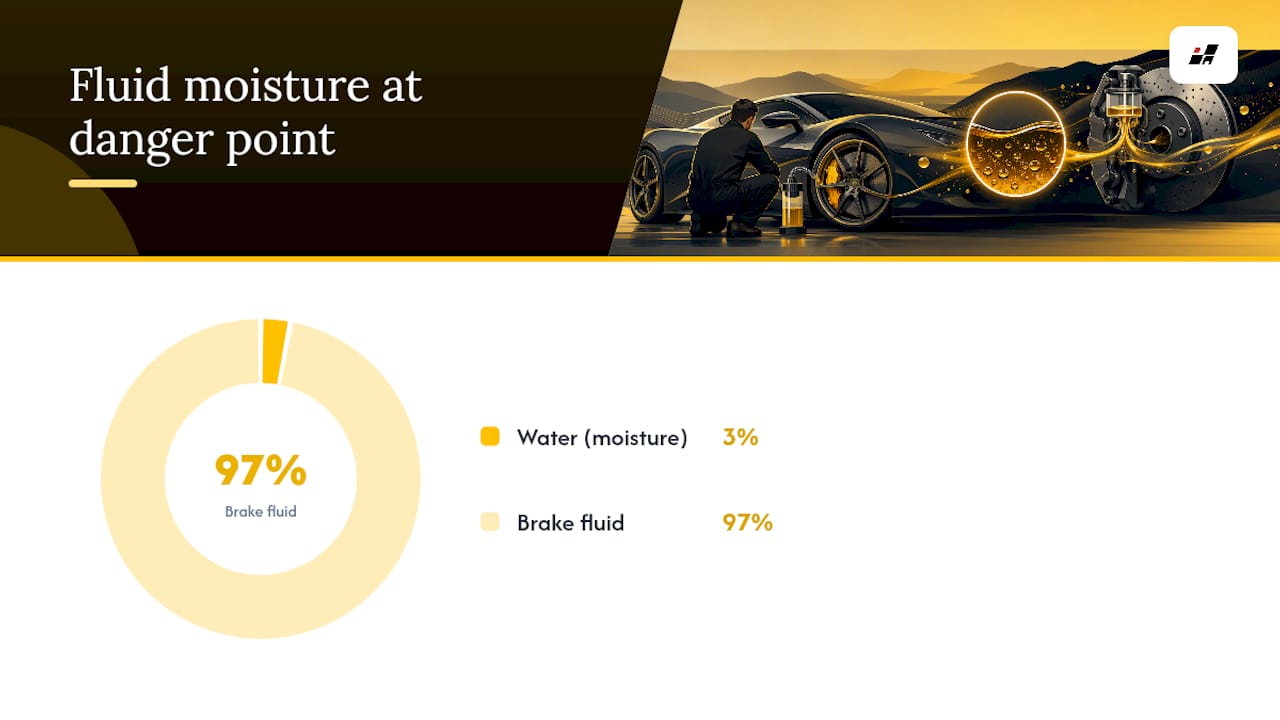
Here’s the part that surprises most owners: a small amount of water does outsized damage. DOT 4 fluid with a dry boiling point around 230°C can drop to roughly 155°C once moisture reaches about 3%. That’s a boiling point collapse of nearly 75 degrees from water content you can’t see or smell. Push a car with fluid in that condition down a steep grade or into a hard stop from highway speed, and the fluid can boil inside the lines, turning to compressible vapor. The pedal goes soft or sinks to the floor at the worst possible moment.
Several driving conditions push fluid into that danger zone faster than the calendar suggests:
- High humidity climates, where moisture ingress through seals happens continuously.
- Towing or hauling, which raises brake temperatures and stresses the fluid thermally.
- Mountain driving or repeated hard stops, common on track days or steep descents.
- Frequent stop-and-go traffic, which keeps brake components hot for extended stretches.
How to Check Brake Fluid: Visual Signs and the 3% Moisture Test
You don’t need a shop visit to get a first read on your fluid’s condition. Pop the reservoir cap and look.
- Check the color. Fresh fluid is clear to light amber, almost like straw-colored oil. If yours looks dark, murky, or the color of iced tea, that’s your visual cue to test or flush.
- Run a moisture test if you have a tester. These handheld devices measure water content directly. A reading above 3% means the fluid has crossed into the range where boiling point loss becomes a real safety issue, not a theoretical one.
- Decide DIY versus professional based on what you find. A basic tester gives you a useful screen, but shop-grade equipment is more precise, and a shop can catch complications like an ABS module that needs a specific bleed sequence before fluid gets touched.
Pro Tip: Keep the moisture tester in your glovebox and check fluid at every oil change. It takes thirty seconds and turns a guessing game into a data point.
What a Brake Fluid Flush Actually Involves (And Why Topping Off Fails)
A real flush isn’t the same as topping the reservoir back up to the “full” line. Topping off dilutes contaminated fluid slightly, but it leaves most of the old, moisture-saturated fluid sitting in the lines and calipers, additives already spent.
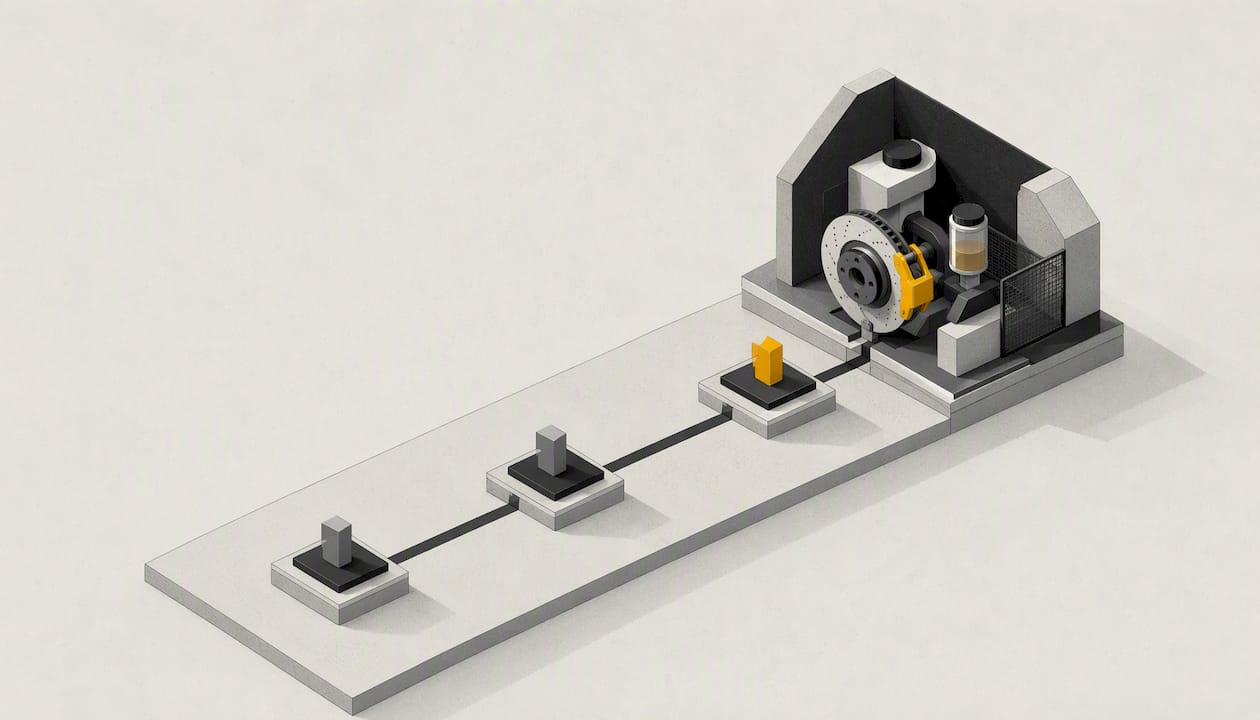
A proper flush pushes fresh fluid through the entire system, from the master cylinder down to each caliper, in a specific bleed sequence. On modern cars with ABS, that sometimes means using a scan tool to cycle the ABS module so fluid clears trapped pockets in the valve body, not just the visible lines.
Expect the job to run 30 to 60 minutes, with typical shop pricing landing between $50 and $150 depending on vehicle complexity and regional labor rates. A few things worth knowing before you book:
- Vehicles with electronic parking brakes or complex ABS setups often run toward the higher end of that range.
- A full-system flush restores both the fluid’s boiling point margin and its anti-corrosion additives, neither of which topping off touches.
- If a shop quotes a flush that takes ten minutes and skips the calipers, ask what’s actually being replaced.
While your brakes are apart, it’s a reasonable moment to check for related wear. If your calipers are corroded or discolored, caliper coating is often bundled into the same visit, and if brake dust has been building up on your wheels, addressing it at the same time saves a second trip.
Brake Fluid for EVs, Hybrids, and High-Performance Cars
Electric and hybrid vehicles use their brakes less thanks to regenerative braking, but that doesn’t pause the chemistry. Fluid still absorbs moisture from humidity and seal permeation regardless of how often the pads bite. Follow the OEM schedule, but don’t skip periodic testing just because the pedal feels light-duty.
Track cars and anything used for towing sit at the other extreme. Heat cycling and severe-service conditions justify annual testing or an annual flush outright, independent of mileage.
- Performance-oriented shops frequently upgrade from DOT 3 to DOT 4 or DOT 5.1 for a higher wet boiling point margin, shortening the service cycle to annual regardless of odometer reading.
- Always confirm the upgrade fits your brake system’s seal materials before switching fluid grades, since OEM specs exist for a reason.
What We’ve Learned Servicing Exotic and Classic Brake Systems
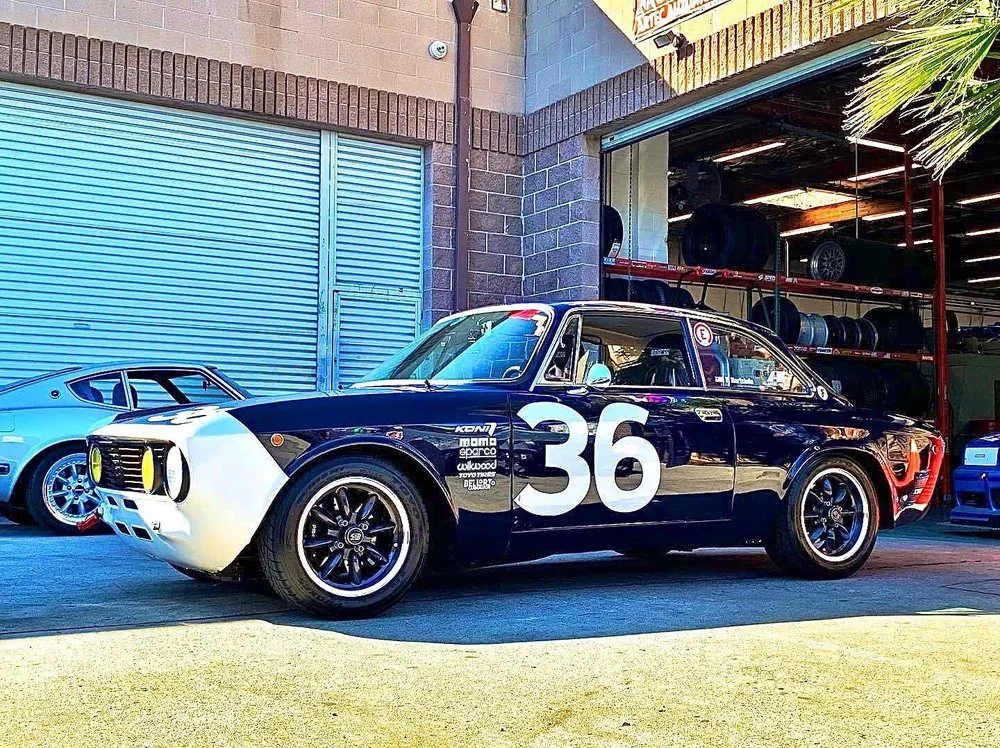
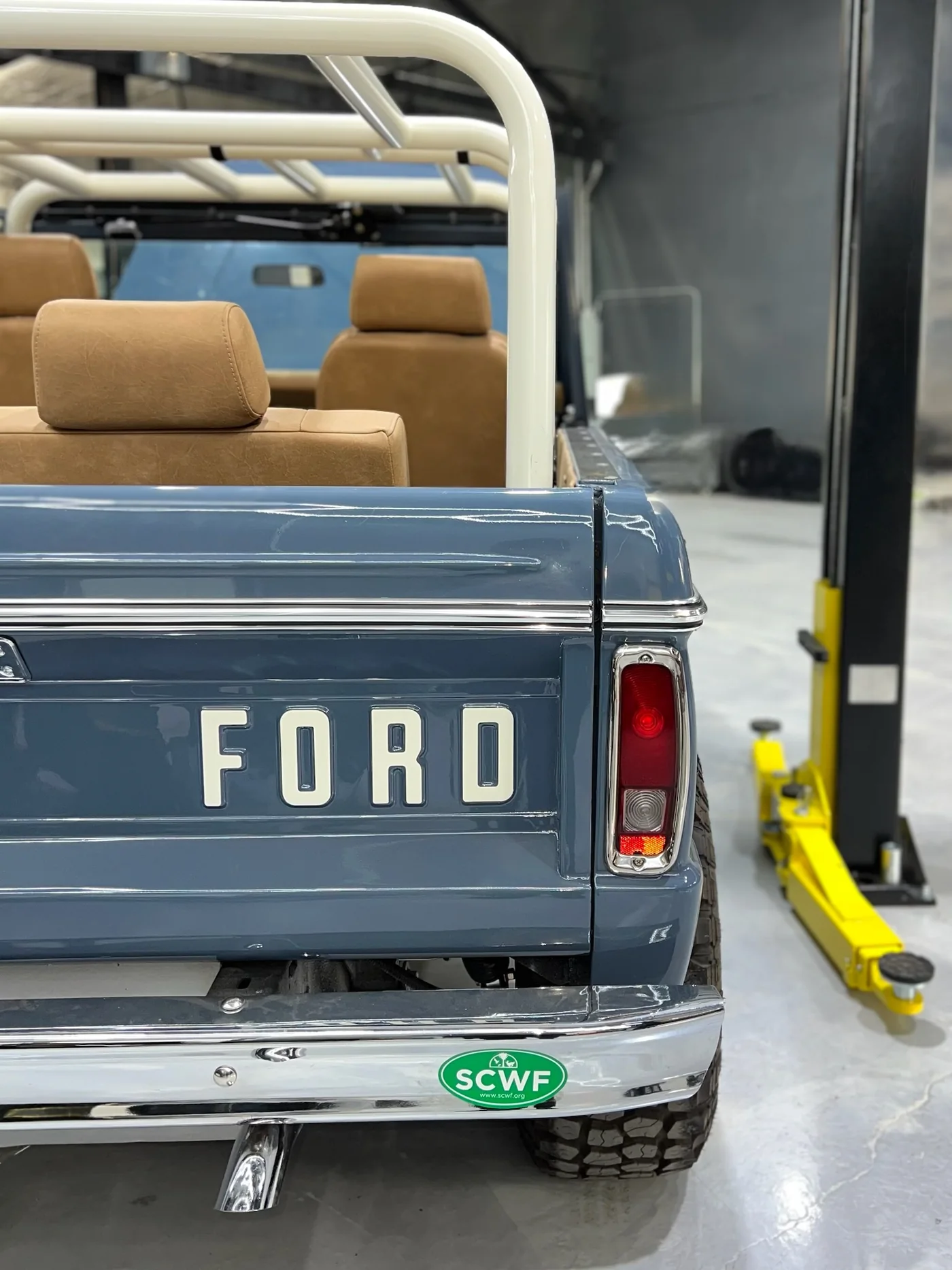
Working on European and collector cars for over two decades has taught us one consistent lesson: the calendar-based interval is a floor, not a ceiling. When a vehicle’s value, rarity, or mechanical complexity is high, we lean toward the shorter end of any recommended window and back that call with shop-grade moisture testing rather than a guess.
Vintage brake systems and many European platforms also demand a specific bleed sequence, sometimes requiring scan-tool activation of ABS or ESP systems to fully evacuate old fluid. Skip that step and you risk trapped air pockets that mimic a spongy pedal, undoing the point of the flush entirely.
— Artec
Book a Brake Fluid Test and Flush With Artec Automotive
If your fluid looks dark, you’re not sure when it was last serviced, or you own something that doesn’t tolerate a guesswork bleed job, a specialized shop can provide the necessary expertise. Specialized shops build each service around your vehicle’s actual brake architecture, including ABS-aware bleeding for European platforms and moisture testing precise enough to catch problems before they show up as a soft pedal.

A typical visit includes a moisture test, a full-system flush rather than a partial top-off, and ABS module bleeding where the platform requires it, usually within a 30 to 60 minute service window. If your fluid is unknown, discolored, or your car is the kind you don’t want to gamble on, schedule a brake fluid diagnostic and service with Artec Automotive today.
Sources
FAQ
What Is the Average Cost of a Brake Fluid Flush?
Most shops charge between $50 and $150 for a full brake fluid flush, depending on your vehicle’s complexity and local labor rates.
Is It Really Necessary to Change Brake Fluid Every 2 Years?
For most vehicles under normal driving conditions, yes. Two to three years (or 30,000 to 45,000 miles) keeps moisture content low enough to preserve the fluid’s boiling point and protect against pedal fade.
Is a Brake Fluid Change Worth It?
Yes. A full flush restores the fluid’s protective additives and boiling point margin, protecting against brake fade and internal corrosion that a simple top-off cannot address.
Can Brake Fluid Last 5 Years?
It can survive that long without failing outright, but a moisture test after 3 to 4 years often shows water content approaching or exceeding the 3% threshold, especially in humid climates, so testing before assuming it’s fine is the safer move.