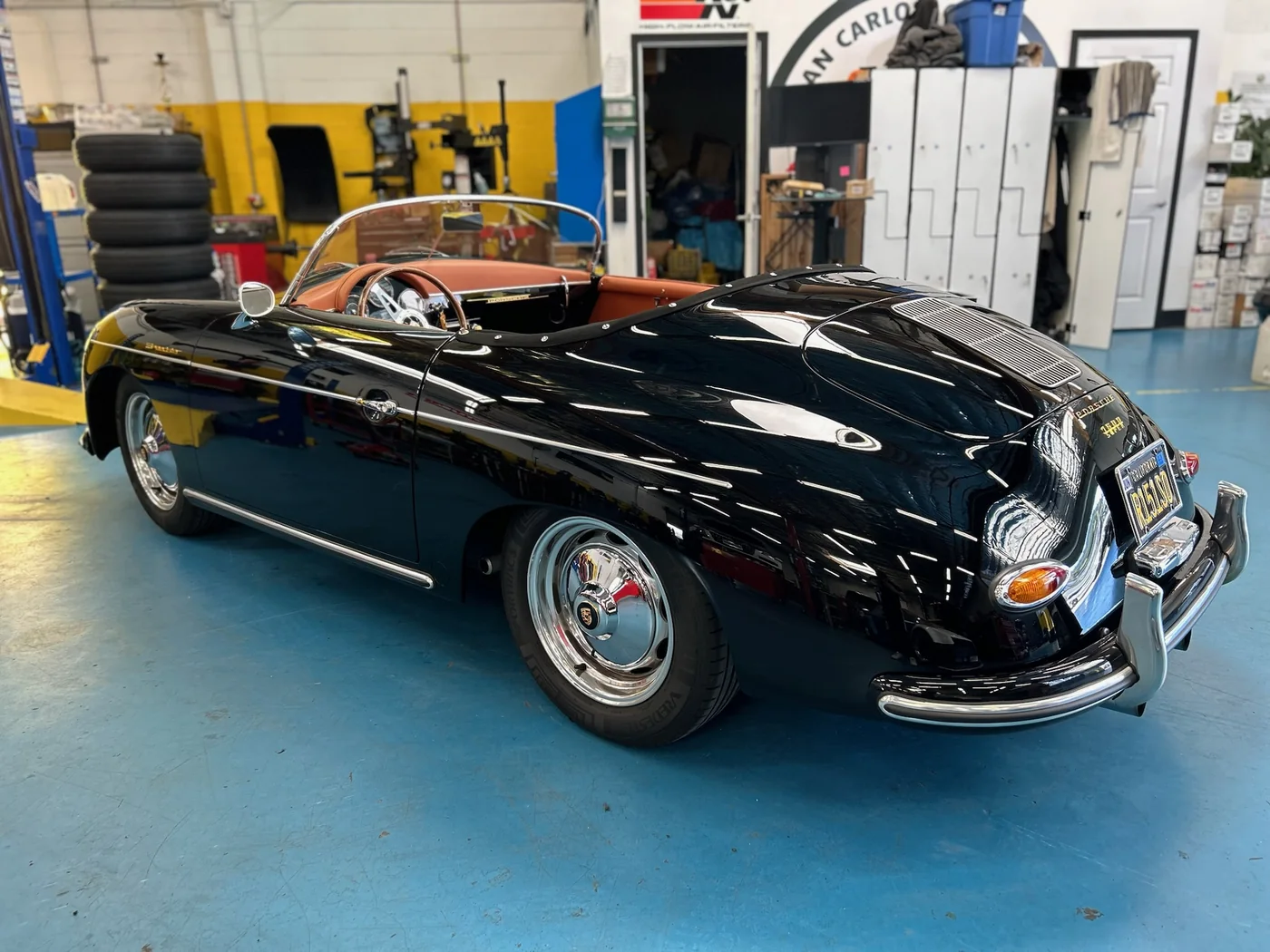


Bentley Suspension Repair: Symptoms, Diagnosis and Service

Bentley suspension repair starts with finding the real fault, not replacing the part that looks guilty. A corner that sags overnight, a compressor that runs constantly or a warning message on the dash can come from an air spring, an air line, a valve block or a ride-height sensor. Bentley’s own service information says a drop in ride height does not by itself prove the air spring is bad. The right order is a proper leak and pressure diagnosis, then the repair, then a ride-height calibration.
This guide covers what the symptoms mean, how a competent shop diagnoses them, what moves the price, and what to know if your garage also holds a Maserati, an AMG Mercedes or a vintage car.
TL;DR
- A corner sitting low, a compressor that never rests, a suspension warning or a harsh ride are the usual signs of an air suspension fault on a Bentley.
- Diagnose before you buy parts: the leak can be in the spring, the pipes, the valve unit, the supply unit or the reservoirs.
- The suspension must be put into Jack mode before the car is lifted, and many repairs end with a ride-height calibration on diagnostic equipment.
- Cost depends on model generation, part source, labor, coding and calibration, so ask for a written estimate that separates diagnosis from repair.
- Maserati, AMG and vintage suspensions each have their own traps, covered below.
Table of Contents
- Signs your Bentley’s suspension needs attention
- What actually fails
- How a Bentley suspension fault is diagnosed
- What affects the cost of Bentley suspension repair
- How to reduce the risk of suspension failure
- Maserati suspension repair: what is different
- Mercedes-AMG suspension upgrades: questions to ask first
- Vintage car suspension: a different kind of repair
- Bring your Bentley to Artec
- FAQ
- Sources
Signs your Bentley’s suspension needs attention
Most Bentley models of the modern era ride on air springs with electronic control, so the symptoms are different from a conventional coil-spring car. The ones we see most often:
- A corner or the whole car sitting low after parking. Bentley technical product information for the U.S. market lists a car sitting low on one or more corners while stationary as a reported suspension symptom, and points the diagnostic path toward air leaks, ride-height sensors and accelerometers.
- Dashboard warnings. A suspension fault message, a ride-height warning or a car that refuses to rise to its normal height.
- A compressor that runs often or for a long time. The compressor is working to replace air that is escaping somewhere. Left alone, it wears out and the repair grows.
- A harsh, bouncy or floaty ride. This can point to a worn damper, a stuck valve or a sensor feeding wrong data to the control unit.
- Uneven stance when you look at the wheel arches. A gap that differs from side to side is easy to spot on a level surface.
A drop overnight is the cheapest time to act. A small leak caught early is often a line or a fitting. The same leak left for months makes the compressor run itself ragged and can leave the spring bag sitting on its bump stop, which damages parts that were fine.
What actually fails
The air suspension is a system, and several parts can produce the same symptom.
| Component | What it does | Typical failure pattern |
|---|---|---|
| Air spring (damper with air bag) | Carries the load and sets ride height | Aging rubber leaks, often at a fold in the bag |
| Air lines and fittings | Carry air between the supply unit, valves and springs | Chafing, corrosion or loose fittings at connection points |
| Supply unit and compressor | Builds and stores pressure | Overworked by leaks elsewhere, moisture, wear |
| Valve block | Directs air to each corner | Sticking or leaking solenoids |
| Height sensors and accelerometers | Report body position to the control unit | Damaged, loose or poorly connected sensors |
| Reservoir | Stores compressed air | Leaks, corrosion |
Bentley’s service information, reproduced for the 2025 model year, notes that air escaping from a damper can make the suspension drop, yet the drop alone does not prove the spring is faulty. It lists the air springs, supply unit, pipes, valve unit and reservoirs as possible leak points. That is why replacing one air spring on a hunch can leave you with the same fault a month later.
How a Bentley suspension fault is diagnosed
Good diagnosis is methodical and leaves a record you can read. The sequence below follows the approach in Bentley’s own bulletin and what a careful independent shop does.
- Confirm the complaint. Note which corner drops, how fast, and whether the warning appears when the car is cold, hot or after a drive.
- Read the fault memory. Stored codes narrow the search, but they point toward a circuit, not always a part.
- Measure ride height. Heights are compared against the specification for the model, with the car on level ground.
- Run guided pressure tests. The bulletin describes guided pressure tests on the factory diagnostic system to see where pressure is lost.
- Check for leaks. Connections, fittings and spring bags are inspected, and a soap solution shows a leak as bubbles. The same document describes soap-solution leak checks and guided tests.
- Inspect sensors and wiring. A height sensor that is loose or damaged can imitate a mechanical fault.
- Report with photos. You should see what the technician saw.
Safety: Jack mode before lifting
An air-suspended car cannot be lifted like a coil-spring car. Bentley instructs its technicians to engage Jack mode through the MMI before raising the vehicle or releasing the air system, to avoid damaging the suspension. If you ever need to lift your own car for a tire or a roadside emergency, activate the mode first and follow the owner’s manual. For anything beyond that, take it to a shop with a proper lift and the right equipment.

Calibration after the repair
Changing a spring, sensor or valve can alter what the control unit expects to see. Depending on the model, the work may end with ride-height calibration or basic settings run on suitable diagnostic equipment. Skipping this step is one reason a car can look right in the driveway and still ride wrong on the freeway. Ask your shop whether calibration is part of the job and whether you will get the before and after readings.

What affects the cost of Bentley suspension repair
No honest shop can quote a Bentley suspension job over the phone without seeing the car. The price moves with five things:
- Model and generation. A Continental GT, a Flying Spur and a Bentayga use different hardware, and the cost of parts and access differs.
- Which parts are needed. A leaking fitting or line is a very different job from a pair of air struts or a valve block.
- Part source. Genuine, original-equipment and aftermarket parts come at different prices and with different warranties. Bentley says its authorized technicians use specialist equipment and that genuine parts help preserve the car’s integrity, performance and identity. Ask which grade of part is quoted so that estimates are comparable.
- Labor and access. Some springs are quick to reach; others need the underbody or wheel-arch components removed.
- Coding and calibration. Ride-height setup and any control-unit adaptation add time, and a quote without them is incomplete.
Ask for the estimate in writing, with diagnosis shown as its own line. If a leak is found in an inexpensive part, you should be able to approve that repair alone and decide on anything else afterward.

How to reduce the risk of suspension failure
You cannot stop rubber from aging, but you can shorten the time a small fault stays small.
- Act on a drop immediately. A corner that settles overnight is the signal. Do not wait for the warning light.
- Listen to the compressor. If you notice it running more than it used to, mention it at the next visit.
- Keep the underbody and wheel arches clean. Dirt and road salt or grit sitting on fittings and lines speeds up wear.
- Drive the car. Cars that sit for months let seals dry and moisture collect. If yours rests for long periods, ask about our climate-controlled storage in Belmont and what the car should have done before and after storage.
- Have the suspension inspected at every service. A visual check of the bags, lines and sensors takes little time.
- Get the alignment checked after any suspension work. Our guide to supercar wheel alignment explains why precise setup protects tires.
Thinking about replacing air with a conventional spring setup? Our comparison of air suspension versus coilovers walks through what you gain and what you give up in ride quality and adjustability.
Maserati suspension repair: what is different
Maserati owners ask the same questions, and one model shows how much the details matter. A manufacturer Rapid Update, number 658, requires replacing both complete front shock absorbers on certain 2024 Maserati GranTurismo (internal code 189) vehicles, to prevent random deflation during full-lock steering maneuvers. The same document refers to a specialized tool, part number 900029760, used to check the position of the suspension arms during shock absorber replacement.
Two lessons carry over to any Maserati:
- Check whether your VIN has an open recall or service campaign before paying for a repair. Some fixes are owed to you.
- Suspension work often depends on the right tools and a precise arm position. A shop that guesses at it risks a car that tracks poorly or wears tires unevenly.
Electronically controlled dampers and air systems also need diagnostic software to read and calibrate, so make sure your shop can do both before you commit.
Mercedes-AMG suspension upgrades: questions to ask first
Many AMG owners want a sharper car, a lower stance or a better track setup. Before you buy a kit:
- Which system does your car have? Some AMG models use air suspension and others use adaptive dampers with steel springs. Each responds differently to lowering springs or coilovers, and some conversions need the control system accounted for so warnings do not appear.
- What is the goal? Street comfort, a lower look and lap times each lead to a different setup. Matching the parts to the goal avoids a stiff car that is no faster.
- Does the package include alignment? Any change in ride height changes camber and toe. Corner balancing helps on track cars, as described in our corner balancing guide.
- What happens to warranty and resale? Ask how reversible the change is, and keep the original parts.
If you are choosing between keeping air and converting, the air versus coilover comparison is a good place to start. Brakes often come with the same conversation, and we cover them in our piece on performance brake upgrades.
Vintage car suspension: a different kind of repair
A vintage car has no air springs to leak, but its problems are just as real. The age of the car changes what the repair looks like:
- Rubber and bushings. Old bushings crack and collapse, and the car wanders, clunks or wears tires unevenly.
- Worn joints and linkages. Ball joints, king pins, tie rods and steering boxes have wear that modern cars never develop in the same way.
- Dampers and springs. Sagging springs and tired shocks change ride height and handling together.
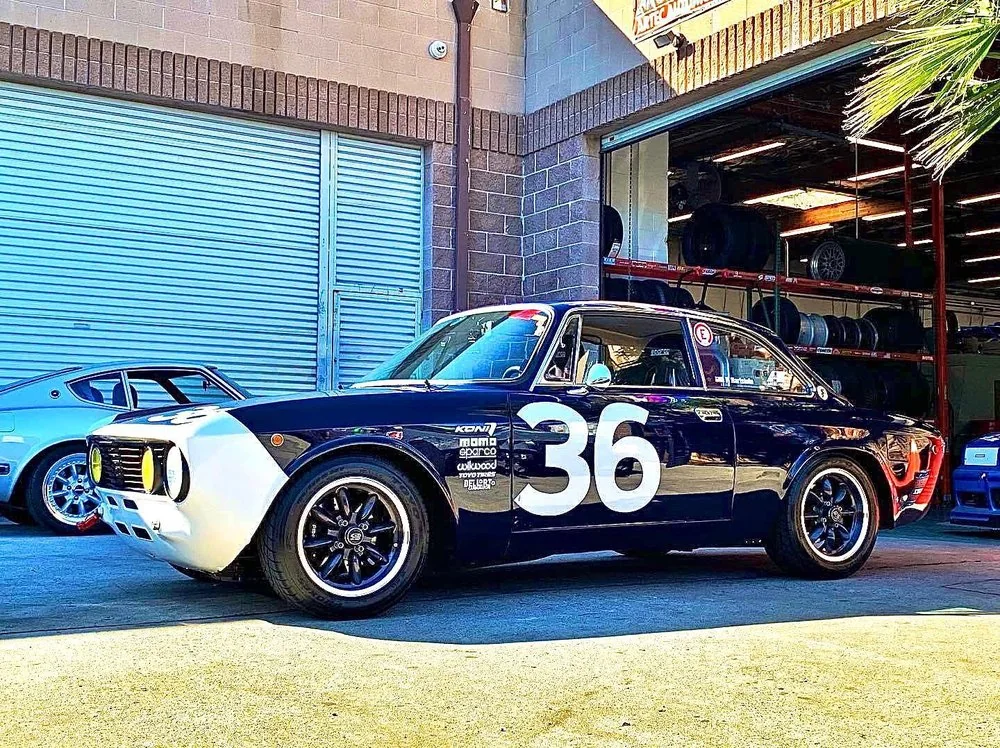
- Parts availability. Some parts are available as reproductions, some must be refurbished and some are fabricated to order. Fabrication is something we do in house, and our classic car repair team handles it with the car’s originality in mind.
- Originality versus drivability. A concours car wants period-correct parts and finishes. A car that is driven regularly may do better with modern-compound bushings or upgraded dampers. Decide which you are building before the first part is ordered.
Document what you remove. Photos and labeled parts protect value if you ever sell.
Our view on Bentley suspension work
We have been working on exotic, classic and European cars since 2001, and the pattern with air suspension is consistent: the expensive jobs are usually the ones that were delayed. A small leak is a modest repair. A compressor that ran for months to compensate is a bigger one.
That is why we start with diagnosis, and why we show our work. You get a transparent estimate, clear communication and photo records of what we found, so you can decide what to fix now and what can wait. We would rather you understand the car than approve a parts list you cannot verify.
Everything is handled under one roof by certified technicians using advanced technology. Suspension, alignment, brakes, wheels, diagnostics and custom fabrication sit with the same team, so one fault does not get passed around between shops. For owners who want an independent alternative to dealer service, that continuity is the point.
Artec
Bring your Bentley to Artec
We service and repair Bentley, Maserati, Mercedes-AMG, Ferrari, Lamborghini, McLaren, Porsche and other European and exotic cars from our shop in Belmont, on the Peninsula. If your car is sagging, throwing a suspension message or riding differently, start with our exotic car service or European car service page, or book a diagnosis through Artec Automotive.

If the issue is a warning light rather than the ride, our automotive repair team can start there.
FAQ
Can I keep driving a Bentley with a sagging corner?
It is better not to. A low corner can mean the spring is resting on its stop, and the compressor may be running continuously to compensate. Both increase wear and the final bill. If the car must move, drive it slowly a short distance to a shop and tell them before arrival so they can plan the lift correctly.
Does a low corner always mean a bad air spring?
No. Bentley’s service information says air escaping from a damper can cause the drop, but the drop alone does not prove the spring is faulty. Leaks can be in the lines, valve unit, supply unit or reservoirs, and sensors can also be at fault. A leak test finds which.
What should a suspension estimate include?
It should list the diagnosis, each part with its grade (genuine, original equipment or aftermarket), labor, any coding or ride-height calibration, and an alignment if it applies. Photos of the failed part are a good sign of an honest shop.
Is Bentley suspension service different at an independent specialist?
The car is the same, so the work should be held to the same standard: correct diagnostic equipment, proper Jack mode procedure, quality parts and calibration afterward. An independent shop can offer more direct communication and often a more flexible approach to parts. Ask about its tools and experience with your model.
Do Maserati and Bentley suspensions fail in the same way?
They share some themes, such as leaks, sensors and the need for calibration, but the details are model-specific. Maserati has had service campaigns that replace dampers outright on certain models. Check your VIN for open campaigns before any suspension repair.
Sources
- Technical Service Bulletin 2076718/1, NHTSA (2025)
- Bentley technical product information 2064582/2
- Bentley Motors: service and maintenance (United States)
- Maserati Rapid Update 658, GranTurismo MY24