

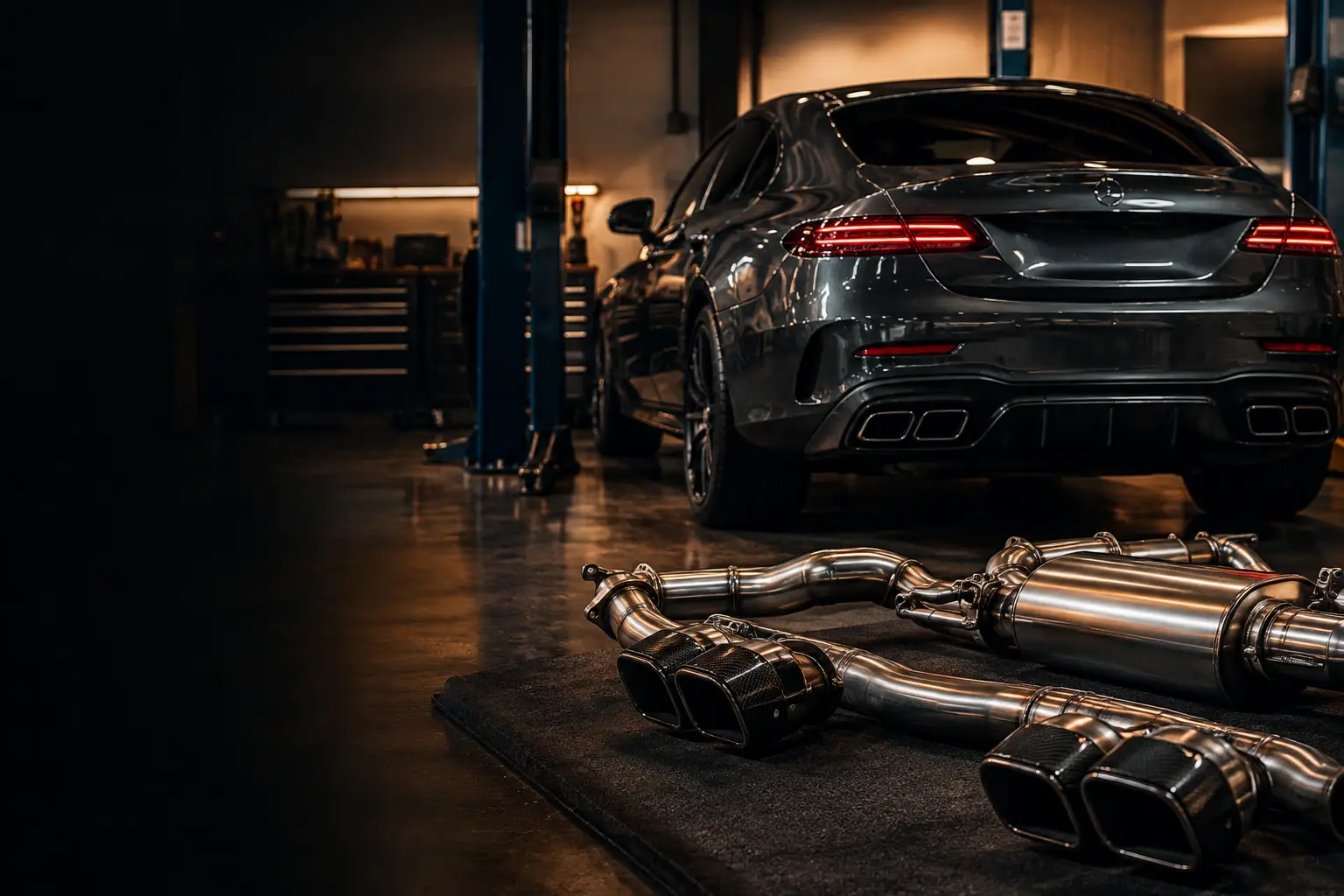
The right AMG exhaust upgrade should make every cold start, canyon road, and highway pull more memorable without compromising the refinement that made you choose an AMG in the first place. That balance matters. A C 63, E 63, GT, G 63, or newer turbocharged AMG is not simply a platform for more volume. It is a highly engineered performance vehicle with active exhaust controls, sophisticated electronics, packaging constraints, and a character worth preserving.
For Bay Area owners, the decision is also practical. Your vehicle may need to handle early-morning departures, long Highway 280 drives, city traffic, and spirited weekend miles. The best exhaust is not necessarily the loudest system. It is the one that delivers the sound, visual finish, drivability, and long-term quality that fit how you actually use your Mercedes-AMG.
Start With the Character You Want
Before choosing a brand, decide what you want to change. Some owners are after a deeper, more authoritative tone at low rpm. Others want sharper upshift crackles, a more exotic upper-rpm note, or a cleaner visual presence through upgraded tips. These are different goals, and they can lead to very different system choices.
Naturally aspirated AMG V8s tend to respond dramatically to exhaust changes because much of their mechanical character is already audible. The M156-powered C 63 and naturally aspirated SLS, for example, can gain a more aggressive and open character with carefully selected resonator, mid-pipe, or rear-section changes. Turbocharged AMG models have a different personality. Their exhaust systems can reveal more turbine sound and improve tone, but the factory system often has more influence from particulate filters, catalytic converters, valve programming, and calibration.
A premium installation begins with a conversation about your preferences, not a generic recommendation. Do you want a civilized comfort mode and a serious Sport+ setting? Are you seeking a classic V8 sound or a more modern, motorsport-inspired edge? Will the car be driven daily, stored as part of a collection, or reserved for special occasions? Those answers should shape the specification.
AMG Exhaust Upgrade Options Explained
An exhaust is a system, not just a set of polished tips. Each section affects sound, flow, weight, fitment, and legality differently.
Axle-Back and Rear-Section Systems
An axle-back system replaces the rear muffler section while retaining much of the factory exhaust ahead of it. This is often the most conservative route for an owner who wants a stronger exhaust note, premium tip design, and reversible modifications. It can preserve factory emissions equipment while offering a meaningful visual and acoustic upgrade.
The trade-off is that the performance change is usually modest. On many modern turbocharged AMGs, an axle-back is primarily about tone, appearance, and reduced rear-section weight rather than a major horsepower increase. That is not a weakness when the goal is a more engaging ownership experience with minimal disruption to the vehicle.
Cat-Back Systems
A cat-back exhaust replaces components from behind the catalytic converters to the rear of the vehicle. Depending on the design, it may include mid-pipes, resonators, mufflers, valves, and tips. This format creates more opportunity to refine exhaust frequency and reduce restriction while maintaining the emissions components nearest the engine.
A high-quality cat-back system should be engineered around your specific AMG chassis. Pipe diameter, crossover design, resonator volume, valve placement, hanger geometry, heat shielding, and bumper-tip alignment all matter. A system that sounds impressive in a short video can become tiring on a 90-minute drive if it introduces persistent cabin drone.
Mid-Pipes, Resonators, and X-Pipes
For many AMG owners, the most satisfying change comes from the middle of the exhaust. Resonator modifications and performance mid-pipes can alter the frequency range more dramatically than rear mufflers alone. An X-pipe, for example, can sharpen the note and change how the engine sounds through the rev range, while resonated sections can retain authority without allowing unwanted harshness into the cabin.
This is where vehicle-specific experience is particularly valuable. Removing too much resonation may produce a rawer sound, but it can also introduce boom between roughly 1,800 and 3,000 rpm, precisely where a road car spends considerable time. The right answer depends on the engine, transmission behavior, exhaust valve strategy, and your tolerance for cabin presence.
Downpipes and Front-Pipe Modifications
Downpipes and front-pipe modifications are generally more consequential on turbocharged AMGs. They can reduce restriction closer to the turbochargers and may support significant performance gains when combined with appropriate calibration. They also bring more serious considerations.
Changes to catalytic converters or other emissions-related equipment can affect emissions compliance, trigger warning lights, alter exhaust odor, increase noise substantially, and create complications during inspection or resale. California regulations are especially relevant here. A performance-minded build should never treat legal compliance as an afterthought. For many street-driven AMGs, a refined cat-back or valved rear section offers a better balance of enjoyment, reliability, and peace of mind.
Valved Exhausts Preserve the AMG Dual Personality
A valved system is often the most complete answer for a vehicle that needs to be both composed and expressive. With the valves closed, the exhaust can remain appropriate for neighborhood departures, client meetings, and extended freeway travel. With the valves open, it can deliver the more direct, muscular response an AMG owner expects when the road opens up.
Not every valve solution is equal. The best setups integrate cleanly with factory drive modes or use reliable, properly installed controllers. Poorly executed valve electronics can produce inconsistent operation, warning lights, rattles, or a system that defaults to an unwanted position. The mechanical components deserve the same scrutiny as the software and wiring behind them.
Factory integration also protects the ownership experience. An AMG should still feel like an AMG, not a vehicle with an aftermarket system fighting the car's original controls.
Material, Fabrication, and Fitment Matter More Than Specs
Titanium attracts attention for good reason. It is exceptionally light, corrosion-resistant, and capable of a distinctive, crisp tone. It also commands a premium and is not automatically the ideal choice for every owner. Quality stainless steel systems remain an excellent solution for road-driven AMGs, offering durability, consistent fitment, and a more accessible investment.
The details separate a lasting installation from a temporary modification. Look for precise weld quality, properly formed bends, durable valve hardware, solid hangers, heat management, and tips that remain centered in the diffuser under engine movement and thermal expansion. On vehicles with carbon-fiber diffusers or close-fitting rear bumper trim, correct clearance is essential. Exhaust heat and vibration can damage expensive components when fitment is treated casually.
At Artec Automotive, an exhaust project can also include custom fabrication when an off-the-shelf system does not meet the vision for a particular build. That may mean tailored tip positioning, fabrication for unique aero components, or careful integration with other performance modifications. The objective is always a finished result that looks intentional from every angle.
Sound Quality Is More Important Than Volume
An exhaust note has texture. Two systems can measure similarly in volume yet feel completely different from behind the wheel. One may have a deep, clean V8 rumble with controlled overrun. Another may introduce metallic rasp, hollow resonance, or sharp frequencies that wear on the driver over time.
Sound clips are useful for developing a general impression, but they are not a final decision tool. Microphone placement, recording compression, outdoor acoustics, and playback equipment can conceal drone and exaggerate burbles. Whenever possible, consider the system on the same generation of AMG you own, ideally with a similar engine, transmission, and emissions configuration.
Be honest about your tolerance for drama. A G 63 can carry a more theatrical note than an E 63 used for frequent executive travel. A weekend GT may benefit from a lighter, more vocal titanium system, while a daily-driven C 43 may be better served by a valve-controlled setup that retains genuine comfort when needed.
Pairing Exhaust Changes With Other Modifications
An exhaust upgrade should be considered within the larger build. A tune, intakes, upgraded cooling, downpipes, suspension, wheels, and aerodynamic components can all change what makes sense. For example, a calibrated turbo AMG with freer-flowing front sections may need more exhaust control than a stock vehicle with only a rear-section system.
This is also the time to assess related maintenance. Exhaust clamps, mounts, heat shields, underbody panels, oxygen sensors, and valve actuators should be inspected before installation. Premium vehicles reward proactive work. Resolving worn hardware before adding a new system prevents rattles and protects the quality of the final result.
The visual side deserves attention as well. Carbon-fiber tips, black ceramic-coated tips, brushed titanium, and polished finishes can each complement a different AMG specification. The best choice considers paint color, diffuser finish, wheel design, and whether the vehicle carries chrome, black, or carbon exterior accents.
Choose the System You Will Still Love in a Year
A successful AMG exhaust upgrade is not about winning a parking-lot sound contest. It is about giving your vehicle a more personal voice while respecting its engineering, your driving habits, and its long-term value. The strongest builds feel cohesive: powerful when asked, refined when required, and executed with the level of precision the AMG badge deserves.
Before committing, listen carefully, ask how the system behaves at highway speed, understand the compliance implications of every component, and choose installation workmanship equal to the parts themselves. The result should make you look forward to pressing the start button, every single time.