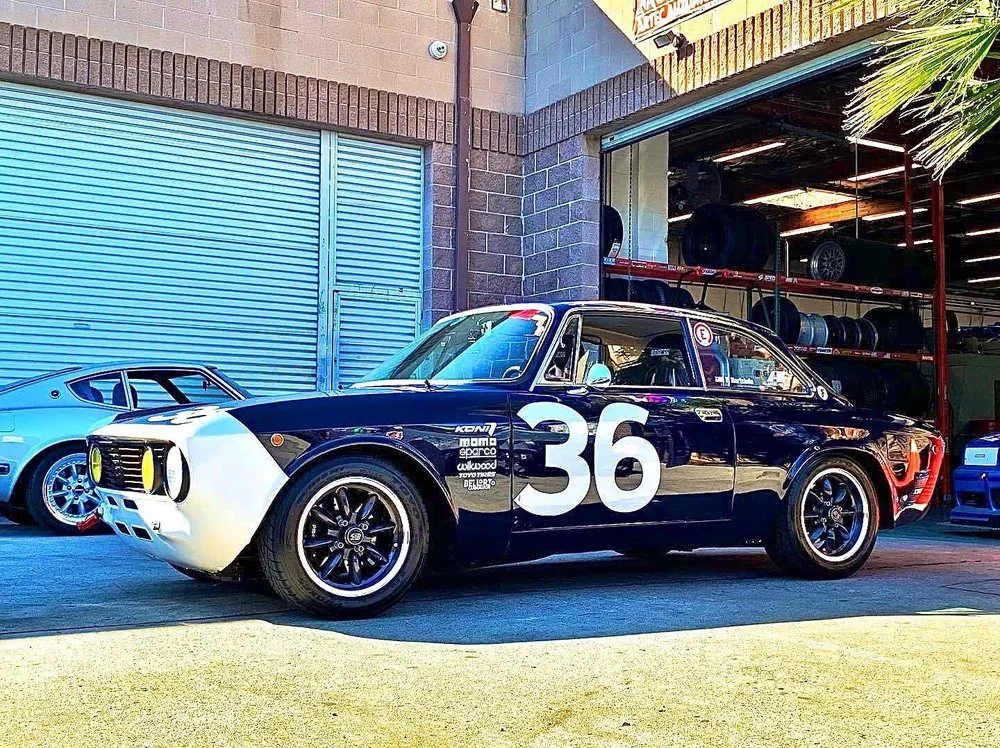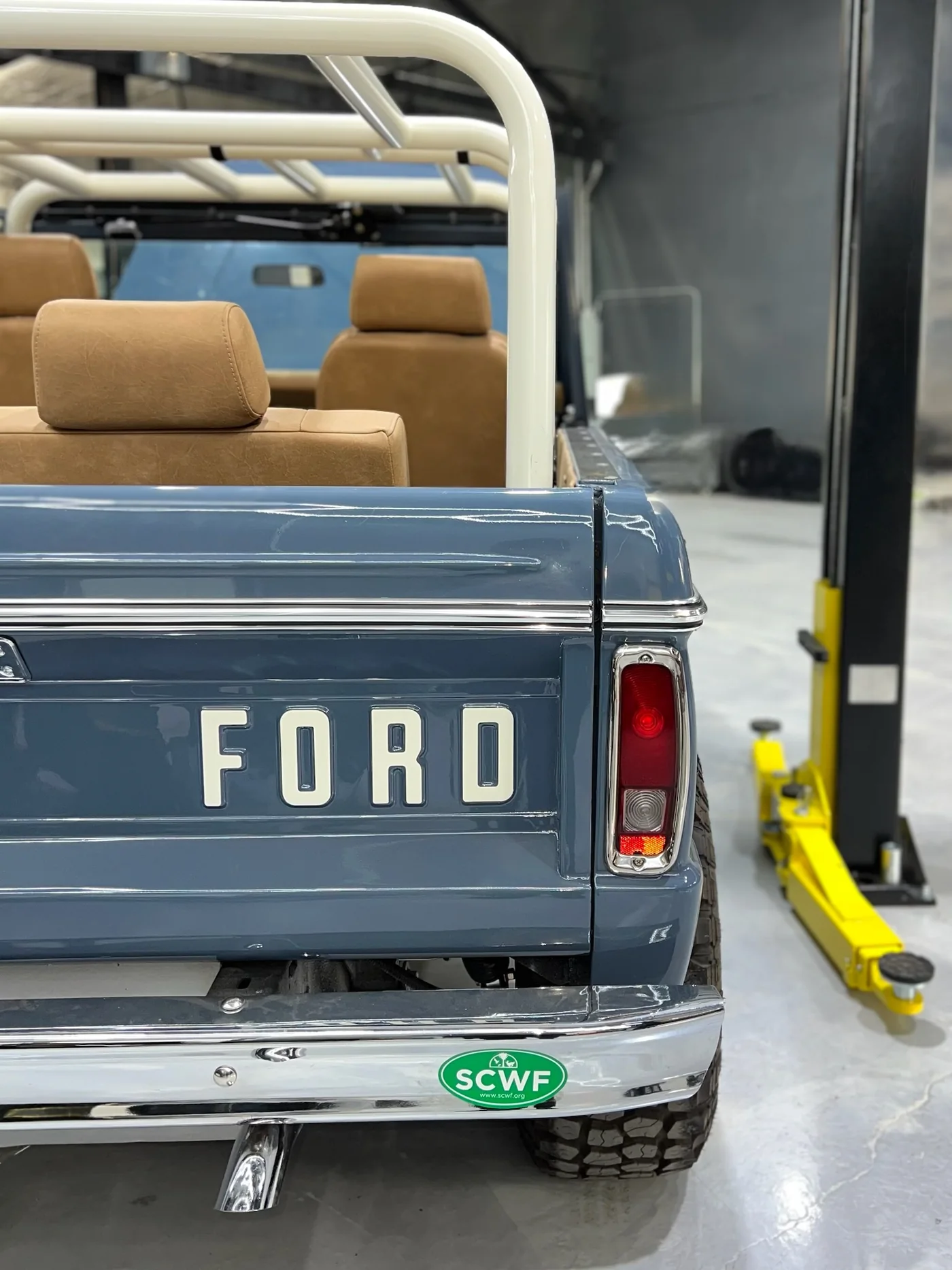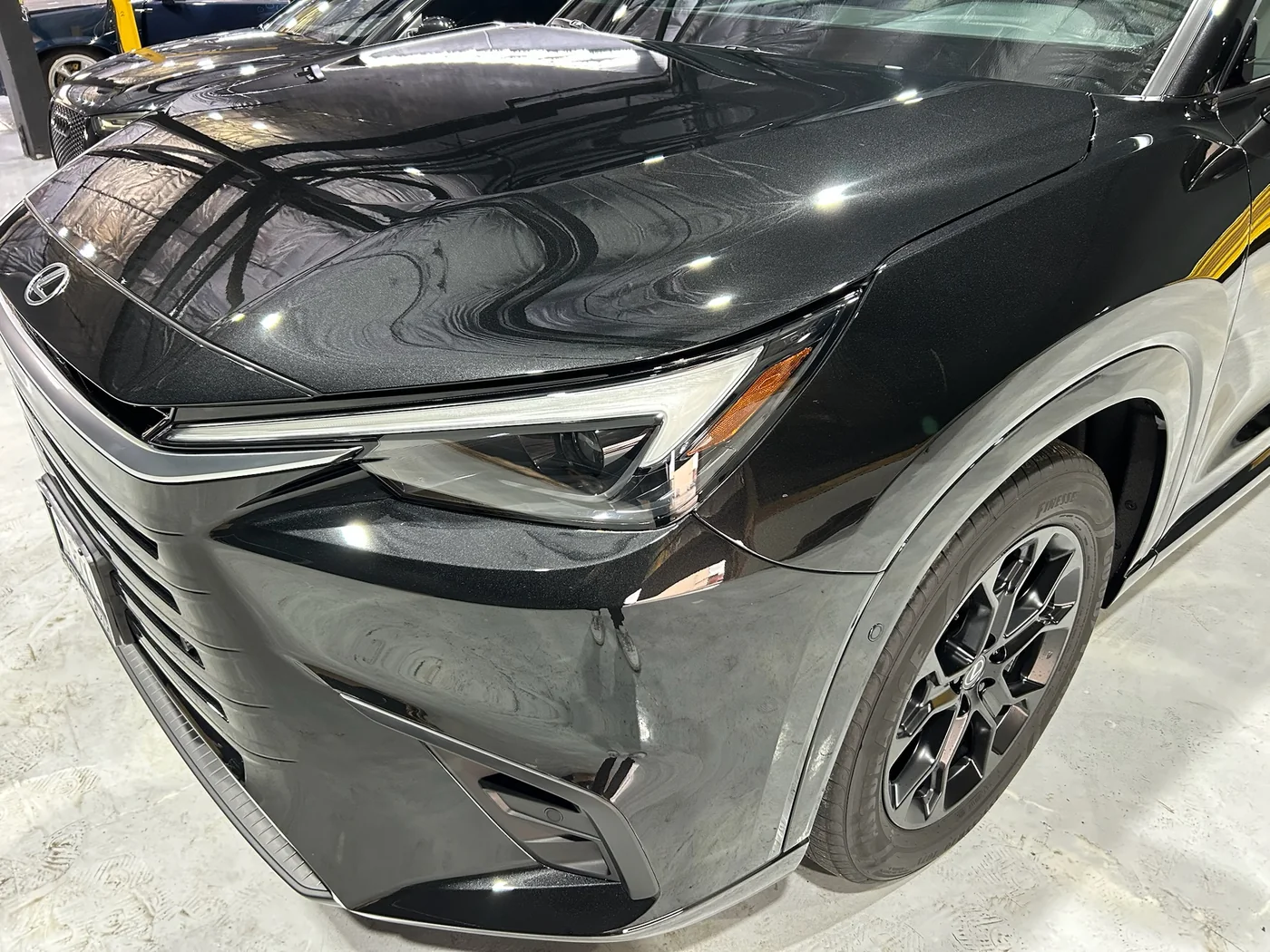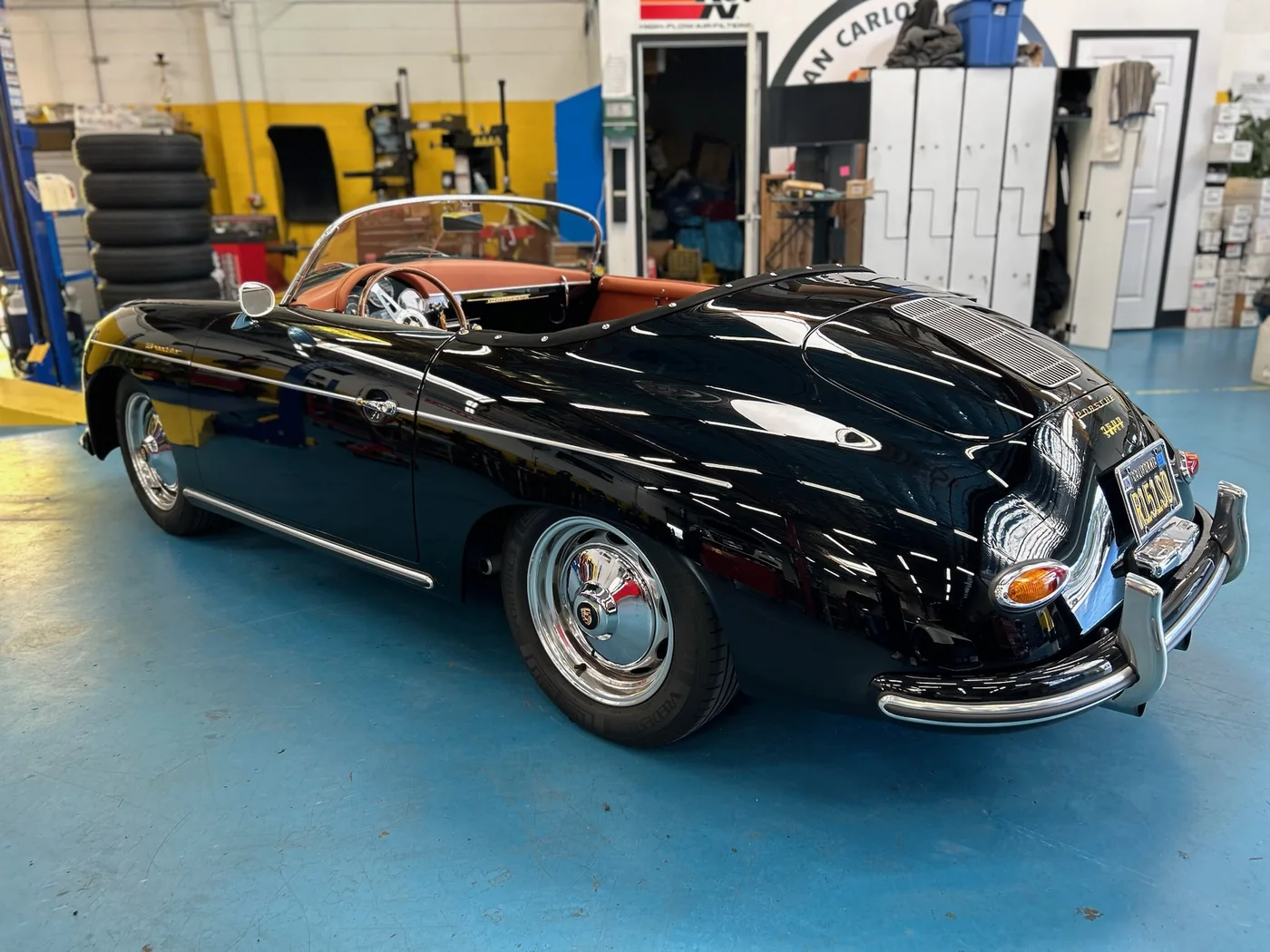


A lowered 911 clearing a steep garage entrance, an M3 set up for a demanding backroad, and a Range Rover that must remain composed while carrying passengers all ask different things of a suspension. That is why air suspension versus coilovers is not a simple debate about which setup sits lower. The right choice determines how a vehicle rides, responds, protects its bodywork, and fits into the way it is actually driven.
For premium and performance vehicles, suspension should be treated as a complete system rather than a cosmetic modification. Spring rate, damping control, suspension geometry, tire clearance, alignment, electronic integration, and installation quality all shape the result. A well-specified setup can sharpen a car's character. A poorly selected one can make an exceptional vehicle less comfortable, less predictable, and more difficult to enjoy.
Air Suspension Versus Coilovers: The Core Difference
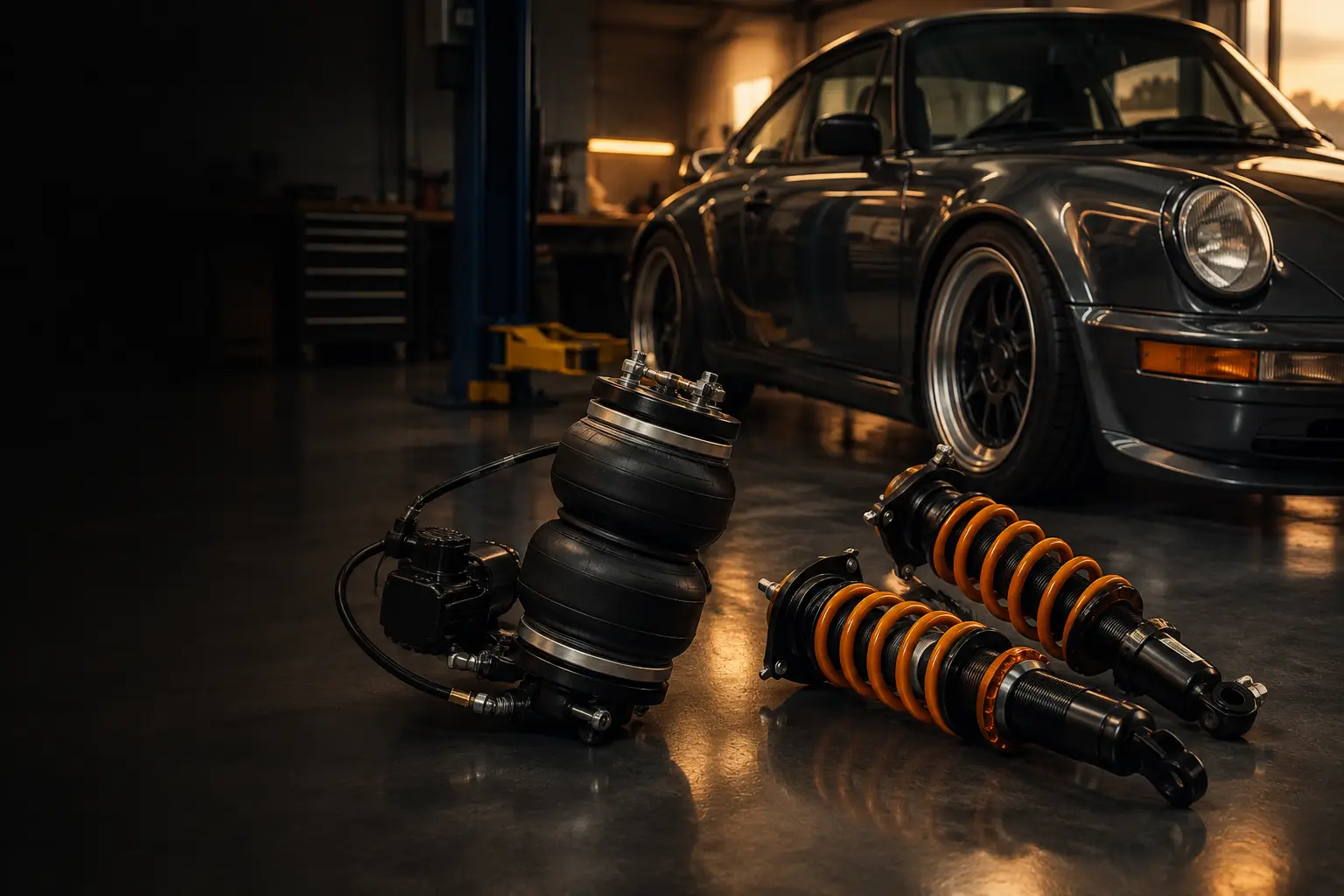
Coilovers use a coil spring wrapped around a damper assembly. Most performance-oriented systems use threaded shock bodies that allow the installer to adjust ride height, while more advanced versions add adjustable compression and rebound damping. Their appeal is direct: a fixed, precisely chosen ride height with suspension behavior tailored to the vehicle's intended use.
Air suspension replaces conventional coil springs with air springs, commonly called air bags, supported by a compressor, air tank, valves or a manifold, air lines, and an electronic controller. Changing air pressure changes ride height. Modern management systems can store height presets, level the vehicle, and allow the driver to raise it before a driveway, speed bump, or loading situation.
Neither system is automatically better. The distinction is whether your priority is static performance tuning or highly adaptable ride-height control.
Where Air Suspension Excels
Air suspension makes the strongest case for vehicles that face real-world clearance challenges. In the Bay Area, that can mean uneven pavement, steep parking structures, aggressive driveways, construction zones, and roads that change from smooth highway to broken surface within a short drive. A low vehicle does not have to remain low every moment it is moving.
For an exotic, a luxury sedan, or a carefully styled European build, the ability to lift the car on demand can help protect a front splitter, undertray, exhaust components, and paint-protected bumper from avoidable contact. Once on an open road or at an event, the vehicle can return to its preferred height with a repeatable controller setting.
Modern air is far more capable than its reputation
Older air systems earned criticism for vague handling and inconsistent reliability. That reputation does not accurately describe a properly engineered modern installation. Quality dampers, vehicle-specific air struts, calibrated management, and thoughtful corner balancing can deliver controlled, confidence-inspiring performance for spirited street driving.
Air suspension also offers exceptional visual flexibility. It can present the vehicle at a dramatic display height when parked, then raise to a practical driving height without compromising tire clearance or turning the car into a constant clearance calculation. For owners who value both aesthetics and usability, that range is difficult for fixed-height coilovers to match.
The trade-off is complexity. An air system has more components than a coilover setup, and its quality depends heavily on installation details. Air line routing, leak-free fittings, protected wiring, compressor placement, moisture management, and controller calibration are not minor details. They determine whether the system feels refined for years or becomes an intermittent source of frustration.
Why Coilovers Remain the Performance Standard
Coilovers are the more focused choice when consistent chassis response is the goal. Because the spring rate and ride height are fixed once the system is set, a properly selected coilover package gives the driver a highly repeatable platform. That matters for canyon driving, track use, and owners who know exactly how they want their vehicle to sit and behave.
A high-quality coilover setup can reduce body roll, improve steering precision, control pitch under braking and acceleration, and provide a more connected feel through fast transitions. The best systems do this without simply making the car harsh. Damper valving is critical. A stiff spring with poorly matched damping may feel impressive for a few blocks, then become tiring and unsettled on imperfect pavement.
Adjustability is useful only when it is purposeful
Many coilovers offer ride-height adjustment, and some provide separate adjustment for rebound, compression, or both. Those settings are valuable when they are selected around the vehicle, tires, alignment, road conditions, and driver preference. Randomly stiffening a damper does not create better handling.
Coilovers also require more consideration when lowering a vehicle substantially. Suspension geometry changes as ride height decreases. Excessive lowering can reduce suspension travel, introduce bump steer, alter camber curves, compromise axle angles, and cause tire rubbing. The best-looking height is not always the best-performing height.
Compared with air suspension, coilovers have fewer added components and generally present a simpler long-term mechanical package. They still need periodic inspection, especially on cars exposed to road debris, moisture, or track conditions. Threaded bodies can seize if neglected, and dampers eventually wear, but the system itself is fundamentally straightforward.
Ride Quality, Handling, and Reliability
Ride quality is where assumptions often lead owners in the wrong direction. Air suspension is not always softer, and coilovers are not always punishing. Both can be excellent or disappointing depending on component quality, spring or air-spring selection, damper calibration, tire sidewall, wheel weight, and the condition of the factory suspension bushings.
Air systems generally offer more day-to-day versatility. Raising the car increases practical clearance, and pressure can be managed to suit different heights and loads. That makes air particularly compelling for a vehicle that sees city streets, highway travel, passengers, luggage, and show-quality presentation.
Coilovers usually offer the more natural advantage for committed performance driving. They provide a stable, predictable baseline that experienced drivers can tune around. On a dedicated track car or a street car built primarily for aggressive driving, that consistency often outweighs the convenience of height-on-demand.
Reliability comes down to system quality and craftsmanship. A premium coilover installation demands correct preload, torque procedures, alignment, and clearance checks. A premium air installation demands all of that plus clean pneumatic and electrical execution. Neither should be approached as a universal kit install. Luxury and European vehicles often have active dampers, ride-height sensors, driver-assistance calibration requirements, and factory warning systems that must be considered before parts are selected.
Choose Based on How You Use the Vehicle
Air suspension is often the stronger answer for a luxury SUV, a low exotic driven regularly, or a show-oriented build that still needs to travel comfortably through the real world. It suits the owner who wants an elegant parked stance but refuses to sacrifice the freedom to enter a hotel driveway, transport the car, or navigate poor pavement without anxiety.
Coilovers are usually the better fit for a performance sedan, coupe, or dedicated weekend car where feedback, consistency, and cornering composure carry more weight than changing ride height from the driver's seat. They are also ideal for the owner who prefers a deliberately engineered fixed setup and is prepared to maintain a sensible height.
There is also a middle ground. Some owners retain or upgrade factory adaptive suspension where available, pairing modest lowering with proper alignment and wheel-and-tire fitment. Others select coilovers with street-friendly damping rather than chasing an extreme drop. The best modification is often the one that improves the vehicle without making ownership more demanding.
The Details That Protect the Result
Before choosing either system, establish the intended ride height, wheel specifications, tire dimensions, driving conditions, and whether the car will see track use. Then account for alignment targets, fender clearance, axle and driveline angles, brake-line routing, and any electronic suspension features. These decisions should happen before installation, not after rubbing tires or warning lights appear.
At Artec Automotive, suspension planning is approached as part of the entire build. A properly lowered car should not just photograph well. It should steer cleanly, clear obstacles with confidence, preserve its components, and feel worthy of the vehicle it supports.
Choose air suspension when adaptable clearance and presentation are central to the experience. Choose coilovers when fixed-height precision and repeatable performance are the priority. Either can be exceptional when the system is selected with restraint, installed with precision, and tuned around the roads and moments that matter most to you.