
Spot Lowball Quotes: Owners’ Checklist for Air Cooled Porsche Rebuilds
A rebuild is the right call once a cylinder is scored, an IMS bearing shows wear, or an engine has gone past 100,000 miles with multiple failure signs stacking up. Expect a mid-range rebuild to cost a substantial amount, with additional expense for sleeved cylinders, IMS solution work, or performance-oriented machine work, and a typical shop timeline that often runs several weeks depending on parts availability and inspection findings.
TL;DR:
- Rebuilding costs can vary widely, with full rebuilds typically ranging from moderate to very high depending on parts and work needed.
- A proper rebuild process includes detailed documentation, measuring all components, and thorough machine work to avoid early failures.
- Critical inspection points include cylinder wear, IMS and AOS issues, sealing, and proper machine work, all of which significantly impact durability.
- Expect a rebuild timeline of six to twelve weeks, carefully managed by staged disassembly, machine work, and parts procurement.
- Trustworthy shops provide detailed quotes, documented processes, and transparency in parts sourcing, avoiding vague scope of work or incomplete inspection data.
Table of Contents
- What Does an Air-Cooled Porsche Engine Rebuild Cost?
- What Does a Proper Air-Cooled Porsche Engine Rebuild Include?
- How Do You Choose a Rebuilder You Can Trust?
- How Long Does an Air-Cooled Porsche Engine Rebuild Take?
- Why Do Air-Cooled Porsche Engines Fail?
- What Should You Expect From a Shop-Documented Rebuild?
- A Final Word on Doing This Right
- Ready for a Documented Rebuild Quote?
- Sources
What Does an Air-Cooled Porsche Engine Rebuild Cost?
Cost ranges break into three tiers, and quotes that skip stating which tier they’re pricing should raise a flag. A top-end refresh, meaning new gaskets, seals, and inspection without splitting the case, sits at the low end. A full rebuild, splitting the case, replacing bearings, addressing cylinder wear, and reassembling to spec, lands in the middle. A performance or concours-level rebuild, with balancing, upgraded internals, and cosmetic case work, runs highest.
Real-world numbers back this up. Owner discussions around a 1981 911SC rebuild indicate that initial rebuild quotes may be substantive, with total project bills increasing significantly when ancillary repairs are included. That gap between the rebuild quote and the final invoice is where most owners get blindsided.
Several line items drive that gap:
- Cylinder work. Honing and re-ringing costs little. Sleeving with Nickies or an equivalent aluminum-silicon solution costs considerably more but often outlasts the original bore.
- IMS and IMS-solution parts. Bearing upgrades on M96/M97 engines add meaningfully to the parts bill but address one of the most common causes of catastrophic failure.
- Pistons, rings, bearings, and gaskets. Quality varies widely here, and OEM-spec or better parts cost more than generic replacements.
- ARP hardware. Upgraded studs and fasteners add a modest sum but reduce the risk of case damage on reassembly.
- Machine work. Line-boring, decking, valve work, and dynamic balancing are labor-intensive line items that separate a careful rebuild from a rushed one.
Soft costs matter too. Diagnostic time before the quote, shipping or core-exchange fees on remanufactured components, and unrelated repairs discovered mid-teardown, like a rear main seal, clutch, or cooling system issue, routinely add to the final bill. A shop that flags these possibilities up front is doing you a favor, not padding the estimate.
What Does a Proper Air-Cooled Porsche Engine Rebuild Include?
A rebuild worth paying for follows a sequence, not a shortcut. Here’s the scope you should see written down before work starts:
- Pre-removal evaluation. The fuel system, intake, cooling system, electrical components, and any prior modifications get checked before the engine comes out, since problems in these systems often mimic or worsen engine symptoms. LN Engineering’s rebuild guide treats this step as foundational rather than optional.
- Documented disassembly. Every component gets measured against pass/fail tolerances and photographed, not just eyeballed.
- Cylinder strategy. Depending on wear, the shop repairs, sleeves (Nickies-style), or replaces cylinders outright, then selects matched pistons and rings.
- IMS inspection and bearing replacement. On applicable engines, this is where a rebuild either solves a known failure point or leaves it ticking.
- Machine work. Line honing or boring, deck surfacing, dynamic balancing, and ultrasonic cleaning happen before anything gets reassembled. Pelican Parts’ rebuild walkthrough treats balancing and thorough cleaning as non-negotiable steps, and skipping them is one of the fastest ways a budget rebuild fails early.
- Reassembly and break-in. Correct ring gap and piston orientation, as Klassik ATS documents in its cylinder and piston walkthrough, followed by a staged break-in and compression or leakdown testing before the car goes back on the road.
Pro Tip: Ask whether the shop uses a case sealant with a short working window, like Loctite 574, which begins setting within about 15 minutes of application. If a rebuilder isn’t organized enough to work within that window, it’s worth asking what else got rushed during assembly.
How Do You Choose a Rebuilder You Can Trust?
There’s no industry-standard definition of a “rebuilt” engine, and that gap is exactly how corners get cut without you noticing. The Porsche Club of America warns buyers directly that a lower quote often means worn components got reused or machine work got skipped entirely, not that the shop found a smarter way to save you money.
Before you sign off on a quote, ask for these in writing:
- A parts list specifying exactly what’s new versus reused, with brand names for critical components.
- Measurement data or reports from line-boring and balancing work, ideally with photos.
- Warranty terms: what’s covered, for how long, and what voids it.
- A clear labor breakdown separating machine-shop hours from assembly hours.
Red flags are just as telling as good documentation. A vague scope of work, silence on whether bearings or rings are new, no inspection photos, and no measurement data are all signs the shop is quoting a price, not a process. When comparing quotes side by side, line up labor hours, machine-work line items, and parts sourcing rather than just the bottom-line number. Two quotes $2,000 apart can represent very different levels of actual work.
How Long Does an Air-Cooled Porsche Engine Rebuild Take?
Plan on six to twelve weeks for a full rebuild, though the range stretches further when parts backorders or unexpected findings intervene. The stages typically run like this:
- Inspection and evaluation (several days to a week): the shop confirms the failure mode and builds the actual scope of work.
- Disassembly and documentation (about a week): components get measured, cataloged, and either flagged for reuse or replacement.
- Machine work (two to four weeks): this stage often has the longest lead time since it may involve outside machine shops for boring, sleeving, or balancing.
- Parts procurement: cylinder sleeves, IMS solutions, and gasket kits can have their own lead times, especially for less common engine variants like early 964 or 993 configurations.
- Reassembly and break-in (one to two weeks): careful torque sequencing, sealant timing, and a staged break-in period before the engine sees full load.
Owners weighing a shop rebuild against a swapped exchange engine face a real trade-off. An exchange unit can shorten downtime dramatically, but you inherit someone else’s unknown history. Building in-house takes longer but gives you full documentation from day one. You can shorten your own timeline by pre-authorizing likely repairs before teardown, arranging transport early, and scheduling the job during a season when you’re not relying on the car daily.
Why Do Air-Cooled Porsche Engines Fail?
Cylinder wear tops the list. Bore scoring, cylinder taper, and outright cracking show up most often on engines that ran hot, sat unused for long stretches, or received poor prior maintenance. Sleeve slipping is a specific concern on engines that were previously “fixed” with a lower-quality repair rather than a proper sleeve.
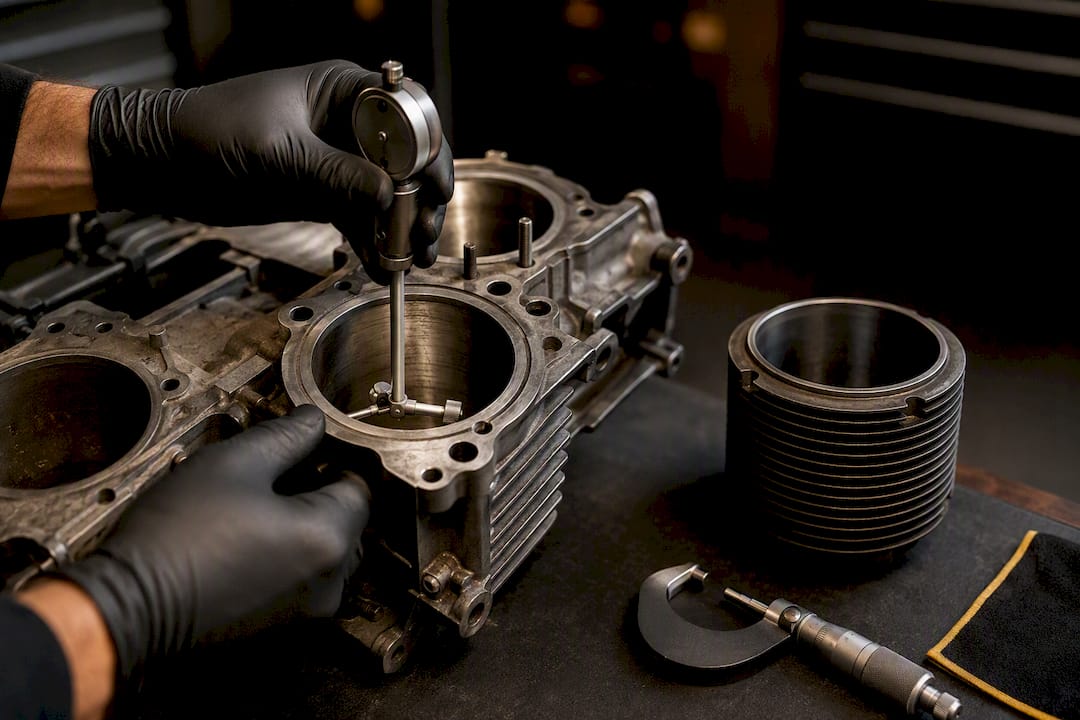
IMS and AOS issues are the other major pattern, especially on M96/M97-era engines. Specialist rebuild data from LN Engineering and RND Engines consistently points to cylinder repair and IMS/AOS attention as the two areas that determine whether a rebuild lasts 100,000 miles or fails again at 20,000.
A few upgrade decisions are worth weighing during any rebuild:
- Oiling improvements. A properly sized sump and attention to oil flow patterns reduce long-term wear risk.
- Cooling system updates. On later air-cooled and early water-cooled hybrids, water pump quality and coolant practices materially affect engine life.
- OEM-spec versus performance rebuild. If you’re keeping the car stock or concours-correct, OEM-spec parts preserve value. If you’re chasing more power, this is the point in the process to discuss cams, compression, or head work, since the engine is already apart.
Pro Tip: If your engine has already had one “rebuild” that failed early, ask the new shop to specifically document why the last one failed. That diagnosis often reveals whether the real issue was a parts problem, a machining problem, or a step that got skipped altogether.
What Should You Expect From a Shop-Documented Rebuild?
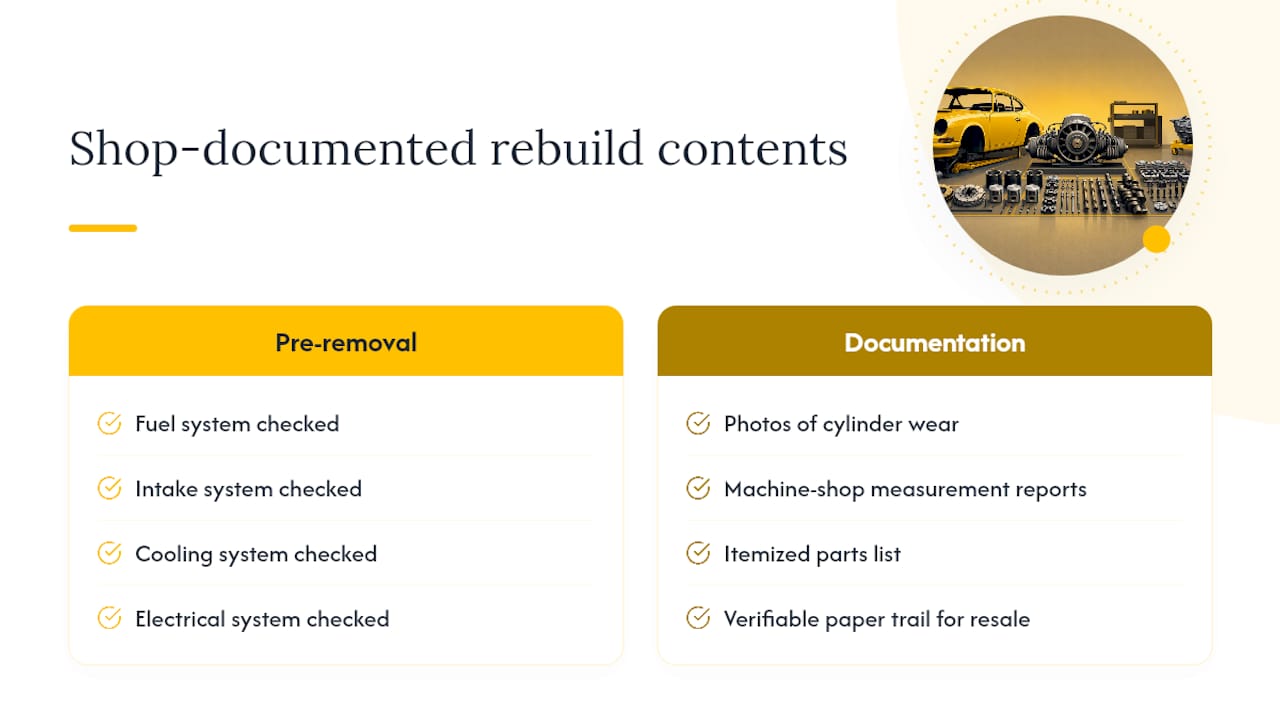
A rebuild package worth paying for reads like a paper trail, not a promise. Artecautomotive’s approach to classic and European engine work starts with the same pre-removal evaluation LN Engineering outlines: checking fuel, intake, cooling, and electrical systems before the engine ever comes off the mounts, so nothing downstream gets misdiagnosed.
A rebuild is only as good as what you can verify after the fact. Photos of cylinder wear before repair, measurement reports from machine work, and an itemized parts list turn a rebuild from a leap of faith into a documented job you can stand behind years later.
That documentation matters just as much when you sell the car as when you drive it.
A Final Word on Doing This Right
Rebuilding an air-cooled Porsche engine properly isn’t complicated in concept. It’s disciplined in execution. The shops that get it right measure everything, document everything, and tell you what they found before they tell you what it costs. If a quote can’t answer basic questions about parts and process, treat that as your answer. Get a documented inspection before you commit to any number, and expect regular updates once the work begins, not silence until the invoice arrives.
— Armen
Ready for a Documented Rebuild Quote?
If you’ve read this far, you already know the difference between a rebuild quote and a rebuild plan. Some shops specialize in exotic, classic, and European vehicle service, performing pre-removal evaluation, cylinder strategy, and machine-work documentation as standard practice for classic Porsche rebuilds.
What you want from a rebuild shop is a process you can verify at every stage, not just at pickup. If your air-cooled engine is showing bore scoring, IMS concerns, or you’re simply past due for a full inspection, reach out to Artecautomotive to schedule a documented evaluation and get a parts-and-labor quote built around what your engine actually needs, not a generic price sheet.
Sources
- How to choose a Porsche Engine Rebuilder and What is Required to Rebuild a Porsche Engine Correctly | The Porsche Club of America
- The Ultimate M96/M97 Engine Rebuild Guide - LN Engineering
- Rebuilding Your Porsche 911 Engine - Pelican Parts
- Pistons and cylinders. Rebuilding an air-cooled Porsche - Klassik ATS