
Skip the $40 Code Reader: Advanced Diagnostics for Exotic Cars
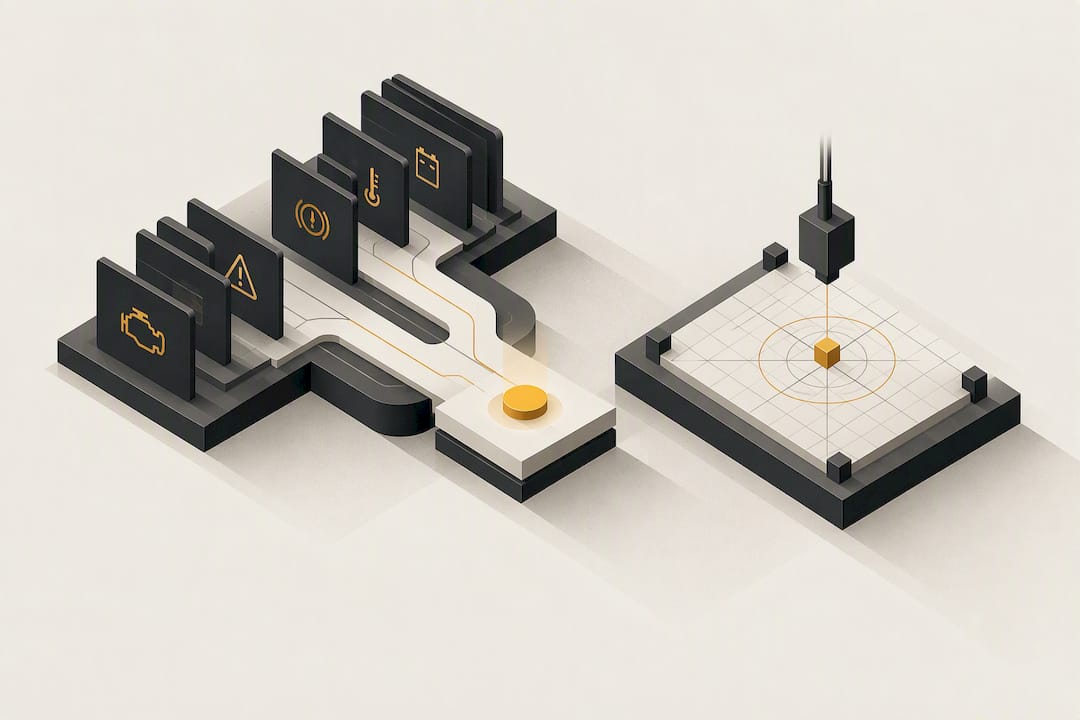
Advanced auto diagnostics use OEM-level scan tools, live data logging, and sensor calibration to find faults that generic code readers miss. You need them when a problem is intermittent, when ADAS or high-voltage systems are involved, or when a basic scan turns up a code but no clear cause. Owners of exotic and European vehicles should go straight to a specialist shop with factory-level tools rather than a corner garage with a $40 code reader.
TL;DR:
- Advanced auto diagnostics access OEM-level tools and full-system data, essential for troubleshooting intermittent faults and complex systems like ADAS and high-voltage batteries.
- Shops with factory-licensed diagnostic equipment, including calibration rigs and reprogramming interfaces, provide more accurate results on exotic and European vehicles than generic code readers.
- Diagnostic costs vary greatly, often exceeding repair expenses when tracking elusive electrical faults, ADAS recalibrations, or OEM module programming requiring specialized procedures.
- Proper diagnosis follows a systematic process: symptom collection, full-system scan, live-data testing, component isolation, and proof of resolution before final repairs.
- Certification matter: technicians with manufacturer-specific training and OEM-level tools dramatically improve diagnostic accuracy on luxury, exotic, and vintage cars.
Table of Contents
- What Advanced Auto Diagnostics Actually Cover
- What Tools And Technology Do Shops Actually Use?
- When Should You Get Professional Diagnostics?
- What Should You Expect To Pay For Diagnostics?
- How Does A Shop Diagnose A Complex Problem?
- How Do You Choose A Trustworthy Diagnostic Shop?
- Why Specialist Experience Changes The Diagnostic Outcome
- What Certifications Actually Matter For Specialized Diagnostics?
- Why Exotic And European Diagnostics Require A Different Approach
- What Do Successful Diagnostic Outcomes On Exotic Cars Look Like?
- What Do You Gain From A Specialist Shop?
- What Owners Should Expect In Practice
- How Artec Automotive Handles Advanced Diagnostics
- Sources
- FAQ
What Advanced Auto Diagnostics Actually Cover
A generic OBD-II reader pulls one thing: a trouble code. That code tells you where a system flagged a problem, not why. Advanced auto diagnostics go past that single data point into the vehicle’s full electronic architecture, which on a modern Porsche or BMW can mean dozens of interconnected modules talking over a CAN or LIN network.
Full-system diagnostics typically examine:
- Engine and transmission control modules, including live sensor data and adaptive fuel trims
- Body control modules governing lighting, locks, and climate systems
- ABS, traction control, and stability systems
- ADAS components: radar sensors, forward cameras, and calibration targets
- Battery management systems in hybrids and EVs
A check-engine code is a starting point, not a diagnosis. Consumer Reports notes that the light can mean something as minor as a loose gas cap or as serious as a failing catalytic converter, and only deeper testing separates the two.
What Tools And Technology Do Shops Actually Use?
The gap between a home code reader and a dealer-level diagnostic platform is enormous. Consumer-grade scanners read generic codes. OEM diagnostic platforms, like the ones Porsche, BMW, and Mercedes-Benz license to their dealer networks, access manufacturer-specific fault data, live sensor streams, and reprogramming functions that aftermarket tools simply can’t reach.
A properly equipped shop’s toolkit includes:
- Dealer-level scan tools and reprogramming interfaces for manufacturer-specific systems
- Oscilloscopes and multimeters for tracing electrical signals and intermittent faults
- Smoke machines, leak detectors, and fuel-pressure gauges for drivability issues
- ADAS calibration rigs and target boards for camera and radar alignment
- Insulated tools and bench programmers for EV high-voltage work
Telematics and cloud-based analytics are changing the front end of this process. Streamed vehicle data can flag developing problems before a warning light ever appears, a shift the diagnostics industry describes as moving from reactive diagnostics toward prognostics. Even with that data in hand, most repairs still need a technician with hands-on equipment to confirm and fix the fault.
Pro Tip: Ask any shop quoting ADAS or module work whether their scan tool is a generic aftermarket unit or a factory-licensed platform. The answer tells you a lot about what they can actually see.
When Should You Get Professional Diagnostics?
Some problems are DIY-friendly. Others are not, and pushing forward with guesswork on a high-value vehicle usually costs more than it saves. Get a shop involved when you notice:
- A fault that comes and goes, especially electrical gremlins that clear themselves before you can diagnose them
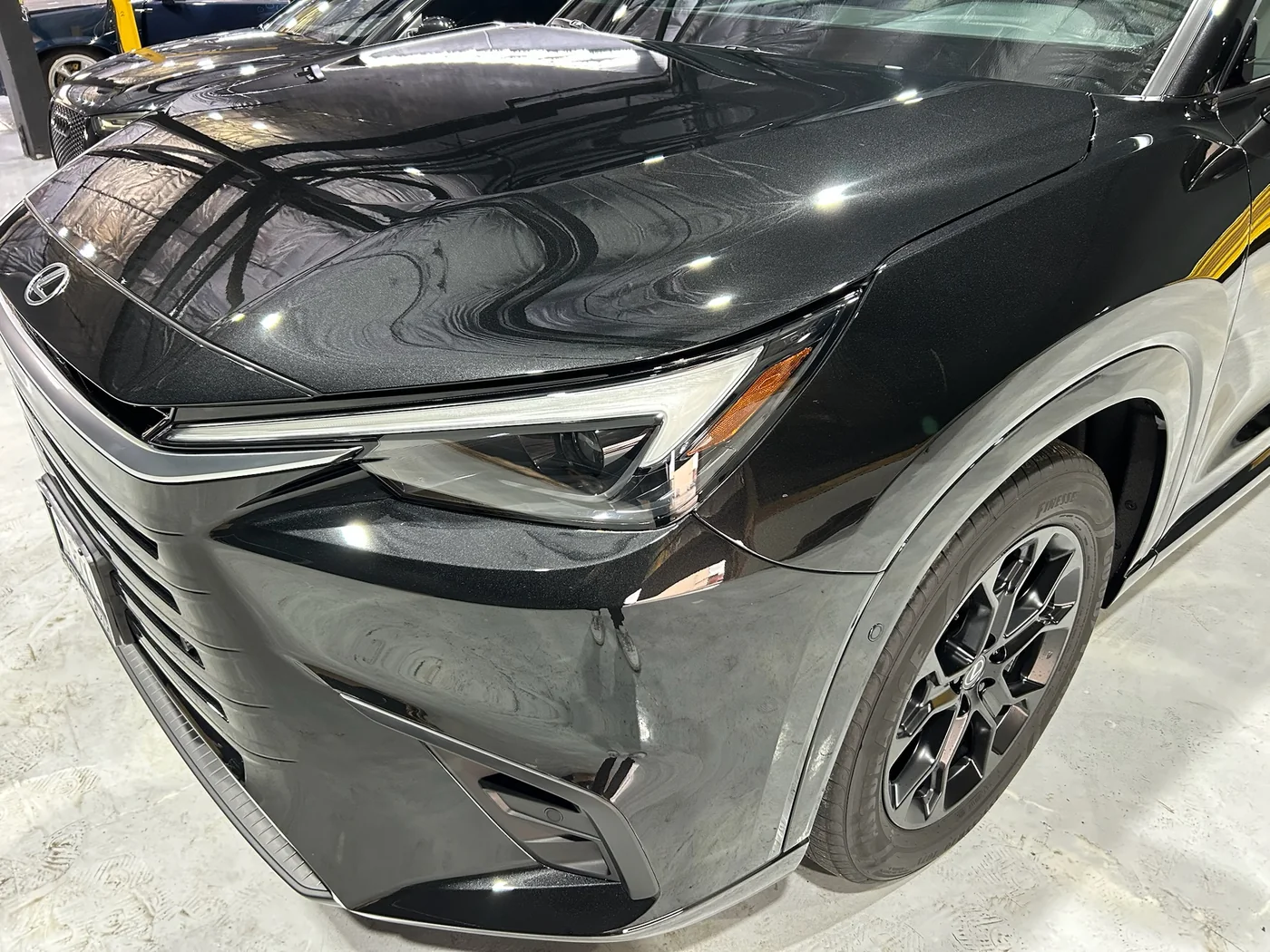
- ADAS warnings that appear after a collision, bumper repair, or windshield replacement
- Multiple module errors, immobilizer faults, or key-programming issues that generic scanners can’t clear
- Any high-voltage alert or battery-management warning on a hybrid or EV
Intermittent faults are the hardest category. They rarely throw a permanent code, and chasing them without live-data logging tools wastes hours. ADAS issues are just as unforgiving: a camera or radar sensor that’s a few degrees out of alignment after glass work can disable automatic braking or lane assist without any dashboard warning at all.
What Should You Expect To Pay For Diagnostics?
Shops generally price diagnostics one of two ways: a flat fee that covers a set block of time, or an hourly diagnostic rate that continues until the fault is isolated. Many shops waive or credit that fee if you have them do the repair.
What drives the price up:
- Intermittent electrical faults that require extended data logging across multiple drive cycles
- ADAS recalibration, which needs specialized rigs and target alignment
- OEM module programming that requires factory-level software access
- EV high-voltage procedures, which demand insulated tools and additional safety time
- The technician’s specific brand training and experience level
Diagnostic labor costs can sometimes be higher than the repair costs themselves. AAA notes that tracing a complex electrical fault can take more technician hours than the actual fix, since running a modern diagnostic bay requires real investment in high-tech equipment. ADAS work adds its own cost layer: AAA’s ADAS cost data puts radar sensor replacement at $500 to $1,300 and front camera replacement at $600 to $800, before labor.
How Does A Shop Diagnose A Complex Problem?
A competent diagnostic process follows a consistent sequence, whether the car is a daily driver or a Ferrari 458.
- Intake and symptom capture. The technician records your description of the fault, pulls the VIN, and checks for applicable technical service bulletins before touching a scan tool.
- Scan and live-data review. A full-system scan pulls stored and pending codes, then the technician reviews freeze-frame data captured at the moment the fault occurred.
- Recreate and isolate. Road tests, subsystem bench testing, and oscilloscope traces narrow the fault to a specific circuit or component, especially for problems that don’t set a permanent code.
- Repair and verification. After the fix, the technician re-logs the data, road-tests the vehicle, and should be able to show you before-and-after evidence that the fault is actually resolved.
Skipping the TSB check in step one is a common shortcut that costs owners money. Consumer Reports explains that NHTSA lets anyone search for manufacturer bulletins by VIN or year, make, and model, so a shop that skips this step may bill you to rediscover a known issue.
Pro Tip: Before you approve diagnostic work, ask whether the shop checked for a matching TSB. If one exists, it can shorten the diagnostic time considerably.
How Do You Choose A Trustworthy Diagnostic Shop?
Not every shop that offers “diagnostics” can actually deliver them. A few concrete checks separate the specialists from the guessers:
- Ask whether technicians hold ASE certification or brand-specific manufacturer training
- Confirm the shop owns OEM-level or dealer-level scan tools, not just generic code readers
- Request evidence: code screenshots, data logs, and before-and-after captures tied to your repair
- Ask directly whether an applicable TSB exists for your symptom
- Watch for red flags: vague explanations, pressure to approve unrelated services, or refusal to document findings
Independent shops often outperform dealerships on communication and honesty, particularly for vehicles outside their factory warranty window.
That pattern shows up consistently in Consumer Reports’ shop-quality research, which also flags that dealers sometimes carry the best factory tools but charge accordingly. If your specific concern is cosmetic rather than mechanical, proper wash technique guidance can help you tell the difference between a real paint defect and something a two-bucket wash would have fixed, before you pay a shop to “diagnose” it.
For EVs and hybrids, confirm the shop follows lockout and tagout procedures around the high-voltage battery pack. Skipping that training isn’t just a cost issue; it’s a safety one.
Why Specialist Experience Changes The Diagnostic Outcome
A specialist shop that focuses on exotic, classic, and European vehicles applies such diagnostic procedures routinely. Diagnosing a transmission control fault on a Bentley or a battery-management anomaly on a Tesla requires familiarity with that specific platform’s quirks, not just general automotive knowledge.
Every diagnostic job at the specialist shop should come with photo documentation, data logs, and a transparent estimate before any repair begins, so owners can see exactly what was found and why a recommendation was made. OEM-grade tools support ADAS calibration and manufacturer-level programming across various exotic and European brands.
What Certifications Actually Matter For Specialized Diagnostics?
ASE certification (Automotive Service Excellence) is the baseline credential to look for. It’s earned through testing on specific vehicle systems, engine performance, electrical systems, and heating and air conditioning among them, and it has to be renewed periodically to stay current with new vehicle technology. An ASE credential alone doesn’t guarantee brand-specific expertise, though.
That’s where manufacturer training programs come in. Brands like Porsche, Mercedes-Benz, and BMW run their own technical certification tracks that teach technicians how to use factory diagnostic software, interpret brand-specific fault codes, and follow the exact calibration procedures those manufacturers require for ADAS and electronic systems. A technician with both ASE certification and hands-on experience on a specific make brings a combination that generalist shops rarely match.
Licensing requirements for auto repair vary by state, and most states require a business license rather than an individual technician license. That makes shop-level credentials, ASE status across the team, manufacturer training, and documented experience on your specific vehicle, more meaningful than any single license on the wall. When you’re evaluating a shop for a six-figure vehicle, ask which certifications the specific technician assigned to your car actually holds, not just what the shop claims in its marketing.
EV and hybrid work adds another layer: high-voltage safety training and certification, since improper handling of a battery pack during diagnosis carries real risk. A shop that services EVs should be able to name the specific high-voltage safety program its technicians completed.
Why Exotic And European Diagnostics Require A Different Approach
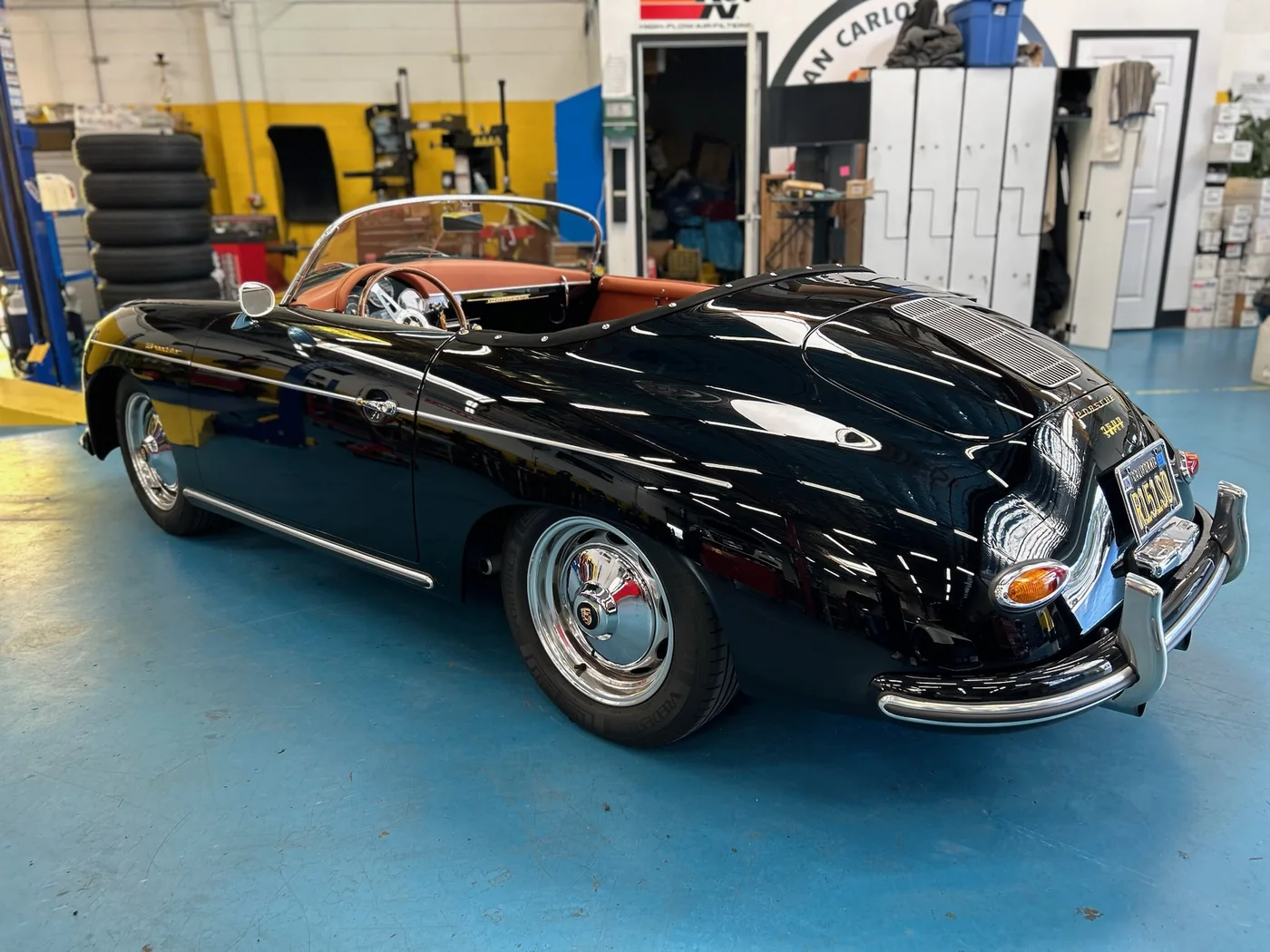
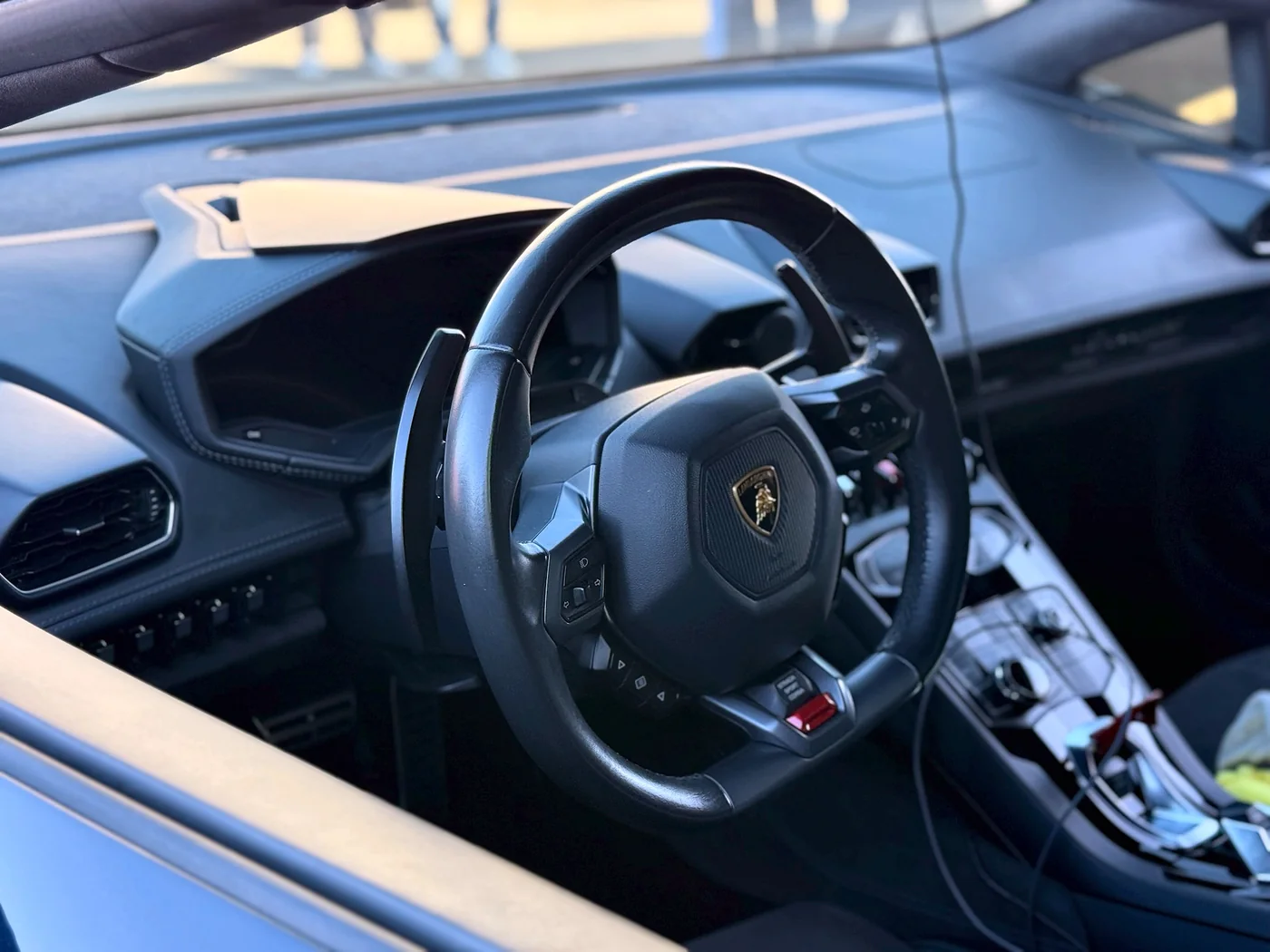
European and exotic manufacturers build electronic architectures that diverge sharply from mass-market vehicles. A Porsche’s PASM suspension control, a Bentley’s air suspension module, or a Lamborghini’s drive-mode logic all run on proprietary software that generic scan tools often can’t read past a surface-level code.
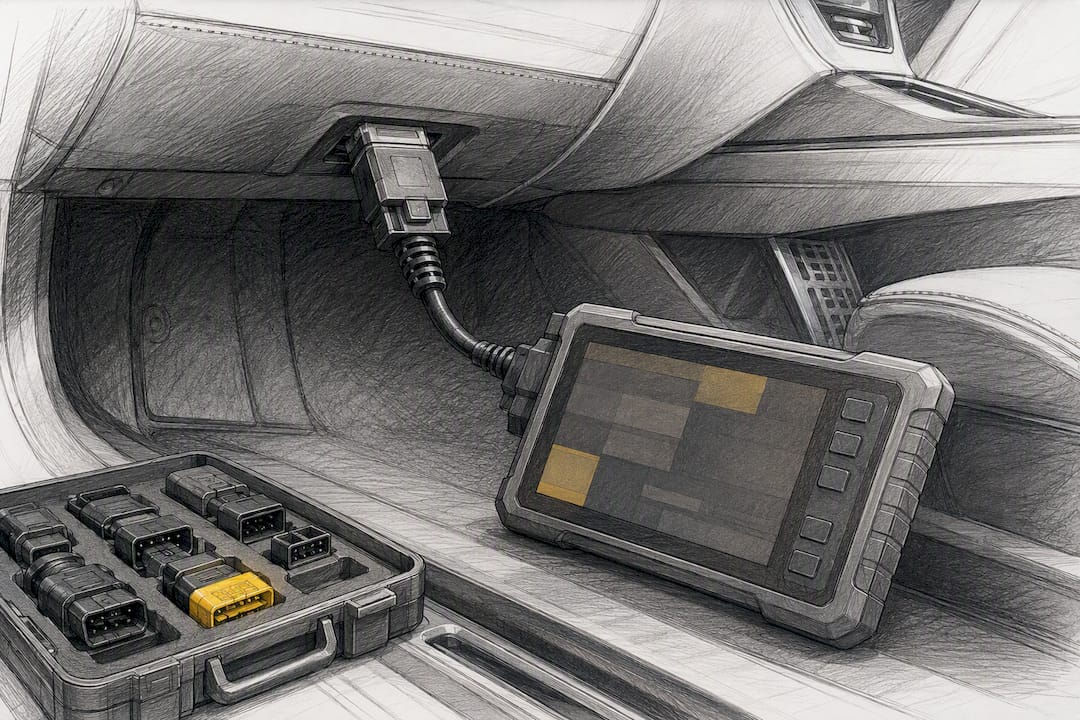
Parts availability compounds the diagnostic challenge. Many components on exotic vehicles are low-volume or specially sourced, so a misdiagnosis doesn’t just cost labor time, it can mean weeks of waiting on the wrong part before the real fault gets addressed. Getting the diagnosis right the first time matters more on these vehicles than on a mainstream sedan where parts ship overnight.
European electrical architecture also tends to be more complex than comparable American or Japanese platforms, with more modules communicating over the CAN bus and more software-dependent behavior. A rough idle on a Mercedes might trace back to a module communication error rather than a mechanical issue, something a generic reader would never surface. Diagnosing that correctly requires both the OEM software and a technician who has seen that specific fault pattern before, which comes only from concentrated experience on the platform.
Age adds a further wrinkle for classic and vintage exotics. A shop servicing a classic Ferrari needs both the electronic diagnostic capability for later production years and the mechanical judgment to work through analog systems that predate on-board computers entirely. Few shops carry both skill sets under one roof.
What Do Successful Diagnostic Outcomes On Exotic Cars Look Like?
The pattern in successful exotic and European diagnostic cases tends to share a few traits: a documented starting symptom, a systematic elimination process, and evidence-based repair verification, rather than a part swapped on a guess.
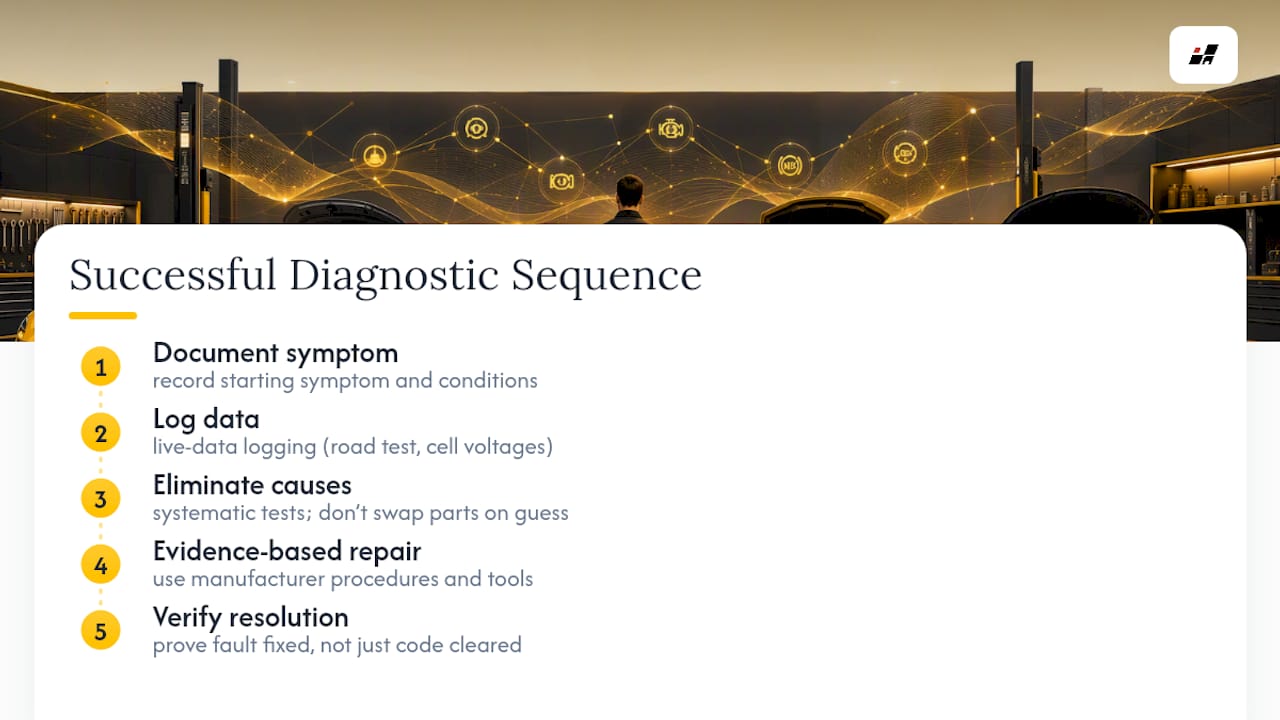
Consider the type of case that shows up often in specialist shops: an intermittent warning light on a European luxury sedan that a previous shop couldn’t reproduce on a lift. The fault only appeared at highway speed under specific temperature conditions. Resolving it required live-data logging during an actual road test rather than a static scan in the bay, since the fault never triggered while the car sat idle in a garage.
ADAS calibration after glass or collision work follows a similar logic. A forward camera that’s misaligned by even a small margin can pass a visual inspection while still throwing off lane-keeping assist. Confirming a correct calibration means using target boards and measured distances specified by the manufacturer, not eyeballing the sensor and calling it done.
High-voltage diagnostics on hybrid and EV exotics add a further layer. A battery-management anomaly might present as a vague performance warning with no obvious mechanical cause. Isolating it correctly requires reading cell-level voltage data through the manufacturer’s software rather than guessing at a pack replacement, a costly mistake if the actual fault is a single sensor rather than the battery itself.
What separates a good outcome from a frustrating one isn’t luck. It’s a shop that logs the data, tests the theory, and shows the owner proof the fault is actually resolved, not just that a code cleared.
What Do You Gain From A Specialist Shop?
Choosing a shop with deep exotic and European experience changes more than convenience. It changes accuracy.
A generalist shop sees a Porsche a few times a year. A specialist sees dozens, which means pattern recognition kicks in faster: a specific fault code on a specific model year often points to a known issue the specialist has already traced before, cutting diagnostic time and cost. That familiarity also extends to parts sourcing and knowing which components fail predictably on a given platform.
Specialist shops also tend to invest in the OEM-level tools that generalist shops can’t justify buying for occasional exotic work. That investment shows up directly in diagnostic accuracy, since a factory-level scan tool can read module data a generic scanner simply can’t access. Owners get a second benefit too: a specialist shop that works on your specific make regularly usually has a better sense of manufacturer TSBs and known issues than a shop that sees your model once a year.
What Owners Should Expect In Practice
Transparency isn’t a slogan here; it’s the actual deliverable. Every diagnostic job should come with evidence you can look at, not just a verbal explanation. Diagnosing a high-value vehicle correctly sometimes takes longer than a quick fix would, and that time is what you’re paying for. Ask for the data. Ask direct questions. A shop confident in its findings will show you the proof without hesitation.
— Artec
How Artec Automotive Handles Advanced Diagnostics
Specialist shops with OEM-level tools and calibration equipment, backed by extensive exotic and European vehicle experience, offer diagnostic services that generic shops may not provide. Such specialization can offer an alternative to dealership visits with factory-level diagnostic capabilities and transparent documentation before work begins.
Before you book, have your VIN ready along with notes on when the symptom appears and whether the car recently went through a collision repair or windshield replacement. That context speeds up the intake step and helps the technician target the right systems from the start.
Artec Automotive’s automotive repair services cover full diagnostic work for exotic and European vehicles, and the exotic car service and European car service pages detail brand-specific capabilities for owners of Ferrari, Lamborghini, Porsche, BMW, Mercedes, Bentley, Tesla, and McLaren vehicles. Reach out through the Artec Automotive site to schedule a diagnostic appointment and get a documented estimate before any repair starts.
Sources
- What Does the Check Engine Light Look Like, and Really Mean? - Consumer Reports
- Car repair labor rates explained | AAA Automotive
- ADVANCED DRIVER ASSISTANCE SYSTEMS (ADAS) REPAIR COSTS - AAA
FAQ
Does Advanced Auto Do Free Diagnostics?
Policies vary widely by shop and by chain, so there’s no universal answer. Most independent specialty shops charge a diagnostic fee that covers technician time, though many will credit that fee toward the cost of the repair if you have them do the work.
How Much Does A Full Diagnostic Test Cost?
Cost depends heavily on the complexity of the fault and the vehicle involved. A straightforward code read might run a modest flat fee, while tracing an intermittent electrical fault can take enough technician hours that the diagnostic labor exceeds the eventual repair cost. Artec Automotive provides a transparent estimate for diagnostic work before proceeding; current pricing is available through the site.
How Much Do Advanced Diagnostics Cost On A Luxury Or European Car?
Expect higher costs than a mainstream vehicle when ADAS calibration or OEM programming is involved. AAA’s data puts radar sensor replacement between $500 and $1,300 and front camera replacement between $600 and $800, and that’s before diagnostic labor to confirm the fault.
What Is The Average Cost Of A Diagnostic On A Car?
There’s no single flat rate across the industry since pricing depends on whether a shop bills a flat fee with a time cap or an hourly diagnostic rate. Complexity drives the number more than anything else, and Consumer Reports notes that a check-engine code alone rarely tells you the final cost until a technician investigates further.